
All Articles
Page 54 of 226Who does Oregon women’s basketball play next in 2026 NCAA tournament?

AUSTIN, Texas — Oregon’s eighth-seeded women’s basketball team booked its ticket to the round of 32 with a commanding 70-60 victory over ninth-seeded Virginia Tech on Friday night, never trailing in a performance that showcased the Ducks’ postseason poise. The win lifts Oregon to 23-12 on the season and sets up a daunting Sunday showdown against the tournament’s top overall seed.
Awaiting the Ducks at the Moody Center on March 22 will be host Texas, fresh off an 87-45 dismantling of No. 16 Missouri State. The Longhorns’ balanced attack and home-court advantage present a steep challenge for an Oregon squad that has already defied expectations by advancing past the opening round.
Tip-off time for the Ducks versus the Longhorns has yet to be announced, though the game will be played in the same Austin venue that has already seen its share of March drama this weekend. Fans can follow every possession live on Fubo, with full coverage carried across ESPN’s family of networks.
Oregon, which controlled tempo and glass against Virginia Tech, will need a similar complete effort to upset the nation’s No. 1 seed and continue its tournament run.
Read more →Newcastle eye Delap - Saturday's gossip

Newcastle United have placed Chelsea striker Liam Delap on their summer shortlist, with discussions already hinting at a £40 million valuation for the 23-year-old England forward, according to Talksport.
Delap, who has been on the books at Stamford Bridge, is viewed by the Magpies as a prime target to bolster Eddie Howe’s attacking options ahead of next season. The proposed fee would represent a significant outlay for the Tyneside club as they look to close the gap on the Premier League’s top four.
Elsewhere in the Premier League, Manchester United are preparing to reward 20-year-old midfielder Kobbie Mainoo for his rapid rise by offering a contract extension through 2031 that will quadruple his wages to £120,000 a week. Talksport reports that the deal is expected to be finalised alongside an extension for veteran defender Harry Maguire.
Liverpool’s pursuit of Inter Milan centre-back Alessandro Bastoni appears to be stalling, with Teamtalk indicating that the Italian international is now increasingly unlikely to leave the San Siro this summer.
Tottenham have been monitoring Freiburg goalkeeper Noah Atubolu, 23, as speculation grows that current Spurs number one Guglielmo Vicario could head back to Italy, with Inter Milan said to be leading the race for his signature.
Everton have issued a hands-off warning regarding midfielder Kiernan Dewsbury-Hall, insisting the 27-year-old is not for sale at any price despite reported interest from Manchester United.
Newcastle boss Eddie Howe has branded suggestions that captain Bruno Guimaraes could be lured to Old Trafford as “disrespectful” to both the club and the 28-year-old Brazilian.
Manchester United and Liverpool are also keeping tabs on Fulham’s United States international left-back Antonee Robinson, 28, according to Caught Offside.
Finally, Bournemouth manager Andoni Iraola has emerged as a leading candidate for the vacant Athletic Bilbao post after Ernesto Valverde stepped down. Marca adds that Iraola has also been discussed by Tottenham and Crystal Palace as they continue their own managerial searches.
Read more →Arsenal and Man City battling for defender with €500 million release clause
Barcelona’s teenage centre-back Pau Cubarsi has become the subject of a high-stakes tug-of-war between Premier League heavyweights Arsenal and Manchester City after a series of commanding performances that have marked him out as one of Europe’s most coveted young defenders.
The 17-year-old, a product of the famed La Masia academy, has been valued by Barcelona at €500 million via a release clause that the Catalan club insist is non-negotiable. While the figure is designed to ward off suitors, it has not deterred England’s top two clubs from registering firm interest in the Spain youth international.
According to a report in Fichajes, Arsenal have placed Cubarsi on a growing list of defensive targets as they seek to add elite, home-grown talent to a squad already challenging for major honours. The Gunners’ recruitment staff have been impressed by Cubarsi’s composure in possession, tactical intelligence and ability to handle senior opposition well beyond his years.
Manchester City, however, are unwilling to allow their title rivals a clear run at the defender. The treble winners have tracked Cubarsi since he broke into Barcelona’s first-team setup and believe his ball-playing style fits the profile City have successfully integrated into their squad in recent seasons. With both clubs expected to push deep into domestic and European competitions, the opportunity to pitch a long-term project to the youngster is regarded as equally compelling.
Barcelona, for their part, have no desire to enter negotiations. Club officials view Cubarsi as a future leader of the back line and have communicated that any approach would have to trigger the €500 million clause in full. Sources close to the player indicate he is happy at Camp Nou and focused on nailing down a regular starting spot, making an immediate switch improbable.
Yet the very presence of Arsenal and Manchester City in the chase underlines how quickly Cubarsi’s reputation has risen. Should he continue his rapid development, the battle for his signature is likely to intensify, even if a blockbuster transfer remains a distant prospect while the prohibitive clause stands.
Read more →Arnold Schwarzenegger, 78, undergoing brutal gym prep for 'Conan the Barbarian' sequel

Los Angeles, March 20, 2026 — Arnold Schwarzenegger, 78, is back under the iron, grinding through what insiders describe as a brutal gym regimen to reprise his iconic role in the upcoming Conan the Barbarian sequel. The veteran actor and former California governor has reportedly committed to an intense training schedule designed to restore the formidable physique that defined his early career.
While studio representatives remain tight-lipped about production details, sources close to the project confirm that Schwarzenegger’s preparation is already underway. The actor’s return to the sword-and-sorcery franchise marks one of the most anticipated comebacks in modern action cinema, and his willingness to endure rigorous workouts at nearly 80 years old underscores the personal stake he has in resurrecting the Cimmerian warrior.
Fans first met Schwarzenegger as Conan in John Milius’s 1982 cult classic, a role that catapulted the Austrian bodybuilder to global stardom. A sequel, Conan the Destroyer, followed two years later, yet plans for a third installment lingered in development limbo for decades. Now, with cameras expected to roll later this year, Schwarzenegger’s disciplined approach to training signals that the new film aims to honor the raw physicality that made the original a benchmark in the genre.
Observers note that the actor has been spotted daily at a private Santa Monica facility, focusing on heavy compound lifts, functional mobility drills, and recovery protocols tailored to an athlete navigating advanced age. Nutritionists and physiotherapists are said to be monitoring every metric, ensuring that the septuagenarian can safely shoulder the demands of large-scale battle sequences and horseback stunts.
Industry analysts predict that Schwarzenegger’s return could energize the property much the way legacy sequels have reinvigorated other dormant franchises. With modern filmmaking technology and a renewed appetite for epic fantasy, the new Conan installment is poised to bridge generations of moviegoers—those who thrilled to the original 1980s adventures and younger audiences discovering the mythic hero for the first time.
For Schwarzenegger, the undertaking appears as much a personal mission as a cinematic one. Social-media snippets show him hoisting familiar free weights and reciting his trademark determination to “come back” stronger—a mantra that has defined his public life from bodybuilding stages to the governor’s office. If the training footage is any indication, the 78-year-old star refuses to concede ground to time, determined to stride back onto the big screen with the same imposing presence that made Conan a cultural touchstone four decades ago.
Read more →Antoine Semenyo and Omar Marmoush played big roles in getting City into the final

London – When Manchester City step onto the Wembley turf for Sunday’s Carabao Cup final against Arsenal, the stakes will be towering. A first trophy in almost two years is on the line, and Pep Guardiola’s side know that defeat would deepen the gloom created by their mid-week Champions League elimination at the hands of Real Madrid and a Premier League title race that is slipping away. Yet within the City camp there is a quiet confidence, fuelled in part by two names that have steadily risen in prominence this season: Antoine Semenyo and Omar Marmoush.
Neither player arrived with the fanfare of a nine-figure transfer, but both have become pivotal to City’s domestic-cup surge. Semenyo, the powerful right-sided attacker, is expected to rejoin the starting XI after being rested in mid-week, and teammates speak of a player “hungry to end his personal silverware drought.” The 24-year-old has yet to lift a major honour in his professional career; colleagues believe that statistic has sharpened his training-ground edge and turned him into one of the dressing-room’s most vocal leaders ahead of the final.
Marmoush, the versatile German-Egyptian forward, has operated both through the middle and in wider areas during City’s League Cup run, scoring decisive goals in the quarter- and semi-finals. Guardiola has lauded the 25-year-old’s “fearless pressing” and ability to stretch back lines, traits that forced the manager to juggle his front line to keep the former Wolfsburg man involved. While Erling Haaland is set to spearhead the attack, club sources say Marmoush’s recent performances guarantee him a prominent role off the bench – if not a shock start – as City look to exploit an Arsenal defence that can be caught on the transition.
Their influence has been felt beyond mere goals. Semenyo’s direct running has drawn fouls in dangerous areas, while Marmoush’s relentless work-rate has allowed Guardiola to deploy a more aggressive high press than in previous rounds. Together they have offered energy at a time when City’s campaign has flirted with entropy.
Guardiola confirmed on Friday that deputy goalkeeper James Trafford will retain his cup role, with Gianluigi Donnarumma consigned to the bench. Further changes are expected: Marc Guéhi is poised to partner Rúben Dias at centre-half, Nico O’Reilly is likely to join Rodri in the double pivot, and Rayan Aït-Nouri will resume his unenviable task of trying to shackle Bukayo Saka. Yet it is the continued emergence of Semenyo and Marmoush that has given the squad a timely jolt of belief.
City trail Liverpool by one trophy in the competition’s all-time standings; victory on Sunday would narrow that gap to a single title and, perhaps more importantly, restore conviction ahead of a season-defining sprint through April and May. For Semenyo and Marmoush, the final represents a chance to repay the faith shown in them and, in the process, carve their own place in the club’s ever-expanding honours board.
History says City know how to handle these occasions. Eight of the current squad already own a League Cup winners’ medal, and Dias, Bernardo Silva and Rodri have each lifted trophies beneath the iconic Wembley arch. But football is rarely kind to teams living on past glories. Guardiola understands that new heroes must emerge; on Sunday he will look to two of his most in-form forwards to answer the call.
Antoine Semenyo and Omar Marmoush have already propelled City to the brink of glory. Now they have 90 minutes – maybe more – to finish the job and spark a late-season resurgence.
Read more →Blockbuster Richard Hughes deal looks more likely than ever
Liverpool’s football operations could be on the brink of a seismic shift, with sporting director Richard Hughes now the subject of intensifying speculation linking him to Saudi Arabian giants Al-Hilal. Multiple reports indicate that a summer move for the 44-year-old is gathering momentum, placing Anfield’s back-room stability under the microscope.
Hughes, appointed only last summer, is entering the final 12 months of his contract once the current season concludes, a detail highlighted by The Athletic on Friday and one that has simplified negotiations for Al-Hilal, who are searching for a new sporting director to oversee their ambitious recruitment drive. Saudi journalist Ahmed Al-Ajlan went further, claiming Hughes has already struck a provisional agreement to relocate to Riyadh when the transfer window re-opens. While respected transfer correspondent Fabrizio Romano stresses that Hughes remains “completely committed” to Liverpool for the time being, he confirms Al-Hilal’s “strong interest” is genuine and ongoing.
The potential departure carries added weight because of Hughes’ close professional bond with Michael Edwards, the architect of Liverpool’s data-driven overhaul and the man who convinced his long-time friend to leave Bournemouth for Merseyside. Edwards himself is out of contract in 2027 and, according to sources, no longer occupies a clearly defined role inside the club’s expanding multi-club model—a project that has stalled after early fanfare. Losing one figure, insiders concede, increases the probability of losing the other, raising the prospect of a comprehensive reset in the club’s power structure.
Although some voices at Anfield believe the Saudi links could be a bargaining chip designed to secure improved terms on Merseyside, the convergence of contract timelines and Al-Hilal’s willingness to invest heavily in back-room talent means a blockbuster switch has never appeared more plausible. With Liverpool facing a pivotal summer on and off the pitch, the coming weeks could determine whether Hughes boards a plane to the Middle East or commits his future to the Reds amid mounting uncertainty.
Read more →IPL 2026: KKR dealt Pathirana blow, availability timeline revealed
Kolkata Knight Riders will begin their IPL 2026 campaign without tearaway quick Matheesha Pathirana, with the franchise confirming that the Sri Lankan is unlikely to be match-fit until mid-April. Head coach Abhishek Nayar delivered the update during the side’s pre-season media briefing on Friday, revealing that the 23-year-old is presently completing a rehabilitation programme overseen by Sri Lanka Cricket after a calf strain forced him out of the recent T20 World Cup.
Pathirana, who managed only three appearances in that global event before being assisted off the field in a clash against Australia, has not yet undergone the mandatory Physical Performance Test that would clear him for IPL duty. “The latest update that we know is he’s obviously with the Sri Lankan cricket board and they took out his rehab, and the latest communication that we’ve had is, hopefully, somewhere mid-April is when they feel he’ll be match fit. That’s what we know as of now,” Nayar said.
The development compounds selection headaches for the Knight Riders, who had banked on the sling-armed speedster to spearhead their attack. Nayar conceded the absence is a significant setback. “Firstly, it is a big blow, because Harshit has been an integral part of this team for the last couple of seasons, including the championship season. He’s grown a lot as a cricketer over the years, so it’s not easy to replace him.”
With the tournament window tightening, KKR have already begun scouting for stand-ins. “Over the last few days we’ve looked at a few bowlers. We’re trying to evaluate, with the help of the leadership group, who fits in and who can do that role to the best of their prowess,” Nayar added, stressing that no final call has been taken.
Team mentor Dwayne Bravo struck an optimistic chord, highlighting India’s fast-bowling reserves. “In any tournament with any team, once you lose some of the key bowling options, these are things you plan for, but also things you have to accept. The good thing about Indian cricket, especially at the moment, is that there is a lot of depth.” Bravo name-checked former India quick Umran Malik among the candidates being monitored, describing the contingent as “young, exciting talents” who have already tasted IPL and international cricket.
Sri Lanka Cricket, meanwhile, clarified the administrative status of its contracted players. Dushmantha Chameera, Pathum Nissanka and Kamindu Mendis have cleared fitness benchmarks and received No Objection Certificates, while Nuwan Thushara’s NOC hinges on the outcome of his Physical Performance Test. Wanindu Hasaranga, Eshan Malinga and Pathirana remain in rehabilitation and will be assessed once their recovery programmes conclude.
For Kolkata, the race is now on to secure a like-for-like replacement capable of replicating Pathirana’s death-over nous until the Sri Lankan can rejoin the squad, should the medical timelines hold.
Read more →Guardiola hits back at Arsenal’s ‘dark arts’ claims ahead of Manchester City’s Carabao Cup final

London—With a Carabao Cup final looming on Sunday, Manchester City manager Pep Guardiola used his pre-match press conference to swat away suggestions that Arsenal have been bending the rules on set pieces, dismissing the north-London club’s alleged “dark arts” as a distraction from far weightier issues.
“Dark arts? When someone does something like that, the referees must stop it,” Guardiola said. “Look what happens in the world. We are in the middle of chaos, and nobody moves a finger. The world is going to collapse, and we are talking about whether a team uses dark arts. There are more important things than that.”
The rebuttal lands 48 hours before City walk out at Wembley knowing the competition may represent their most realistic route to silverware this season. Although the champions remain mathematically in the Premier League title fight—nine points behind Arsenal with a match in hand—recent elimination from the Champions League at the hands of Real Madrid has narrowed their trophy path. A quarter-final date with Liverpool in the FA Cup offers another opportunity, yet the League Cup final offers an immediate chance to lift a trophy.
Guardiola, who worked closely with now-Arsenal boss Mikel Arteta during the latter’s tenure as his assistant at the Etihad, offered measured praise for the Gunners’ evolution under the Spaniard. “They control many aspects of the game after years without titles. That has given them an edge. They are organized, they defend deep, they have a good build-up. They are an exceptional team,” he said, while brushing aside any personal rift with his former lieutenant.
Arteta’s tactical blueprint has shifted away from the high-tempo positional play both coaches once espoused, instead favouring deeper blocks and set-piece efficiency—an approach that has apparently rankled City ahead of the Wembley encounter. Guardiola’s broader frustration, however, appeared aimed at football’s governance rather than any single opponent, referencing opaque decision-making “behind stage” and citing the recent overturned result in the Africa Cup of Nations final, where Senegal were stripped of the title despite beating Morocco.
City’s season now hinges on a strong finish across three remaining competitions. Victory on Sunday would secure a first piece of silverware since last spring’s Premier League triumph and keep alive Guardiola’s streak of winning a major honour in every full campaign since arriving in England. For Arsenal, a maiden trophy under Arteta would serve further notice that their rebuilding project has moved into a ruthless new phase—one that, according to their rivals, is not above exploiting every marginal gain, legal or otherwise.
Kick-off at Wembley is set for Sunday afternoon, with both managers expected to field near full-strength sides despite congested calendars. Guardiola, ever the perfectionist, insists the focus must stay on performance rather than subterfuge. “I don’t have time to go to London,” he said of off-field mind games, “and I don’t think he has time to come to Manchester with four competitions.”
The rivalry, already white-hot, now carries the extra spice of accusation and rebuttal. By late Sunday evening, the debate over dark arts may be superseded by the more decisive matter of who lifts the first major trophy of the English season.
Read more →White’s Quiet Storm: How Derrick White’s 100-100 Chase is Fueling Boston’s Surge

Boston, MA – The stat sheet will not scream MVP, but inside TD Garden the growing consensus is that no Celtic is more indispensable right now than Derrick White. With Brooklyn in town on Feb. 27, 2026, White spent the first half hounding Nets rookie Nolan Traore, sliding his feet, reaching for strips, and contesting every inch of hardwood. The sequence was a snapshot of a season-long theme: White is on pace to finish with 100 steals and 100 blocks, a benchmark that has become a rallying point for a roster that has overachieved in the face of roster turnover and injury chaos.
“Derrick is just calculating,” said Celtics beat insider John Karalis, who has chronicled the guard’s evolution from role player to defensive lynchpin. “He rarely takes a chance that puts the team at risk. His mind and body are quick, and he uses that to his advantage.”
That cerebral approach separates White from his predecessor Marcus Smart. Where Smart baited opponents into charges and emotional mistakes, White wins with timing and spatial awareness. Smart played mind games; White plays angles. Smart leapt for highlight rejections; White pounces in a blur, swatting drives before they reach the rim. The contrast has spawned a “thunder and lightning” comparison inside the locker room: Smart supplied the roar, White supplies the silent strike.
The numbers back up the eye test. Entering the Brooklyn matchup, White sat just outside the league’s top-10 in both steals and blocks among guards, a rarity in an era when most back-court players specialize in one defensive category. Coaches credit his study habits: he charts opponent tendencies, notes preferred dribble moves, then anticipates the moment a crossover will expose the ball. Teammates credit his humility: White will switch onto 7-footers, fight over screens, then sprint in transition for corner threes without demanding a single play call.
That selflessness has become the personality of the 2025-26 Celtics. Jaylen Brown has emerged as the undisputed vocal leader, but White sets the tone with consistency. When Kristaps Porzingis missed almost the entire season and Al Horford battled nagging injuries, White’s versatility allowed Boston to stay afloat. When rookie Hugo Gonzalez needed guidance navigating life in a new country, White invited him to post-practice shooting sessions, accelerating the teenager’s adjustment.
The Nets game offered another example. Midway through the second quarter, Traore tried to isolate White on a high pick-and-roll. White slid under the screen, stayed attached to the hip, then reached in at the precise instant Traore brought the ball low. The steal led to a Payton Pritchard pull-up three in transition, a sequence that brought the Garden crowd to its feet and forced Brooklyn into a timeout. No chest-thumping, no trash talk—just business.
Off the court, White’s chase for 100-100 has become a subplot that captiviates both fans and analytics departments. Only a handful of guards in league history have reached the century mark in both categories during a single season; accomplishing the feat would etch White’s name among elite company and validate Boston’s decision to build around a defense-first identity.
Yet White shrugs at the milestone chatter. “I just want to win,” he said after the Nets win, towel draped over his head. “If I get there, cool. If not, as long as we keep playing in May and June, I’m happy.”
For a Celtics team that has navigated cap constraints, roster turnover, and the lingering question of what might have been had last year’s core stayed intact, White’s steady hand provides clarity. Boston may not control health, schedules, or rival super-teams finally clicking, but they control effort, execution, and the quiet storm that is Derrick White.
As the regular season hits the stretch run, opponents are learning what Traore discovered: the ball is never safe when White is near, and neither is the game plan. The 100-100 milestone is within reach, but the larger objective—another deep playoff push—remains the only number that truly matters in a season defined by resilience.
Read more →Will Flick Make Any Changes? | 4-2-3-1 Barcelona Predicted Lineup Vs Rayo Vallecano
Barcelona return to La Liga action on Saturday evening when they welcome Rayo Vallecano to the Estadi Olímpic Lluís Companys, and all eyes will be on Hansi Flick’s team sheet after the Catalans’ statement 7-2 demolition of Newcastle United in mid-week. The comprehensive victory has buoyed the squad and, according to club sources, convinced the coaching staff that continuity, rather than rotation, is the safest route to three more points.
Flick is therefore expected to retain the 4-2-3-1 shape that has underpinned Barcelona’s recent surge, with veteran striker Robert Lewandowski once again entrusted to lead the line. The Polish forward struck twice against the Magpies and will aim to carry that momentum into the domestic meeting with Rayo, who have struggled on the road this term.
Between the posts, Joan Garcia is set for a second consecutive start despite conceding twice in the European thriller. In front of him, Eric Garcia and teenage prodigy Pau Cubarsi will reunite in central defence, a partnership Flick believes offers the ideal blend of composure and aggression. Joao Cancelo keeps his place on the right, with academy graduate Gerard Martin continuing on the left; both full-backs have licence to push high and overload the wide areas.
Pedri and Marc Bernal will sit deepest in midfield, tasked with dictating tempo and shielding the back four. Ahead of them, an attacking trident of Raphinha, Fermin Lopez and precocious winger Lamine Yamal will look to supply Lewandowski, while also interchanging positions to stretch Rayo’s compact back five.
The bench will be stacked with game-changing talent. Gavi, Dani Olmo and deadline-day loanee Marcus Rashford provide forward thrust, while defenders Xavi Espert and Ronald Araujo offer defensive insurance should Flick wish to shut up shop. Ferran Torres is also expected to be named among the substitutes and could be unleashed late on if the hosts require fresh impetus in the final third.
Kick-off is scheduled for 18:30 local time, and anything less than victory will be viewed as a setback for a side chasing both points and momentum at the business end of the campaign.
Barcelona predicted XI (4-2-3-1): Joan Garcia; Joao Cancelo, Eric Garcia, Pau Cubarsi, Gerard Martin; Marc Bernal, Pedri; Raphinha, Fermin Lopez, Lamine Yamal; Robert Lewandowski.
Read more →Arsenal and Manchester City lineups: James Trafford to start, Mikel Arteta dodges Kepa, David Raya question

Wembley Stadium will stage a tantalising EFL Cup final on Sunday with one goalkeeper confirmed and the other still cloaked in mystery. Pep Guardiola ended speculation by announcing that James Trafford will keep the gloves for Manchester City, while Mikel Arteta refused to reveal whether Kepa Arrizabalaga or David Raya will start for Arsenal.
Trafford, the only City player to have featured in every round of the competition, edges out Gianluigi Donnarumma, who has been Guardiola’s automatic pick in the Premier League and Champions League since early September. The 21-year-old’s retention caps a week of scrutiny after Trafford admitted in February that he “didn’t expect” to find himself relegated to cup duties following Donnarumma’s loan arrival from Paris Saint-Germain. Guardiola brushed aside the youngster’s public frustration, saying: “Players can be happy, unhappy. It is what it is. They have to be here to do the best they can do.”
Across the tunnel, Arteta offered no such certainty. Pressed repeatedly on whether Kepa, who has started every EFL Cup tie this campaign, will be preferred to summer signing David Raya, the Arsenal manager replied: “We will see how everyone is tomorrow.” When reminded that Guardiola had already settled on his keeper, Arteta smiled: “Good for him.”
The Spaniard acknowledged that rotating goalkeepers carries unique pressure. “If you talk to the goalkeeping coaches, they are very special because they are always different,” he said. “There is a lot of history about that as well that is very related to how people have made decisions in the past.”
City enter the match without fresh injuries, though Marc Guehi is cup-tied and Josko Gvardiol remains unavailable. Arsenal will check on captain Martin Odegaard and defender Jurrien Timber after Saturday’s final training session; Timber has already been named in the latest Netherlands squad.
Guardiola’s starting XI is expected to show Trafford behind a back four of Matheus Nunes, Abdukodir Khusanov, Ruben Dias and Rayan Ait Nouri. Ahead of them, Rodri anchors a midfield that includes Bernardo Silva, Rayan Cherki and Jeremy Doku, with Antoine Semeyo supporting Erling Haaland.
Arteta’s projected side lists Kepa in goal, protected by Timber, William Saliba, Gabriel Magalhaes and Piero Hincapie. Martin Zubimendi partners Declan Rice in midfield, while Bukayo Saka, Eberechi Eze and Noni Madueke supply Kai Havertz.
By kick-off, only one question will linger: which keeper will Arteta trust to lift Arsenal’s first silverware of the season?
Read more →Robert Lewandowski Edging Closer to One-Year Barcelona Extension

Camp Nou, Barcelona – Robert Lewandowski’s future appears increasingly likely to be settled in Catalonia rather than anywhere else, with multiple sources close to the striker predicting a one-year contract extension will be finalised as early as April.
The 36-year-old’s current deal expires in June, yet president Joan Laporta has already gone on record saying he wants the Polish forward to remain for at least another season. Polish journalist Tomasz Włodarczyk, who has tracked Lewandowski’s career for years, told local media outlets that both player and club are now aligned on the next step.
“This decision will be made shortly,” Włodarczyk explained. “I think April will be the time when his future will be clarified and formalised. In my opinion, there will be a one-year contract extension. Firstly, because Robert wants it, and we assume that the other side—Joan Laporta, Deco—also wants it.”
Family considerations are understood to weigh heavily in the deliberations. Lewandowski’s children have settled into Barcelona schools, and uprooting them for a single-season stint elsewhere is viewed as an unattractive logistical challenge. Włodarczyk stressed that lifestyle factors, rather than pure economics, are driving the conversation.
“There are important personal, private things, and money probably doesn’t play a major role here,” he added. “Would he leave for a year with his entire family, change his surroundings, for two, three, five million euros? Saudi Arabia is a very, very cold topic these days. Moving overseas would involve incredible logistics.”
While interest exists from Major League Soccer and Serie A—Mateusz Święcicki confirmed that “Juventus is very excited about Lewandowski”—the reporter believes the forward will view Barcelona’s offer as “the absolute best” once every option is laid out on the table.
Barcelona’s hierarchy, fresh off Laporta’s recent election victory, are confident they can secure the veteran’s signature without triggering any purchase clause, aligning with the club’s wider strategy of managing wages while retaining key experience.
All signs point toward an announcement next month that will see Lewandowski pull on the blaugrana shirt for at least one more campaign.
Read more →England’s Tuchel open to calling up Max Dowman at 16: Who’s the youngest ever to play at a World Cup?
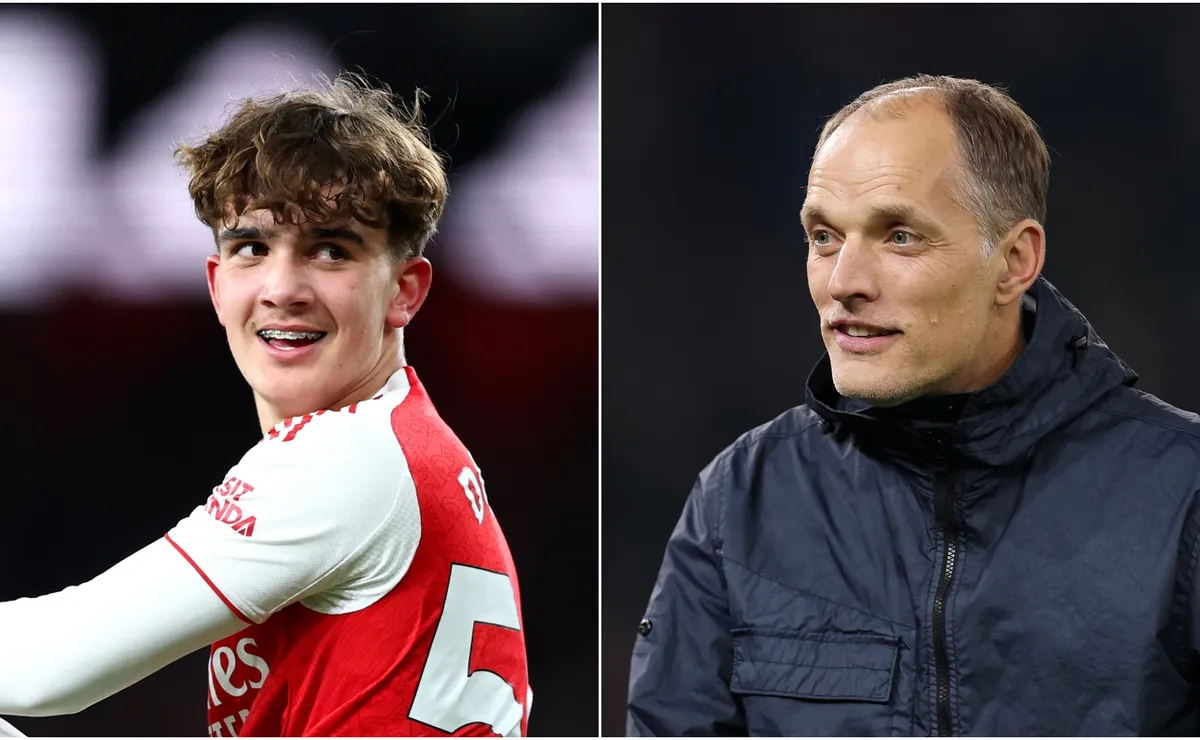
London – England head coach Thomas Tuchel has refused to rule out fast-tracking Arsenal prodigy Max Dowman into the senior squad for the 2026 FIFA World Cup, a move that would shatter the tournament’s age record.
Speaking after Friday’s squad announcement for the March friendlies against Uruguay and Japan, Tuchel told reporters that the 16-year-old attacker is already on his long-range radar.
“He’s a fantastic talent,” the German coach said, referencing Fabrizio Romano’s report on X. “We still have a chance to call him for the World Cup.”
Dowman, who last weekend became the youngest goal-scorer in Premier League history during Arsenal’s 2-0 victory over Everton, was left out of the current camp because he is not yet a regular starter for Mikel Arteta’s side.
“At the moment he competes for minutes so he’s not a regular starter for Arsenal,” Tuchel explained. “He is in the best environment possible, he has to keep going. No need to call him up now and increase the pressure.”
Should Tuchel reverse course and include Dowman in England’s final 26-man roster for North America 2026, the midfielder would be 16 years and 169 days old when the Three Lions open Group-stage play against Croatia on June 17. That would eclipse the existing World Cup age record held by Northern Ireland’s Norman Whiteside, who was 17 years and 41 days when he faced Yugoslavia at Spain 1982. Cameroon’s Samuel Eto’o (17-99, 1998) and Nigeria’s Femi Opabunmi (17-101, 2002) round out the current podium.
While Dowman’s potential leap to the global stage dominates headlines, Tuchel’s March selections generated their own talking points. Liverpool right-back Trent Alexander-Arnold was omitted despite strong recent form for Real Madrid, with Tuchel opting to retain Tino Livramento, Djed Spence and Jarell Quansah at the position. Jude Bellingham returns after injury, joined by Manchester United pair Harry Maguire and Kobbie Mainoo and Manchester City centre-back John Stones.
England will face Uruguay at Wembley on 22 March and Japan four days later as Tuchel uses the final international window before the summer tournament to refine his tactical blueprint.
Read more →'Things will be little different for Virat': Kohli warned before RCB's IPL 2026 season
New Delhi: As Royal Challengers Bengaluru open their IPL 2026 campaign, all eyes will once again fixate on Virat Kohli, but the chatter around the talismanic batter carries a fresh nuance this year. For the first time since the tournament’s inception, Kohli will enter the competition having fully stepped away from Test cricket, a reality former India all-rounder Irfan Pathan believes could subtly alter his T20 rhythm.
“This time, things will be a little different for Kohli,” Pathan said in a video posted to his YouTube channel. “For the first time, he will play the IPL having completely retired from Test cricket. He is playing only one format. It is not easy for anyone.”
Pathan, who has tracked Kohli’s career arc from teenage prodigy to modern great, stressed that while the 37-year-old’s one-day returns remain imperious even after extended breaks, the frenetic nature of T20 cricket presents a unique test. “In T20s, when you play the aggressor and come in not having played a lot, it will be challenging. But he has faced many challenges before as well. I am very excited to see how he will go forward this season.”
The conversation is not merely academic. Last season Kohli’s recalibrated approach—trading his customary anchor role for outright aggression—was widely credited with tilting the balance in RCB’s favour as they captured a long-awaited title. Pathan underlined that transformation as pivotal. “When they won last season, his strike rate also went up. He did not play anchor but took the role of an aggressor. It was a very big factor. They will expect even this time that he keeps up the same form.”
Kohli’s identity remains inseparable from the Bangalore franchise. “Virat Kohli and RCB is an identity that goes together,” Pathan observed. “He started with RCB and is still playing for them. He has delivered brilliant performances. It was also a golden period in his career when he captained the team; there were a lot of brilliant performances.”
With the IPL’s landscape growing ever more demanding, the coming weeks will reveal whether Kohli’s single-format focus sharpens his T20 edge or forces a recalibration of the swashbuckling template that served RCB so well in their title-winning 2025 campaign.
Read more →Tottenham Supporters Group Relay Bold Message to the Players Before Crucial Six-Pointer Clash Against Nottingham Forest

Tottenham Hotspur’s season has reached a tipping point. Nine months after lifting the Europa League trophy, the Lilywhites enter Sunday’s Premier League meeting with Nottingham Forest just one point above the relegation zone, transforming what once felt like a campaign of promise into a nerve-shredding fight for survival.
With pressure mounting on every corner of the club, the Tottenham Hotspur Supporters’ Trust (THST) has issued a rallying cry designed to bind players, staff and fans together for the run-in. Posting on X, the Trust delivered an unambiguous message of solidarity:
“Tottenham Hotspur means everything to us. It always has. Generations of us. Families. Friends. Strangers. Brought together by the same badge, the same community, the same pride. With one job: to support our team. Time for reflection comes later. Right now we’re in the run-in, with big games ahead. So, to our team, our players, our coaching staff, our team behind the team, our club: we’re not going anywhere. We are with you.”
The statement, which ends with the refrain “All together, always,” has been endorsed by a growing number of first-team players, beginning with defender Kevin Danso. Others have since followed, amplifying the plea for unity across social media platforms.
Spurs’ recent form offers a glimmer of hope. Back-to-back positive results against Liverpool and Atlético Madrid have lifted spirits around N17, momentarily quieting the chorus of boos that had become commonplace. Head coach Igor Tudor has encouraged a more expressive style, a shift players believe can propel the club toward safety.
Yet the mathematics remain stark. Three points separate Tottenham from the bottom three, and Sunday’s encounter with fellow strugglers Nottingham Forest is already being billed as a six-pointer. Anything less than victory would leave Spurs staring at the prospect of Championship football next season, an unthinkable outcome after last term’s continental triumph.
Players privately acknowledge the supporters’ statement has resonated inside the dressing room. Several squad members contacted the THST to express gratitude, insisting the backing of the terraces can serve as an extra layer of motivation during the club’s most critical weeks since their 2019 Champions League run.
The club hierarchy, long criticised by fans for a perceived lack of direction under the Lewis family, faces uncomfortable questions about how a squad that conquered Europe now finds itself flirting with relegation. For now, though, the focus inside the stadium must narrow to the pitch, where a single lapse could prove fatal to Premier League status.
Supporters are expected to generate a raucous atmosphere from the first whistle, hoping to turn the Tottenham Hotspur Stadium into a cauldron capable of unsettling Forest and inspiring their own side. With ten fixtures remaining after the weekend, the Lilywhites still control their fate, but the margin for error has all but evaporated.
As the THST concluded: “We can’t control what happens on the pitch. But we’ll provide everything you need off it. We believe in you. This is our club.”
Tottenham and Nottingham Forest both recognise the stakes. For Spurs, the message from the stands is clear: the 12th man will be present, loud and unwavering, ready to push their team across the survival line starting this Sunday.
Read more →Hamstring injury keeps Ronaldo out of Portugal friendlies against US and Mexico

LISBON — Cristiano Ronaldo will miss Portugal’s upcoming friendlies against the United States and Mexico after sustaining a hamstring injury, the Portuguese Football Federation confirmed Tuesday.
The setback comes less than two weeks before the World Cup kicks off across North America, raising immediate questions about the 39-year-old’s readiness for the tournament. Portugal is scheduled to face the U.S. on June 11 in East Hartford, Connecticut, and Mexico three days later in Mexico City, matches that were expected to serve as the team’s final tune-ups before opening group play.
Ronaldo, who has been managing recurring muscle issues late in the season, felt tightness in his left hamstring during training on Monday. Medical staff conducted scans that revealed a low-grade strain, prompting the decision to leave him out of both fixtures as a precaution.
The forward’s absence deprives Portugal of its all-time leading scorer and most experienced leader at a pivotal moment. With only a handful of sessions remaining before the squad disperses for the World Cup, manager Roberto Martínez will now turn to his depth chart to fill the void in attack.
Portugal’s first World Cup match is slated for June 20, leaving Ronaldo roughly a fortnight to recover and regain match fitness.
Read more →Marcus Rashford’s lack of minutes bring fresh doubts about his Barcelona future
Barcelona, Spain – A fortnight ago Marcus Rashford’s long-term future at Camp Nou appeared settled; today the English forward finds himself at the centre of a fresh storm after back-to-back matches in which he failed to make it off the bench. Spanish media outlets are openly questioning whether the 27-year-old will still be wearing blaugrana colours beyond the current campaign.
Marca led the charge on Thursday with a blunt headline: “Something’s going on with Rashford.” The Madrid-based daily points out that the forward has not featured for a single minute in Barcelona’s last two fixtures and labels Hansi Flick’s decision to omit him entirely as “strange.” The same report highlights a stark dip in productivity: Rashford’s past 15 appearances have yielded three goals and one assist, a sharp fall from the seven goals and eight assists recorded in the previous 20 matches.
Diario AS struck a similarly cautious tone, suggesting “the continuity of the English striker could be in danger.” With Raphinha returning to full fitness and rediscovering form, AS expects Rashford to remain on the periphery in the short term, intensifying speculation over his medium-term role in Flick’s squad.
Barcelona’s recruitment department, meanwhile, continues to canvas alternatives. Club scouts remain in regular contact over the progress of winger Abde and teenage talent Héctor Virgili, while Benfica’s Andreas Schjelderup is also under close scrutiny, according to Marca.
Rashford’s next opportunity to force his way back into contention arrives on Sunday when Barcelona host Rayo Vallecano. Should he again be consigned to the bench, the forward will depart for international duty with England for friendlies against Uruguay and Japan, hoping to regain sharpness and, crucially, confidence before the season’s decisive stretch.
What seemed a formality only weeks ago—Rashford extending his Catalan adventure—has quickly morphed into one of the spring’s most intriguing subplots.
Read more →Washington Nationals Outfielder Dylan Crews to Open 2026 Season at Triple-A Rochester

West Palm Beach, FL — In a spring training that has already produced its share of eyebrow-raising roster moves, the Washington Nationals dropped the biggest bombshell yet on Friday by optioning prized outfielder Dylan Crews to Triple-A Rochester, ensuring the 24-year-old will not break camp with the big-league club.
The decision, announced ahead of the club’s final exhibition games, ends months of speculation about whether the 2023 No. 2 overall pick would be fast-tracked onto the Opening Day roster. While right-hander Jackson Rutledge was also reassigned, it is Crews — long viewed as a cornerstone of the Nationals’ rebuild — who dominates the conversation.
Crews’ path through the minors last season was meteoric but turbulent. After posting a 126 wRC+ at Double-A, he slipped to 106 wRC+ at Triple-A and managed only an 80 wRC+ during his 2024 major-league cameo. Those numbers, coupled with a spring training that failed to show dramatic improvement, convinced president of baseball operations Paul Toboni that additional seasoning is required.
“There was a clear feeling inside the organization that Dylan, like several other prospects, was accelerated too quickly,” a club source said. “This is about letting him slow the game down, rediscover his timing, and return with confidence.”
The reassignment follows the earlier demotion of catching prospect Harry Ford, acquired this winter from Seattle, and signals a philosophical shift under Toboni’s leadership: development over immediacy, even for the most ballyhooed talents.
Fans and analysts alike had projected Crews as a potential Opening Day starter ever since he rocketed through the collegiate ranks at LSU and signed for a franchise-record bonus. Yet the gulf between expectation and production has widened, prompting the front office to prioritize long-term gains over short-term headlines.
By starting Crews in Rochester, Washington hopes the former Golden Spikes finalist will face consistent high-level pitching without the glare of the majors, refine his approach, and rekindle the power-speed profile that once made him a consensus top-five draft pick. If the reset works, the Nationals believe they will ultimately be rewarded with the perennial All-Star they envisioned on draft night in 2023.
For now, the club will march into the regular season without its most heralded prospect, banking that patience now translates to production later.
Read more →Guardiola Rejects Quadruple Hype, Reminds Media of City’s 2018-19 Four-Trophy Haul

Manchester City manager Pep Guardiola bristled at the suggestion that Arsenal could make history by winning an unprecedented quadruple this season, pointing out that his own side captured four domestic trophies in 2018-19 even if, in his words, the media “pretend” it never happened.
Speaking on the eve of Sunday’s Carabao Cup final against Arsenal, Guardiola was asked how difficult it is to chase four major honours in a single campaign. The journalist noted that City’s 2022-23 treble had brought the club closer than any English side to a clean sweep, but Guardiola interjected: “And quadruple as well.”
He was referring to the Premier League, FA Cup, Carabao Cup and Community Shield lifted by City five years ago, a haul achieved despite a Champions League quarter-final exit to Tottenham. “I know it’s not as prestigious, like you pretend,” Guardiola said with a shrug. “But we did it.”
The Catalan has long contested the marginalisation of the Community Shield, arguing that its status as a competitive honour fluctuates depending on who wins it. “When Manchester City win the Community Shield, it’s not a title,” he once complained. “When another team wins the Community Shield, it’s a title.”
Guardiola’s relationship with Arsenal counterpart Mikel Arteta, his former assistant, was also addressed. The pair now meet only on match-day touchlines, with Guardiola admitting: “I don’t have time to go to London, and I don’t think he has time to come to Manchester. When we were here we saw each other five or six hours every day, so the relationship is completely different after his five or six years in London.”
Arteta, for his part, insists the distance has not diluted his respect. “The feelings from my side haven’t changed at all,” he said. “What I feel about him and the time that we had together… that’s never going to change.”
With both managers fully focused on Sunday’s Wembley showdown, the subplot of their shared history adds an extra layer to a fixture that could shape the remainder of the domestic season.
Read more →Chelsea ready to break bank with €100m swoop for Nottingham Forest star Elliot Anderson
London—Chelsea are preparing to make one of the boldest statements of the summer transfer window by tabling a €100 million offer for Nottingham Forest midfielder Elliot Anderson, according to a report in Spanish outlet Fichajes.
The proposed deal, which would shatter the club’s previous outlay for a home-grown Premier League talent, is being framed as central to head coach Liam Rosenior’s early rebuild. Sources close to the negotiations say the Blues have already informed Anderson’s representatives that he would be guaranteed a pivotal role in a refreshed midfield set-up, a promise designed to leapfrog rival interest from Manchester City and Manchester United.
City currently view the 21-year-old as an ideal long-term successor to their own ageing engine room, while United have scouted him extensively as a potential replacement for Casemiro. Yet Chelsea’s willingness to trigger a nine-figure release strategy has shifted the dynamic decisively in their favour, with talks now expected to accelerate once the June window officially opens.
The urgency behind the move is twofold. While Rosenior’s side edge toward completing the signing of Strasbourg full-back Valentin Barco, uncertainty continues to cloud the Stamford Bridge future of World Cup winner Enzo Fernandez. Real Madrid and Paris Saint-Germain have maintained a watching brief on the Argentine, and despite public reassurances from Rosenior that Fernandez is “completely committed”, the club are mapping out contingencies.
“I had a great conversation with Enzo at length this morning,” Rosenior told reporters ahead of Sunday’s trip to Everton. “He made it really clear to me how happy he is here, how much he wants to win for the team, and how passionate he is for this football club.”
Yet respected transfer journalist Fabrizio Romano noted there is “no smoke without fire” surrounding Fernandez’s situation, a verdict that has convinced Chelsea hierarchy to secure a marquee midfield addition regardless of whether their record signing stays or goes.
Anderson’s emergence has been impossible to ignore. Forty appearances for Forest this season have showcased a player comfortable dictating tempo, pressing aggressively and arriving late in the box—attributes that align neatly with Rosenior’s high-octane blueprint. Forest value the academy graduate closer to £85 million (€100 million), a valuation Chelsea appear ready to meet in full.
Privately, club officials believe an early strike offers dual benefits: it wards off domestic competitors and gives Rosenior a full pre-season to integrate Anderson alongside, or instead of, Fernandez. The manager is understood to have endorsed the pursuit after receiving data-driven presentations that project the England youth international as a rare blend of present quality and future ceiling.
For supporters, the development signals a shift from last-minute trolley dashes to methodical, pre-meditated squad building. Retaining Fernandez while still landing Anderson would create competition of the kind that propelled Chelsea to past glories; losing the Argentine but gaining a ready-made replacement softens the blow and maintains momentum.
Either scenario points to a transformative summer in west London, with Anderson now the name on everyone’s lips and €100 million the figure that could decide the race before it truly begins.
Read more →Liverpool favourites to sign world-class midfielder in £43m deal
Liverpool have emerged as the front-runners to secure Real Madrid’s Eduardo Camavinga in a deal valued at £43 million, according to TeamTalk, as Arne Slot’s side look to accelerate a midfield overhaul ahead of next season.
Intermediaries acting for the 23-year-old French international have begun briefing Premier League clubs that Camavinga will be available this summer, with Liverpool currently leading the chase. Manchester United and Chelsea have also registered early interest, but Anfield is the destination where talks have progressed furthest.
The timing is critical. Slot guided Liverpool to the 2024-25 Premier League title, yet the midfield engine that powered that success has shown unmistakable signs of wear. Ryan Gravenberch and Alexis Mac Allister have both regressed since last May’s triumph, while futures of Curtis Jones and Wataru Endo remain uncertain. Sporting director Richard Hughes has consequently made reinforcements a priority, targeting energy and tactical versatility rather than mere squad depth.
Camavinga fits the profile. Despite his youth, he has already collected two Champions League winners’ medals in Madrid and is under contract until 2029. Nevertheless, sources indicate that Madrid would entertain an offer this summer, allowing the player to seek a new challenge.
A significant hurdle remains personal preference. The midfielder is believed to favour a move to London, but with one non-negotiable caveat: his next club must be competing in the UEFA Champions League. That stipulation places enormous importance on Liverpool’s final league position; fifth place, where they currently reside, may not be enough.
Chelsea retain hope of hijacking the deal, yet inconsistent form under Liam Rosenior has left their own top-five credentials in doubt. Liverpool, for all their recent wobbles, still possess global pulling power and a long-standing admiration for Camavinga that predates this window. Insiders describe the club as “very attentive to his situation” for months.
At £43 million, the fee is considered strong value for a player entering his prime with proven elite experience. Beyond economics, the transfer would signal intent to refresh a department that has grown predictable. Camavinga’s athleticism, ball-carrying ability and capacity to dictate tempo are precisely the qualities Slot’s side have lacked during a stop-start campaign.
The deal also offers a broader reset. Last season’s title was built on cohesion; this season’s drop-off suggests that cohesion has calcified into predictability. Injecting a dynamic, press-resistant midfielder could re-energise Gravenberch, relieve Mac Allister of defensive chores and provide a platform for Liverpool to reassert their high-tempo identity.
Yet everything hinges on Champions League qualification. Fail to finish in the top five and Liverpool risk losing more than broadcasting revenue; they could miss out on primary targets such as Camavinga. Secure qualification and the narrative changes instantly: Anfield becomes an attractive destination again, and Slot’s project regains credibility.
With intermediaries already sounding out English clubs, movement is expected early in the window. Liverpool’s willingness to act swiftly may ultimately decide whether the Reds return to the summit of European football or face a more complicated rebuild.
Keywords:
Read more →European cricket nations cup could launch in 2027

Cricket across the continent is edging toward a fresh frontier after Cricket Ireland revealed that a men’s and women’s Euro Nations Cup could debut as early as summer 2027. Talks are now intensifying among Europe’s leading boards, with England, Ireland, Scotland, the Netherlands and potentially Italy pencilled in for a T20 event designed to sit in the early-season calendar.
The disclosure came during a wide-ranging press briefing on Friday at which Cricket Ireland chair Brian MacNeice said the concept has moved “much more than a fanciful idea” to an active project that could be finalised within months.
“I’ve had this on the table for discussion with various stakeholders for quite some time,” MacNeice explained. “It’s something that I’m very passionate about and that I fundamentally believe in. The conversations have now developed and evolved to a point that I’m much more confident that it is going to happen.”
Momentum gathered after England’s 2-0 T20 victory over Ireland in Malahide last September, when officials from the England and Wales Cricket Board met their Irish counterparts to examine the merits of a regular European tournament. While the ECB has historically greeted similar proposals with caution, the recent competitiveness of associate nations—Italy and Scotland both pushed England at the most recent T20 World Cup—plus encouragement from the International Cricket Council has shifted the debate.
England’s involvement is viewed as pivotal: their commercial pull would help attract broadcasters and sponsors, while the country’s array of international venues would solve a logistical headache for organisers elsewhere in Europe. With England already assured of a place at the 2028 T20 World Cup, the competition would also offer a platform for emerging talent.
MacNeice conceded that hurdles remain. “In principle it’s really easy to do,” he said. “There are practicalities of logistics and existing broadcasting and all that sort of stuff. That’s the complicated kind of piece that has to be pieced together.”
Cricket Ireland chief executive Sarah Keane echoed the cautious optimism, noting that calendars are already congested but stressing the importance of carving out space for a flagship European event. “We are certainly starting to consider how we can create room and build it into our future plans,” she said.
No definitive format has been locked in, yet T20 has emerged as the favoured version of the game, and a June or July window appears most attractive to boards seeking a high-profile warm-up ahead of bilateral series or global qualifiers. An announcement on structure and participating teams is expected “in the next couple of months,” according to MacNeice.
Away from the Euro Nations Cup discussions, Cricket Ireland confirmed that Afghanistan’s men will visit in August for a five-match ODI series staged at Bready and Belfast between 5-14 August. The decision to host Afghanistan was not taken lightly; board members held a 90-minute session on Wednesday before approving the fixtures, mindful of the Taliban’s ban on women’s sport since 2021.
Keane, in her first media appearance since succeeding Warren Deutrom, acknowledged the “moral discomfort” surrounding the series but said pre-existing commitments to support Afghanistan’s exiled women players would be honoured. “We didn’t just invite the men’s team to come here, we also invited the women’s team, and we are in discussions around how that might happen,” she stated.
If timelines hold, the summer of 2027 could herald a new chapter for European cricket, giving fans a continental championship and players a fresh pathway to international recognition.
Read more →Forgotten Juventus midfielder Arthur aims to convince Spalletti & Ancelotti, Compares himself to Napoli star Lobotka
Porto Alegre, Brazil – When Arthur Melo swapped the blaugrana of Barcelona for the bianconeri of Juventus in the summer of 2020, the transfer was trumpeted as the arrival of Europe’s next elite regista. Five turbulent years on, the Brazilian is back where it all began, resurrecting his career at boyhood club Gremio and daring to dream of a dramatic return to the Italian champions under Luciano Spalletti.
The numbers since his homecoming in January 2026 read like a redemption novella: 11 matches, one goal, a 95 percent pass-completion rate and, most importantly, the Campeonato Gaúcho trophy lifted after a hard-fought final against Internacional. A minor muscular tweak in that decider has been the lone cloud over an otherwise immaculate renaissance.
Speaking exclusively to La Gazzetta dello Sport, Arthur outlined why he believes the same tactical intelligence that once made him a €80 million target can now serve Spalletti’s possession-oriented Juventus.
“Luciano likes to have an organising midfielder, a fulcrum of the team, and I love that role,” the 29-year-old said. “Pizarro and Lobotka both flourished under Spalletti with possession-based, tactically intelligent football. It is not absurd to think I could adapt well. We will see.”
The comparison to Napoli anchor Stanislav Lobotka is deliberate: both players rely on close control, progressive passing and an almost allergic distaste for turnovers. Whether that profile is enough to earn a recall to Turin remains uncertain, yet Arthur’s confidence is unmistakable.
Reflections on his Juventus stint carry more nuance than rancour.
“I arrived during a period of transition at the club with many changes, and that probably affected everyone, including me,” he admitted. “I have the regret of not being able to show at Juventus what I am demonstrating at Gremio. But I learned a lot in Italy.”
Equally, the decision to leave Barcelona still prompts mixed emotions.
“It leaves a bittersweet taste, I was happy there. But Juventus allowed me to discover another culture and grow as a man, even through difficulties. Lessons I perhaps would never have learned staying in my comfort zone.”
Beyond club ambition, Arthur has set his sights on a Seleção recall ahead of the 2026 World Cup under new coach Carlo Ancelotti. While discussing his international hopes, he took the opportunity to flag two Gremio prodigies—18-year-old defender Luis Guedes and 17-year-old winger Gabriel Mec—as names to watch.
Asked to distil the experience of sharing a dressing room with Lionel Messi and Cristiano Ronaldo, Arthur offered a succinct appraisal: “Leo is magic. Cristiano is work, hunger, ambition: a winning mentality that pushes everyone around him. I feel privileged to have played with both.”
Whether those memories of greatness translate into one last shot at Serie A glory will depend on Spalletti’s assessment of a player determined to prove that his story in Italian football is far from finished.
Read more →Real Madrid Boosted by Key Returns Ahead of Crucial Madrid Derby Clash
Valdebebas – Real Madrid’s training ground hummed with renewed energy on Friday as Álvaro Arbeloa supervised a session that offered the clearest indication yet that the club’s lengthy injury list is finally shortening. With only 48 hours separating Los Blancos from Sunday’s high-stakes LaLiga meeting with Atlético at the Santiago Bernabéu, the sight of Jude Bellingham, Kylian Mbappé and a trio of defenders back in full flow has lifted spirits inside the camp.
The morning began behind closed doors in the gym, players loosening limbs after a congested run of fixtures. Once outside, the emphasis shifted to sharpness with ball: rondos morphed into possession drills, then into detailed tactical patterns and set-piece rehearsals. A full-pitch practice match closed the workout, allowing Arbeloa to gauge combinations he hopes will blunt Atlético’s threat.
While five senior players remain unavailable—Thibaut Courtois (right quadriceps), Dani Ceballos, Ferland Mendy, Éder Militão and Rodrygo—the ledger is tilting toward availability. Courtois has already been ruled out of the derby, but the returns elsewhere are timely.
Chief among them is Bellingham. The England midfielder completed every phase of Friday’s session without discomfort, the first time he has done so since a left hamstring complaint forced him off in Munich. Club sources expect the 20-year-old to be named in the match-day squad, though a start is viewed as improbable given the coaching staff’s caution ahead of the international break.
Mbappé’s situation is rosier. The French forward, who left Manchester with ice strapped to his knee last week, trained at full tilt and is considered “fully fit.” His starting berth is all but inked, offering Madrid a focal point that had been in doubt only days earlier.
Defensive reinforcements have also checked in. David Alaba, Raúl Asencio and Carreras all worked without restrictions. Carreras, fresh from shaking off a heavy knock, is pressing for a starting role, while Alaba and Asencio expand Arbeloa’s options at centre-back and full-back. Their presence eases the burden on a back line that has fielded makeshift pairings in recent weeks.
The swelling roster means Madrid will likely head into the derby with 19 first-team players at the coach’s disposal, a luxury after last weekend’s trip to Elche required heavy academy support. Castilla, Madrid’s reserve side, will feel the knock-on effect: fewer senior loanees are expected for their Sunday clash at Zamora.
Barring a late setback, Sunday’s derby will be contested by a Madrid side closer to full strength than at any point since early autumn. After weeks of patching line-ups together, Arbelao now faces the pleasant puzzle of selection rather than improvisation as the capital rivals prepare to write the next chapter of their storied feud.
Read more →Strasbourg fans to join Chelsea supporters in London for April BlueCo protest

London is bracing for an unprecedented cross-border fan demonstration on 18 April as supporters of Chelsea and French side Strasbourg prepare to march shoulder-to-shoulder to demand the exit of BlueCo, the American-led consortium that owns both clubs.
Organisers from NotAProjectCFC, the Chelsea supporters’ group that staged a January protest before the Brentford match, say this will be the first time fans from two BlueCo-owned teams have united in a single action. Ultra Boys 90, Kop Ciel et Blanc, Fédération des supporters du RCS and the Pariser section—Strasbourg’s most prominent fan collectives—will fly into the capital to join a march toward Stamford Bridge ahead of Chelsea’s Premier League meeting with Manchester United.
A statement posted on NotAProjectCFC’s X account framed the demonstration as a watershed moment: “As a result of the continued erosion of values at both football clubs, we have decided to come together to take action with one clear, unified message: BlueCo Out. We believe this could be a seismic moment in the history of football, where fans of clubs from separate countries will come together to do what is right not only for our clubs individually, but for the sport more widely. Together, we can force change.”
BlueCo, fronted by Todd Boehly and Clearlake Capital, acquired Chelsea in 2022 and added Strasbourg to its expanding portfolio a year later. Since then, 12 players have shuttled between the clubs by the close of the 2025 summer window. January’s managerial merry-go-round—when then-Strasbourg head coach Liam Rosenior was promoted to replace Enzo Maresca at Stamford Bridge—intensified resentment among Alsace supporters who fear their identity is being subsumed into a transatlantic experiment.
Chelsea’s recent on-field woes have only fuelled supporter anger. The Blues were dumped out of the Carabao Cup by Arsenal in the semi-finals before suffering their joint-heaviest Champions League defeat, an 8-2 aggregate loss to Paris Saint-Germain in the last 16. Strasbourg, currently eighth in Ligue 1, remain alive in both the French Cup and the Conference League, yet fans argue that competitive results mask deeper structural problems under BlueCo’s ownership model.
The January protest drew only around 200 participants; organisers hope the Franco-British alliance will deliver far greater numbers and global attention when the teams walk out on 18 April.
Read more →When did Arsenal last win a trophy? Mikel Arteta out to end long wait for Gunners Premier League, Cup silverware
London — As the 2025-26 campaign enters its decisive phase, Arsenal supporters are permitting themselves to dream of a haul that would have seemed fantastical only a few seasons ago. Mikel Arteta’s side, long starved of major honours, are still alive on four fronts and could bring the club its first silverware since the pandemic-emptied 2020 FA Cup final.
That Wembley triumph over Chelsea, sealed by a 2-1 scoreline in front of deserted stands, remains Arsenal’s most recent piece of silverware. It extended the club’s record to 14 FA Cup wins — the most by any team — yet it also underscored a concerning drought elsewhere. The Gunners have not lifted the League Cup since 1993, have never been crowned European champions and, most glaringly, have not finished top of English football since the fabled Invincibles season of 2003-04.
This year the narrative feels different. Arsenal enter this weekend’s Carabao Cup final against Manchester City as slight favourites after a league season in which they have opened a healthy gap at the Premier League summit. A victory at Wembley would deliver only the third League Cup in the club’s history and the first in more than three decades. It would also serve as a springboard: the club remain in the Champions League and FA Cup quarter-finals, meaning a quadruple — unprecedented in the English game — is mathematically on the table.
Arteta, a former Arsenal captain who memorably lifted the FA Cup twice as a player, has rebuilt the squad with a blend of youthful exuberance and hardened winners. The Spaniard has spoken repeatedly of instilling a “culture of excellence,” and the table suggests the message has taken root. Domestically, Arsenal have dropped points only three times since the turn of the year; in Europe, they have dispatched heavyweight opposition with a balance of defensive rigour and ruthless attacking transitions.
Still, history counsels caution. Arsenal’s last five major trophies have all arrived via the world’s oldest cup competition, and the club’s failure to translate domestic consistency into league championships has become a perennial talking point. The Emirates faithful still sing about 2004 because nothing has come close since; neighbours and rivals have lapped the Gunners in the intervening years.
Yet the current squad appears equipped to shoulder the weight of expectation. They have already defeated City twice this term, overturning a psychological block that had loomed large, and their goal-difference advantage in the league reflects a new-found killer instinct. Should they overcome Pep Guardiola’s side again on Sunday, the belief inside the red half of north London will surge to levels not felt since Arsène Wenger’s pomp.
What happens next could define an era. Win the first trophy of the Arteta age and Arsenal would enter the season’s final months with momentum, confidence and, crucially, proof that they can handle the pressure of delivering when it matters most. Fail, and familiar questions about mentality and big-game nerves will resurface with a vengeance.
For now, the club and its fans are embracing the possibility of history. A single cup on Sunday may be only the beginning — but it would also be the end of a six-year wait that has felt far longer.
Read more →Neymar didn’t have pink hair for long.

PARIS — When Neymar stepped onto the Parc des Princes pitch in 2020 sporting a shock of neon-pink dye through his dark curls, cameras clicked in disbelief and television pundits sharpened their knives. The Brazilian forward had already built a reputation as football’s most prolific hair chameleon, but even by his standards the Pepto-Bismol tone felt deliberately provocative.
The experiment lasted exactly one competitive match. PSG staffers, opponents, and supporters spent 90 minutes trying to keep their eyes off the fluorescent fringe; Neymar spent the same span orchestrating play with typical flair. By the final whistle the color had already become a social-media punch line. Within hours the 28-year-old ordered his barber to buzz the entire look into history, returning to a more conventional crop before the next training session.
Yet the brevity of the style has done nothing to dim its staying power. In highlight reels and fan forums, the single-game cameo remains shorthand for Neymar’s willingness to treat the football field as a runway. Like Ronaldo’s 2002 World Cup triangle or Beckham’s 2001 mohawk, the pink flash has become part of the sport’s visual folklore—proof that in modern football, a hairstyle can be as memorable as a match-winning goal, even when it disappears as quickly as it arrived.
Read more →Things go a step too far – Union Berlin chief denies referee favouritism towards Bayern
Munich – With Bayern Munich hosting 1.FC Union Berlin at the Allianz Arena tomorrow, the spotlight on the match officials has intensified after a week of public debate about perceived refereeing bias in favour of the record champions.
Union sporting director Horst Heldt, speaking to Abendzeitung München, acknowledged that criticism of referees is widespread across the Bundesliga but warned that the discourse can “go a step too far.”
“Other clubs, and I include myself in that, have also criticized refereeing decisions,” Heldt said. “And sometimes, I'm not excluding myself from this either, things go a step too far.”
The 59-year-old executive was responding to suggestions that Bayern receive preferential treatment, a narrative amplified after recent contentious calls. Bayern officials have countered that they feel disadvantaged, a stance Heldt believes could inadvertently pressure officials.
“But the claim by Bayern that they feel disadvantaged is perceived quite differently,” he noted. “Ultimately, referees are human. After such a situation, it could be difficult to make tough decisions against Bayern.”
Heldt stressed that his remarks were not an attack on Bayern but rather a plea for perspective. “This means it certainly won't be easy for the refereeing team this weekend. I'm far from expressing an opinion about the mighty FC Bayern; my concern is with our club.”
On the pitch, Union arrive in Bavaria aiming to replicate the defensive resilience that has become their trademark under head coach Nenad Bjelica. “We'll try to play our typical style of football,” Heldt explained. “Many teams try to defend their goal with everyone they have against Bayern. We'll do the same.”
While acknowledging Bayern’s near-perfect success rate against deep-lying defences, Heldt believes slim margins can still be exploited. “They'll have to find solutions to that. They usually succeed 99 percent of the time, but we'll try to make it as uncomfortable as possible for them and use our qualities to take advantage of any slim chance we have.”
The capital club will resist any temptation to engage in an open, high-line contest. “But we can't make the game as open as when Arsenal or Real Madrid play Bayern,” Heldt concluded, underlining the pragmatic approach Union will carry into one of the league’s most daunting venues.
Read more →LeBron James Reversed His Decision to Own an NBA Team in Las Vegas

Los Angeles Lakers forward LeBron James has closed the door on pursuing ownership of a prospective NBA expansion franchise in Las Vegas, a sharp reversal from comments he made on The Shop nearly four years ago. Speaking to reporters after the Lakers’ 124–116 victory over the Houston Rockets on Wednesday night, the four-time MVP offered a succinct “Not at all” when asked whether he still harbored interest in leading a Las Vegas-based team.
The timing of James’ declaration is notable. League governors are expected to vote next week on whether to authorize the bidding process for two expansion markets—Las Vegas and Seattle—marking the NBA’s first potential growth since the Charlotte Bobcats joined in 2004. If 23 of the 30 governors approve the exploratory phase, formal franchise approval could arrive as early as this summer, with new clubs tipping off in the fall of 2028.
James, whose estimated net worth stands at $1.4 billion according to Forbes, would face steep financial hurdles even if his interest persisted. Expansion fees are projected to land between $7 billion and $10 billion, a sum that would require outside investors. Since 2011, James has held a partnership stake in Fenway Sports Group, the parent company of the Boston Red Sox and Liverpool FC. The Athletic reports that FSG currently has no plans to mount a bid, citing the prohibitive price tag among its reasons.
Under NBA rules, James would also need to retire as an active player before taking an ownership role. Speculation about a post-playing career pivot intensified after the 41-year-old recently snapped an 18-year streak of scoring at least 10 points in consecutive games, but James’ latest remarks appear to quell any immediate transition to the boardroom.
Should expansion proceed, league executives anticipate the Minnesota Timberwolves or Memphis Grizzlies would shift to the Eastern Conference, balancing the conferences at 16 teams apiece. The NBA Board of Governors typically convenes in July during the Las Vegas Summer League, setting the stage for a pivotal vote that could reshape the league’s footprint.
Read more →‘As long as I’m playing, I’m happy’: O’Reilly revels in role of City’s Mr Versatile

City Football Academy, Friday 10 January 2025 – Nico O’Reilly’s ascent from academy hopeful to Guardiola’s Swiss-army knife has been as rapid as it is remarkable. Twelve months after being told he would line up at left-back for the first time in his life against Salford in the FA Cup, the 21-year-old is preparing to walk out at Wembley for Sunday’s Carabao Cup final against Arsenal, equally at home in defence or midfield and now a fixture in Thomas Tuchel’s England plans.
“I’d never played there before,” O’Reilly smiles, recalling Guardiola’s bombshell in the training session before that third-round tie. “He just said: ‘Right, you’re playing at left-back tomorrow.’ I did well, gradually, and started playing there more. I enjoyed it – it was a good challenge.”
The challenge became a habit. O’Reilly featured 13 times last season, 70% of his minutes at left-back, and scored in the 8-0 rout of Salford. By May he was starting the FA Cup final against Crystal Palace, a journey he summarises with typical understatement: “You go from 200 people watching to thousands and thousands. A big difference.”
Numbers underline his adaptability. In 2024-25 he has already made 36 starts: 74% at left-back, 13% on the left wing, 11% as a defensive midfielder and 2% in central midfield. Six goals, five assists, 87 tackles and an 89.2% passing accuracy reveal a footballer who has turned utility into an art form.
At 6ft 4in and just under 13 stone, O’Reilly fits Guardiola’s prototype for a modern multi-positional player. “As long as I’m playing, I’m happy,” he shrugs, brushing aside talk of personal accolades.
The boy from Collyhurst, tattooed with Manchester’s 0161 dialling code, grew up watching City from the stands. “Going to games, seeing them win finals – wanting to be in that position is very special,” he says. Family loyalty is split only by “one or two United fans, but they know not to have any banter or I’ll get mad.”
Sunday offers another chance to etch childhood dreams into silverware. Arsenal, nine points clear of City in the league, arrive with a fearsome set-piece record. “We need to prepare for it,” O’Reilly notes, referencing September’s 1-1 draw at the Emirates. “We were very good then.”
He refuses to cast the final as a title pointer – “We’re just going there to win” – yet admits glory at Wembley could tilt momentum before next month’s league reunion. Either way, Manchester City’s Mr Versatile will be somewhere on the pitch, and that, for O’Reilly, is all that matters.
Read more →Official: Barcelona star handed first-ever international call-up
Barcelona goalkeeper Joan García has received his first senior Spain call-up after a string of outstanding performances in La Liga, the Royal Spanish Football Federation confirmed this week.
The 24-year-old’s inclusion in Luis de la Fuente’s squad caps a remarkable rise that began last season at city rivals Espanyol, where supporters and pundits alike judged him the division’s top shot-stopper. García has since transferred those heroics to the Camp Nou, prompting mounting calls from Barcelona quarters for national recognition.
Until now, De la Fuente had stood firm behind his established trio of David Raya, Unai Simón and Álex Remiro, but García’s sustained excellence has finally forced the coach’s hand. The keeper will join the squad ahead of forthcoming friendlies against Serbia and Egypt, offering him a debut stage on the international scene.
Keywords:
Read more →Ronaldo to miss Portugal games vs. U.S., Mexico

Cristiano Ronaldo will not feature in Portugal’s upcoming World Cup tune-ups against Mexico and the United States, national-team coach Roberto Martínez confirmed on Friday, after the 41-year-old captain failed to overcome a right hamstring injury sustained while playing for Saudi Pro League leaders Al Nassr on Feb. 28.
Ronaldo has spent the past fortnight undergoing treatment in Madrid, but medical staff determined he will not be ready for the March 28 meeting with Mexico at the renovated Estadio Azteca or the March 31 encounter with the U.S. in Atlanta, Georgia. The absence marks his first missed U.S. appearance since Real Madrid’s 2014 preseason tour.
Martínez, unveiling a 27-man roster, stressed that the setback is minor and will not jeopardize Ronaldo’s pursuit of a record sixth World Cup this summer.
“It’s a minor muscle injury, and we think he can be back in a week or two,” the coach said. “Everything Cristiano has done physically this season shows that he’s in great shape.”
Portugal opens its World Cup campaign in Houston on June 17 against a playoff winner still to be determined.
Without their all-time leading scorer, who has 143 international goals, the Seleção will lean on in-form supporting talent. Al Nassr teammate João Félix is included, as is Manchester United skipper Bruno Fernandes, who has seven goals and 16 assists in 27 league matches this season. West Ham United midfielder Mateus Fernandes received his first senior call-up, while Real Sociedad winger Gonçalo Guedes returns to the fold for the first time since 2022 after tallying nine goals in club play.
“Guedes is a versatile player,” Martínez noted. “He’s a game-changing striker … and he’s in a form that deserves a call-up.”
The squad features six Premier League-based players, including Diogo Dalot (Manchester United), Matheus Nunes (Manchester City) and Pedro Neto (Chelsea). Veteran Wolves keeper José Sá and Benfica pair António Silva and Tomás Araújo round out the defensive options, while PSG’s Nuno Mendes, Vitinha and João Neves add youthful energy in midfield.
Ronaldo last missed Portugal duty in November, serving a suspension during the 9-1 rout of Armenia that capped World Cup qualifying. His next target is a full recovery before the global tournament kicks off in North America this summer.
Read more →Arsenal must 'attack trophy' in League Cup final, says Arteta
London – Mikel Arteta has told his Arsenal players that Sunday’s League Cup final against Manchester City is the moment to “attack a trophy and bring it home” as the club seeks to end a six-year wait for silverware.
Speaking on the eve of the Wembley showdown, the Spaniard said the match represents one of the “defining moments” of a campaign in which Arsenal remain on course for an unprecedented quadruple. The Gunners sit nine points clear of City at the Premier League summit and have been handed favourable quarter-final draws in both the Champions League and FA Cup, yet Arteta conceded that the team must now prove it can deliver when it matters most.
“When it comes to the crucial moments and when it comes to the moment to attack a trophy and take it and bring it home, that’s when you need your big players to step up and make the difference,” he told reporters.
Arsenal have finished second in the league for three consecutive seasons and last lifted a trophy in 2020, when Arteta guided them to FA Cup success in an empty stadium under coronavirus restrictions. “At the end of the day it is about whether you win the trophy or not,” he added. “That is the most important thing once you get to the final. But in order to be there you have to do a lot of things. There are a lot of things the team has done so far, but we need to prove that point, that’s clear, and it has to be done on the pitch.”
Arteta, who left his role as Pep Guardiola’s assistant at City in 2019, has overseen a dramatic upturn in Arsenal’s fortunes, yet Sunday offers an opportunity to add tangible reward to the progress made. Guardiola, meanwhile, dismissed suggestions of lingering tension with his former lieutenant now that they are title rivals, and Arteta reiterated his gratitude for the education he received at the Etihad. “How I feel about him and the time we had together and what he did for me, the inspiration he’s been… that is never going to change,” Arteta said.
Team news centres on the fitness of captain Martin Odegaard and defender Jurrien Timber, both of whom sat out the 2-0 midweek victory over Bayer Leverkusen. Arteta hopes the pair will be available at Wembley. City are set to continue with James Trafford in goal after the youngster started every domestic cup fixture this season, keeping Gianluigi Donnarumma on the bench. For Arsenal, Kepa Arrizabalaga is expected to retain his cup goalkeeper role ahead of David Raya, who remains first choice in the league and Europe.
With a trophy within touching distance, Arteta’s message is unequivocal: the time for near-misses is over; only victory will suffice.
Read more →Evans Emerges as Linchpin of Oregon’s Rebuild After Dismal 12-20 Campaign

Chicago — The image of Dana Altman stalking the United Center sideline on March 10, 2026, was that of a coach already thinking about next season. His Oregon Ducks had just closed a 12-20 campaign, 5-15 in the Big Ten, and the offseason could not come quickly enough. With center Nate Bittle gone and guard Jackson Shelstad’s status uncertain after a December hand injury, Altman’s first order of business is clear: keep junior wing Kwame Evans Jr. in Eugene.
Evans, who posted career highs of 13.3 points, 7.4 rebounds and 2.0 assists this winter, became Oregon’s primary offensive valve once Shelstad went down in the Dec. 28 win over Omaha. Over the final 18 games Evans reached double figures 13 times, topping out with 24 in a Jan. 28 loss to UCLA. Those numbers, compiled on a roster short on consistent shooting and reliable playmaking, underscore why Altman views the 6-foot-9 Maryland native as the one transfer-portal departure the program cannot absorb.
“Kwame carried us when we had no margin for error,” Altman told reporters after the regular-season finale. “His versatility on both ends is the foundation we’re building on.”
The foundation is otherwise unsettled. Bittle’s exit leaves a vacancy in the post, and Shelstad, who flashed lottery-level potential before the right-hand fracture, has yet to announce whether he will return for a third season. If Shelstad comes back, Evans could slide into a complementary scoring role; if not, Oregon will ask Evans to shoulder even more usage.
Altman’s staff is already canvassing the portal for reinforcements. Last spring the Ducks landed Takai Simpkins, Devon Pryor and Sean Stewart, a trio that vaulted Oregon to the No. 12 transfer class in the Big Ten, per 247Sports. Expect a similar aggressive approach after a season in which Oregon ranked 13th in the league in offensive efficiency and 12th in rebounding margin.
One internal candidate to ease Evans’ load is guard Wei Lin, whose 6.6 points and 1.7 assists in 18 minutes a night offered glimpses of shot-making craft. Lin’s 39 percent from three after the All-Break juncture suggests he can space the floor alongside Evans, provided both remain in Eugene.
The stakes are obvious. Another sub-.500 finish would mark three straight losing seasons for Oregon, a stretch the program hasn’t endured since the mid-1990s. Retaining Evans, developing Lin and mining the portal for front-court help represent Altman’s clearest path back to relevance in a deepening Big Ten.
As the Ducks boarded their charter back across the country, Evans’ phone buzzed with messages from programs coveting his blend of length, skill and experience. Altman’s next sales pitch may determine how quickly Oregon escapes the wilderness.
Keywords:
Read more →‘We predict a great future’ – Marc Bernal hailed by Spain Under-21 boss after call-up
Barcelona midfielder Marc Bernal has been rewarded for his resilience with a place in Spain’s Under-21 squad for the upcoming European Championship qualifiers against Cyprus and Kosovo, head coach David Gordo confirmed today.
Bernal, who has battled back from a serious injury, was included in the 23-man list despite speculation that he could be fast-tracked into the senior national set-up. Gordo singled out the 18-year-old for special praise after naming his squad.
“Marc has been through very tough circumstances with the injury,” Gordo said. “He has a quality that’s beyond doubt. He’s become an example to keep working and maintain a very high level. We predict a great future for him.”
The squad blends domestic talent with players plying their trade across Europe. Real Madrid goalkeeper Fran Martínez joins Atlético’s Esquivel and Valencia’s Vicente Abril between the posts, while the defensive unit features Sporting’s Fresneda, Bournemouth’s Jiménez and PSV’s Yarek.
In midfield, Bernal will link up with Stuttgart’s Chema Andrés, Celta’s Fer López and Racing Santander’s Peio Canales, among others. Up front, Betis forward Pablo García and Real Madrid’s Gonzalo provide firepower alongside Sunderland’s Mayenda and Málaga’s Adrián Niño.
Spain travel to Larnaca to face Cyprus on Friday 27 June before returning to Madrid to host Kosovo on Tuesday 31 June. Victory in both matches would boost La Rojita’s push toward next summer’s U-21 European Championship finals.
Read more →Should Barcelona’s Joan Garcia be Spain’s starting goalkeeper in World Cup 2026?

Madrid—When Luis de la Fuente unveiled his Spain squad for the March friendlies against Serbia and Egypt, one name carried more weight than the rest: Joan Garcia. The 22-year-old Barcelona goalkeeper had watched every national-team list this season from the outside, his consistent club displays apparently falling short of the coach’s eye-test. On Friday, that changed. Garcia’s phone buzzed with the call every Spanish keeper is waiting for, and with only a handful of fixtures remaining before the 2026 World Cup, this camp is effectively a one-shot audition for the tournament’s No. 1 shirt.
De la Fuente has leaned on Unai Simón, David Raya and Álex Remiro throughout the qualifying cycle, but none arrive with the momentum Garcia has generated at Camp Nou. Clean sheets in high-pressure Clásicos and command of his six-yard box in Champions League knockouts have turned the youngster from La Masia graduate into Barcelona’s last-line metronome. Now he has 180 minutes—possibly fewer—to convince the staff that his reflexes, distribution and composure translate to the international stage.
Inside the federation, the debate is already raging. Goalkeeping coach José Sambade has privately praised Garcia’s willingness to play through the press and his quick trigger on counter-attacks, traits that fit Spain’s high-line blueprint. Critics point to inexperience: just one senior cap, earned in a fleeting cameo against Cyprus 18 months ago. Yet with the World Cup still two summers away, the timing of this March window could prove decisive. A commanding performance against a physical Serbia side on Saturday, followed by a poised outing versus Egypt three days later, would catapult Garcia past the incumbent trio in the pecking order.
For the player, the stakes are clear. “Every training session is a final,” Garcia told club media before joining the squad. De la Fuente has echoed that sentiment, insisting spots are “not gifts.” If Garcia seizes the moment, the conversation shifts from whether he belongs in Qatar—read: the United States, Canada and Mexico—to whether he should be the first name inked onto the teamsheet.
Spain’s faithful have seen late surges before: Iker Casillas usurped Santiago Cañizares on the eve of 2002, and the rest is history. Garcia will hope the parallel holds. The next eight days in Madrid and Barcelona may determine whether the young Catalan is packing his bags for a World Cup starting role or watching from home as someone else anchors La Roja between the sticks.
Read more →No contact, no World Cup place? What went wrong for Alexander-Arnold?

Trent Alexander-Arnold’s omission from Thomas Tuchel’s 35-man England squad for the March friendlies against Uruguay and Japan has left the 27-year-old facing the very real prospect of missing this summer’s World Cup in the USA, Canada and Mexico.
The Real Madrid right-back, capped 34 times, has now been left out of four consecutive squads and has featured in only one of Tuchel’s ten matches since the German took charge. Despite Reece James’s enforced absence through injury and the international retirements of Kyle Walker and Kieran Trippier, Alexander-Arnold was not recalled, with Tuchel instead placing his faith in Jarrell Quansah, Djed Spence, Tino Livramento and Ezri Konsa.
“I have not yet spoken to Trent,” Tuchel confirmed on Friday. “It is a sporting decision that we stick with Quansah, Livramento and Spence, who all can play in camp at right full-back. Players have to push for their World Cup ticket.”
Tuchel, who has built his England defence around pace, aerial dominance and physicality, praised the quartet ahead of Alexander-Arnold, citing “evidence” from the strong performances of September, October and November. Quansah, a former Liverpool team-mate of Alexander-Arnold, is “a tiny bit ahead” because he is “tall, fast, strong in build-up and strong in the air,” the manager said last year.
Alexander-Arnold’s last cap came as a substitute in a 1-0 win over Andorra, when Curtis Jones started at right-back. His only sustained run in the side arrived under interim boss Lee Carsley, when he started four straight Nations League fixtures, scored a free-kick in Helsinki against Finland and helped secure promotion to the top tier before a hamstring injury ended that sequence.
Since then, a high-profile transfer to Real Madrid has failed to ignite. Hamstring and thigh injuries restricted him to barely half a season, and although he started Champions League knockout ties against Benfica and Manchester City, he is still regaining full sharpness under new Madrid manager Álvaro Arbeloa, who is “proceeding cautiously” with the defender’s reintegration.
Tuchel, long an admirer of Alexander-Arnold’s offensive gifts, has questioned the defensive discipline that underpins his system. “It’s not what Trent cannot offer us,” he stressed. “I know very well what he can give. I suffered when he played against my teams with Liverpool.” Yet the coach has opted for players he feels better suit the aggressive, robust profile he wants in the States this summer.
When asked whether Alexander-Arnold’s World Cup dream is over, Tuchel replied: “No. I know it is a tough decision for Trent. These tough decisions come with the job.”
But with time running out before the final squad is named and at least five rivals now ahead of him, Alexander-Arnold faces an uphill battle to force his way back into contention and avoid becoming the most notable English absentee when the Three Lions attempt to lift the trophy for the first time since 1966.
Read more →Rudi Garcia names 3 uncapped players in Belgium squad for US and Mexico friendlies

BRUSSELS — Belgium coach Rudi Garcia unveiled a 28-man squad on Friday that features three uncapped prospects as the Red Devils prepare for a training camp and friendlies against the United States and Mexico, using the North American trip to audition fresh talent ahead of the World Cup.
Anderlecht midfielder Nathan De Cat, 17, Ajax winger Mika Godts and Saint-Etienne forward Lucas Stassin will join the senior setup for the first time, swelling a deliberately enlarged group Garcia says is designed to balance returning veterans with emerging youth.
“This is the reason why we have three new players in the selection, three players under 21,” Garcia explained, noting that several regulars are still regaining full fitness after injury. “Talent does not wait for age,” he added, citing previous early promotions of Eden Hazard at Lille and Rayan Cherki at Lyon as proof of his willingness to trust teenagers when the profile fits. “I also think he’s an athletic profile we don’t have much of in Belgium,” Garcia said of De Cat.
The camp will welcome back Kevin De Bruyne and Romelu Lukaku, both of whom recently recovered from knocks, but World Cup-winning goalkeeper Thibaut Courtois will remain in Madrid after tearing a muscle in his upper right leg during Champions League play. Medical staff estimate a six-week layoff for the Real Madrid stopper.
Belgium faces the United States on 28 March in Atlanta and meets Mexico three days later in Chicago, giving Garcia two high-profile tests before narrowing his options for the upcoming tournament.
Squad breakdown
Goalkeepers: Senne Lammens (Manchester United), Matz Sels (Nottingham Forest), Maarten Vandevoordt (RB Leipzig)
Defenders: Timothy Castagne (Fulham), Zeno Debast (Sporting Lisbon), Maxim De Cuyper (Brighton), Koni De Winter (AC Milan), Brandon Mechele (Club Brugge), Thomas Meunier (Lille), Nathan Ngoy (Lille), Joaquin Seys (Club Brugge), Arthur Theate (Eintracht Frankfurt)
Midfielders: Kevin De Bruyne (Napoli), Nathan De Cat (Anderlecht), Amadou Onana (Aston Villa), Nicolas Raskin (Rangers), Youri Tielemans (Aston Villa), Hans Vanaken (Club Brugge), Axel Witsel (Girona)
Forwards: Charles De Ketelaere (Atalanta), Jérémy Doku (Manchester City), Mika Godts (Ajax), Romelu Lukaku (Napoli), Dodi Lukebakio (Benfica), Lois Openda (Juventus), Alexis Saelemaekers (AC Milan), Lucas Stassin (Saint-Etienne), Leandro Trossard (Arsenal)
Belgium, currently refining tactics and chemistry under their new coach, will hope the blend of established stars and untested prodigies produces clarity before the global spotlight intensifies.
Read more →Leicester once produced a soccer miracle. A decade later, it risks catastrophic drop to 3rd tier

Leicester, 10 April 2026 — A club that stunned the world by lifting the Premier League trophy at 5,000-to-1 odds now faces the unthinkable: a second relegation in as many seasons that would plunge the Foxes into the third tier of English football for only the second time in 143 years.
Sitting third-from-bottom of the Championship with eight matches remaining, Leicester City have collected just six points from six fixtures under new manager Gary Rowett and have not won on the road since October. A 3-1 home defeat to Queens Park Rangers last weekend, in which Leicester surrendered an early lead, left Rowett lamenting “three really poor goals” and heightened the prospect of League One football next August.
The nosedive comes only 12 months after relegation from the Premier League and a little over a decade after the most unlikely title triumph in modern sport. “Everything that was there 10 years ago — heart, determination, the underdog story — that’s gone,” Phil Holloway, editor of Leicester Fan TV, told reporters. “Now we’ve got overpaid players who don’t seem very bothered.”
Off-field turmoil has compounded on-field struggles. The club was docked six points in February for breaching spending rules in the 2023-24 campaign, and the January departure of record goalscorer Jamie Vardy to Italy removed the last on-field link to the 2015-16 miracle. Manager Marti Cifuentes was sacked on 27 January; interim boss Andy King lost his first three league matches, ratcheting up pressure before Rowett’s appointment.
Rowett, speaking ahead of Saturday’s trip to playoff-chasing Watford, insisted improvement is within reach. “I do believe we are close to being a very good team,” he said. “It’s just those little moments costing us.”
Leicester’s survival bid rests on a threadbare squad led by 21-year-old Wales midfielder Jordan James, on loan from Rennes, whose 10 league goals make him the club’s top scorer. The Foxes have taken only 11 points from a possible 42 since the points deduction and must overhaul at least two sides to avoid the drop.
Relegation would carry a brutal financial sting. Deloitte’s most recent review placed League One clubs’ average revenue at £9.1 million, roughly one-quarter of Championship levels and barely 3 per cent of the Premier League’s £316 million average. For a club still servicing top-flight wages and transfer instalments, the shortfall could be catastrophic.
Leicester have spent only one campaign in the third tier in their history, winning League One in 2008-09 before climbing back to the Championship. Holloway, a lifelong supporter, clings to the memory of past resurrection. “Being a Leicester fan, I do believe in miracles,” he said, “because we’ve all seen one.”
The Foxes have nine days to regroup during the international break before a run-in that includes fixtures against three of the current top six. Whether belief alone can avert a fall that once seemed impossible will determine the next chapter in one of football’s most remarkable modern sagas.
Read more →Belgium coach Rudi Garcia selects three uncapped players for World Cup camp
BRUSSELS — Belgium coach Rudi Garcia unveiled an expanded 28-man squad on Friday for a pre-World Cup training camp and friendlies in the United States, handing maiden senior call-ups to teenage Anderlecht midfielder Nathan De Cat, Ajax winger Mika Godts and Saint-Etienne forward Lucas Stassin.
The trio, all under the age of 21, will join established internationals Kevin De Bruyne and Romelu Lukaku—both returning from injury—while Real Madrid goalkeeper Thibaut Courtois misses out after tearing a muscle in his upper right leg during Champions League action. Courtois is expected to be sidelined for up to six weeks.
Garcia said the enlarged selection reflects both the need to manage fitness concerns and the opportunity to evaluate fresh talent ahead of the global tournament.
“This is the reason why we have three new players in the selection, three players under 21,” Garcia explained. “Talent does not wait for age.”
The coach cited his previous early promotions of Eden Hazard at Lille and Ryan Cherki at Lyon as evidence of his willingness to trust youth, adding that De Cat offers “an athletic profile we don’t have much of in Belgium.”
Belgium will face the United States on 28 March in Atlanta and meet Mexico three days later in Chicago as part of their North American tour.
Full squad:
Goalkeepers: Senne Lammens (Manchester United), Matz Sels (Nottingham Forest), Maarten Vandevoordt (RB Leipzig)
Defenders: Timothy Castagne (Fulham), Zeno Debast (Sporting Lisbon), Maxim De Cuyper (Brighton), Koni De Winter (AC Milan), Brandon Mechele (Club Brugge), Thomas Meunier (Lille), Nathan Ngoy (Lille), Joaquin Seys (Club Brugge), Arthur Theate (Eintracht Frankfurt)
Midfielders: Kevin De Bruyne (Napoli), Nathan De Cat (Anderlecht), Amadou Onana (Aston Villa), Nicolas Raskin (Rangers), Youri Tielemans (Aston Villa), Hans Vanaken (Club Brugge), Axel Witsel (Girona)
Forwards: Charles De Ketelaere (Atalanta), Jérémy Doku (Manchester City), Mika Godts (Ajax), Romelu Lukaku (Napoli), Dodi Lukebakio (Benfica), Lois Openda (Juventus), Alexis Saelemaekers (AC Milan), Lucas Stassin (Saint-Etienne), Leandro Trossard (Arsenal)
Keywords:
Read more →One final experiment? Unpicking Tuchel's latest England squad

Thomas Tuchel has rolled the dice one last time, naming an expanded 35-man party for the forthcoming Wembley friendlies against Uruguay and Japan and effectively declaring this his laboratory before the World Cup this summer.
The headline beneficiaries are the reborn Harry Maguire and Dominic Calvert-Lewin, while Everton’s James Garner, outstanding in the Premier League, receives a maiden senior summons. Yet the selection document is as much about the names omitted as those included: Trent Alexander-Arnold, Ollie Watkins, Luke Shaw and a half-fit John Stones discover that form, fitness and perceived defensive reliability remain non-negotiables for the new regime.
Calvert-Lewin’s story is the most emotive. Written off after injuries derailed his final years at Everton, the 29-year-old backed himself publicly upon joining Leeds and has delivered with goals and, crucially, 90-minute reliability. His last England appearance came as a brief substitute against Ukraine in July 2021; four years on he has the chance to leap from afterthought to emergency cover for Harry Kane. The stakes are illustrated by the paucity of proven alternatives: Watkins, semi-final hero of Euro 2024, is jettisoned after a patchy club run; Dominic Solanke returns from an ankle lay-off; Marcus Rashford and Anthony Gordon remain wide converts rather than natural nine-and-a-halfs. Tuchel’s attacking hub still revolves around Kane’s 78 goals in 112 caps, but the pathway to a genuine deputy is anything but settled.
Alexander-Arnold’s omission feels terminal. Despite Reece James’ continued absence and the international retirements of Kyle Walker and Kieran Trippier, the Real Madrid full-back could not squeeze into a 35-man pool. Tuchel, like predecessor Gareth Southgate, appears unconvinced by his defensive diligence, and the player’s experimental midfield cameo at Euro 2024 is now a distant, failed memory. With no contact from the FA, the 27-year-old can be presumed to be making alternate summer plans.
Maguire, by contrast, personifies resilience. Ridiculed during his nadir at Old Trafford, the 33-year-old resisted lucrative moves, forced his way back into Manchester United’s heart and now offers Tuchel 64 caps’ worth of tournament know-how stretching to the 2018 World Cup. With Stones managing only 11 club starts this season, Maguire’s ball-playing bravery and aerial authority could yet be invaluable in a back line short on recent minutes.
The midfield conundrum is luxuriously different. Jude Bellingham, once undroppable, faces a genuine challenge from Aston Villa’s Morgan Rogers, whose consistency has catapulted him into contention for the No. 10 slot behind Kane. Cole Palmer, intermittently brilliant for Chelsea, and Phil Foden, liberated from wide duty, wait in the wings. Tuchel has already demonstrated he will sideline star power, having ignored Bellingham’s request to face Wales in November, and these friendlies represent the final audition for the creative hub.
Garner’s inclusion is the eye-catcher. The 25-year-old has been Everton’s metronome, contributing goals, set-piece delivery and relentless industry. A long conversation with Tuchel after Everton’s win at Old Trafford in November clearly left an imprint; now the former Manchester United academy product has the chance to translate domestic form onto the international stage.
In goal, Jordan Pickford remains entrenched as No. 1, but Brighton’s 35-year-old Jason Steele is an intriguing addition. Without a Premier League minute this term, he is pencilled in as a potential training-body goalkeeper for the World Cup camp, reprising senior international involvement for the first time since Great Britain’s 2012 Olympic campaign.
Rotation between the Uruguay and Japan fixtures is anticipated, allowing Tuchel to inspect combinations without compromising result objectives. With the clock ticking toward the tournament, the German’s message is unambiguous: reputations count for little, versatility and reliability for everything. For Calvert-Lewin, Maguire, Garner and a host of fringe figures, these 180 minutes at Wembley represent the final sales pitch. For Alexander-Arnold, Watkins and Shaw, the silence is deafening.
England squad:
Goalkeepers: Dean Henderson, Jordan Pickford, James Trafford, Aaron Ramsdale, Jason Steele
Defenders: Dan Burn, Marc Guehi, Lewis Hall, Ezri Konsa, Tino Livramento, Harry Maguire, Nico O’Reilly, Jarell Quansah, Djed Spence, John Stones, Fikayo Tomori
Midfielders: Elliot Anderson, Jude Bellingham, James Garner, Jordan Henderson, Kobbie Mainoo, Declan Rice, Morgan Rogers, Adam Wharton
Forwards: Jarrod Bowen, Dominic Calvert-Lewin, Eberechi Eze, Phil Foden, Anthony Gordon, Harry Kane, Noni Madueke, Cole Palmer, Marcus Rashford, Bukayo Saka, Dominic Solanke
Read more →Hamstring Injury Sidelines Cristiano Ronaldo for Portugal Friendlies Against United States and Mexico
Lisbon—Cristiano Ronaldo will miss Portugal’s upcoming friendlies against the United States and Mexico after failing to recover from a hamstring injury that has sidelined him since Feb. 28, when the 41-year-old limped off the field while playing for Saudi Pro League side Al-Nassr.
Portugal coach Roberto Martínez confirmed on Friday that the five-time Ballon d’Or winner was not included in the 27-man squad for the March 28 meeting with Mexico at Estadio Azteca and the April 1 encounter with the U.S. at Atlanta’s Mercedes-Benz Stadium. The matches serve as Portugal’s final tune-ups before this summer’s World Cup in North America.
Ronaldo, who holds the all-time men’s international scoring record with 143 goals for Portugal, has not appeared in the United States since a 2014 preseason friendly in Ann Arbor, Michigan, when he featured for Real Madrid against Manchester United.
Martínez has retained a blend of experience and youth for the two-game swing. Porto’s Diogo Costa, Wolverhampton’s José Sá and Sporting Lisbon’s Rui Silva will compete for minutes in goal, while a back line led by João Cancelo (Barcelona), Nuno Mendes (Paris Saint-Germain) and Diogo Dalot (Manchester United) will look to tighten a defense that has conceded just once in its last four competitive fixtures.
The midfield engine room features Paris Saint-Germain pair Vitinha and João Neves alongside Manchester United captain Bruno Fernandes, with West Ham’s Mateus Fernandes and Al-Hilal’s Rúben Neves providing depth.
In Ronaldo’s absence, the attacking burden falls on AC Milan’s Rafael Leão, Chelsea winger Pedro Neto, Paris Saint-Germain striker Gonçalo Ramos and João Félix, Ronaldo’s Al-Nassr teammate who has been cleared to join the squad.
Portugal enters the friendlies unbeaten in eight competitive matches and atop its 2026 World Cup qualifying group. Martínez is expected to rotate his lineup across both fixtures as he finalizes the tactical blueprint he hopes will carry the Seleção deep into the knockout rounds this summer.
Read more →Sports on TV for March 21 – 22

From the high banks of Darlington to the high drama of the NCAA Tournament’s opening weekend, sports fans will have wall-to-wall action on every major network March 21-22.
Motorsports dominate the early window. Prime Video carries both practice and qualifying sessions for the NASCAR Cup Series at Darlington Raceway, while the CW network televises the NASCAR O’Reilly Auto Parts Series’ Sport Clips Haircuts VFW Help a Hero 200. FS1 and FS2 offer taped NHRA qualifying from Firebird Motorsports Park in Chandler, Arizona, leading into FS1’s live final-round coverage of the FMP NHRA Arizona Nationals presented by NGK Spark Plugs on Sunday.
Endurance-racing enthusiasts can settle in for the full Mobil 1 Twelve Hours of Sebring on NBCSN, flag-to-flag from Sebring International Raceway. Two-wheel fans get their fix with NBC’s Monster Energy AMA Supercross from Birmingham, Alabama, and FS2’s FIM MotoGP Brazil Grand Prix from Goiânia.
College basketball commands the bulk of airtime. CBS, TNT, TBS and truTV combine to carry every second-round NCAA Tournament matchup, including Saint Louis vs. Michigan, Louisville vs. Michigan State, TCU vs. Duke, Texas A&M vs. Houston, Texas vs. Gonzaga, VCU vs. Illinois, Vanderbilt vs. Nebraska and High Point vs. Arkansas. First-round games blanket ESPN’s family of networks, highlighted by Howard at Ohio State on ESPN2, Vermont at Louisville on ESPN, Southern at South Carolina on ABC, and Fairfield vs. Notre Dame on ESPN.
Conference tournaments also wrap up across the country. The Big Ten crowns its champion on BTN with Ohio State facing Michigan, while the ACC, SEC and Big 12 hold their semifinals on ACCN, SECN and ESPNU respectively.
Flag football makes its network debut with the Fanatics Flag Football Classic. FOX airs both round-robin play and the championship from Los Angeles, offering a fresh spring alternative to traditional stick-and-ball programming.
Globetrotting golf coverage spans three tours. GOLF and NBC share the Valspar Championship’s third and final rounds from Innisbrook’s Copperhead Course, while GOLF also shows the PGA Tour Champions’ Cologuard Classic and the LPGA’s Fortinet Founders Cup. LIV Golf’s South African swing concludes with final-round action on FS1 and FS2 from The Club at Steyn City in Midrand.
Soccer’s English Premier League slate features Liverpool’s visit to Brighton & Hove Albion, Brentford at Leeds United, Sunderland’s derby at Newcastle United, West Ham at Aston Villa and Nottingham Forest at Tottenham Hotspur, all on USA or NBCSN. CBSSN adds Scottish Premiership spice with Aberdeen at Rangers.
Tennis Channel stays courtside for the Miami Open’s second and third rounds, showcasing simultaneous ATP and WTA play, while winter-sport loyalists can catch the FIS Cross-Country World Cup Finals on both CNBC and NBC from Lake Placid, New York.
Prospect-level baseball airs on MLB Network with exhibitions from Clearwater, Phoenix, Mesa and Tampa, plus a Spring Training marquee between the Dodgers and Angels.
With marquee events stretching from sunrise to past midnight, the penultimate March weekend offers a televised buffet for every sports appetite.
Read more →Chuck Norris, Martial Arts Legend and Pop-Culture Icon, Dies at 86

Chuck Norris, the stone-faced martial-arts grandmaster whose roundhouse kicks on screen and super-human exploits online turned him into a global symbol of indomitability, died Thursday at 86, his family announced. The statement described a “sudden passing” but asked for privacy regarding details, adding only that Norris “was surrounded by his family and was at peace.”
From humble beginnings in Ryan, Oklahoma, born Carlos Ray Norris on March 10, 1940, he rose from poverty to become a six-time undefeated World Professional Middleweight Karate champion and the founder of Chun Kuk Do, his own Korean-based American hard style. The United Fighting Arts Federation, which he created, has awarded more than 3,300 Chuck Norris System black belts worldwide, and Black Belt magazine placed him in its hall of fame with a 10th-degree black belt, the discipline’s highest honor.
Norris discovered martial arts while stationed in Korea with the U.S. Air Force, studying judo and Tang Soo Do after his 1958 enlistment. Following an honorable discharge in 1962, he opened a martial-arts studio that quickly expanded into a chain. Celebrity students—Bob Barker, Priscilla Presley, Donny and Marie Osmond, and Steve McQueen—filled his classes, and McQueen prodded him to try Hollywood.
An uncredited fight scene opposite Dean Martin in 1968’s The Wrecking Crew led to the memorable Colosseum showdown with Bruce Lee in 1972’s Return of the Dragon. More than 20 action films followed, including Missing in Action, The Delta Force and Sidekicks, cementing his persona as a clear-cut hero in an era of cinematic anti-heroes.
In 1993 Norris secured his most enduring role: cord-wearing Texas Ranger Cordell Walker in the CBS series Walker, Texas Ranger. The show’s nine-season run championed “fighting injustice with justice,” he told The Associated Press, and earned him an honorary Texas Ranger designation from Governor Rick Perry and the title of honorary Texan from the state senate.
Even as film appearances dwindled—recent credits include 2012’s The Expendables 2 and the 2024 sci-fi release Agent Recon—Norris’s legend ballooned online. “Chuck Norris Facts” (“When the Boogeyman goes to sleep every night, he checks his closet for Chuck Norris”) flooded the internet, and the star embraced the phenomenon, compiling The Official Chuck Norris Fact Book to benefit Kickstart Kids, a nonprofit he launched with President George H.W. Bush to bring martial-arts training to schools.
A devout Christian and vocal supporter of gun rights, Norris campaigned for political allies, most notably Arkansas Governor Mike Huckabee in 2008, and endorsed Donald Trump in 2016. Presidents, pundits and partisans alike invoked his name as shorthand for unassailable toughness.
Norris is survived by five children: Mike and Eric, both stunt performers, from his marriage to the late Dianne Holechek; twins Dakota and Danilee with wife Gena Norris; and daughter Dina. Just over a week before his death he posted a sparring video to Instagram, a final reminder that the man who once joked about counting to infinity—twice—never stopped moving.
Keywords:
Read more →From The Sports Desk: How’s your bracket holding up?

The opening salvo of the 2025 NCAA men’s tournament answered its annual invitation to chaos with a flourish, toppling brackets before most office pools had finished printing. By sundown Thursday, No. 11 Virginia Commonwealth, No. 12 High Point, No. 10 Texas A&M and No. 11 Texas had all ousted higher seeds, while No. 1 Duke spent the afternoon flirting with historical disaster before escaping No. 16 Siena, 72-67.
For 20 electric minutes, Gerry McNamara’s five-man rotation—his starters logged all but 43 seconds—turned the Saints into the protagonists of a real-time underdog script. Siena led by 11 at the break and still clung to a 63-58 edge with six minutes left. Legs eventually betrayed the gamble; Duke ripped off a 15-4 closing kick, keyed by Cayden Boozer’s late-board hustle and a pair of decisive free throws. “We were talking about, ‘We’re not going home,’” Boozer said on the broadcast as Blue Devil fans exhaled in collective relief.
The Rams and Panthers, meanwhile, turned NBC’s pre-tournament sleeper list into a prophet’s ledger. High Point’s Chase Johnston, who had not attempted a two-point field goal all season, drove the baseline and scooped home the go-ahead layup with 11.2 seconds left to stun No. 5 Wisconsin, 83-82. VCU followed with an even louder statement, erasing a 14-point second-half deficit against No. 6 North Carolina and prevailing 82-78 in overtime on the back of Terrence Hill Jr.’s tournament-best 34 points.
Texas A&M validated data guru Steve Kornacki’s “Cinderella” forecast, bullying No. 7 Saint Mary’s 63-50 behind a relentless paint attack. The Aggies’ frontline outscored the Gaels 38-14 in the lane and held Randy Bennett’s club to 31 percent shooting. On a night of high-profile freshmen, BYU’s projected lottery pick AJ Dybansta still stole the individual spotlight with 35 points, yet the Cougars fell 79-71 to an experienced Texas backcourt that forced 17 turnovers.
Illinois big man David Mirkovic submitted the day’s most efficient masterpiece: 29 points, 17 rebounds—11 offensive, one more than the entire Penn roster—in just 28 minutes of a 92-57 rout. The third-seeded Illini led by 40 before emptying the bench.
Elsewhere, history alternated with heartbreak. Nebraska cashed the program’s first-ever tournament victory on its ninth try, dismantling Troy 76-47 as former star Tyronn Lue, in New Orleans with the Los Angeles Clippers, fired congratulatory texts to coach Fred Hoiberg. “A beautiful day,” Lue wrote. Gonzaga, meanwhile, survived a late scare from Kennesaw State—briefly trimmed to five inside two minutes—before clinching a 17th consecutive opening-round win, the longest active streak in the event.
The bracket carnage leaves Friday with more landmines. Top-seeded Tennessee tips off against unbeaten Mid-American champion Miami (Ohio); St. John’s, eager to atone for last year’s one-and-done, faces gritty Liberty; and Kansas must ward off Cal Baptist and NBC’s next projected lottery pick, Darryn Peterson. The women’s tournament also begins, doubling the hardwood dosage.
Follow every buzzer-beater and bracket-buster with NBC News’ live coverage as the madness marches on.
Read more →Newcastle United to open talks over record-breaking deal for Bruno Guimaraes
Newcastle United are preparing to open negotiations with midfielder Bruno Guimaraes over a new contract that would make him the highest-paid player in the club’s history, according to TeamTalk. The proposed terms would see the Brazilian surpass the £200,000-a-week threshold for the first time at St James’ Park, underlining the club’s determination to reward a player they now consider central to their long-term project.
The move comes amid a firm rebuttal of fresh speculation linking Guimaraes with Manchester United. Newcastle have categorically denied that any discussions have taken place with the Red Devils—or any other club—regarding a summer transfer. Sources close to the Magpies describe the rumours as a “misunderstanding” of the club’s direction, insisting that the 26-year-old is not for sale.
That stance is consistent with Newcastle’s recent handling of interest in several key assets. Over the past month the club have dismissed a succession of reports suggesting that Sandro Tonali, Anthony Gordon and Tino Livramento could be lured away, reinforcing a message that St James’ Park will not become what one insider termed “a revolving door” during the upcoming window.
While Manchester United, Manchester City, Liverpool, Arsenal, Real Madrid and Paris Saint-Germain have all registered varying degrees of admiration for Guimaraes, no formal offers have been tabled and none are expected. Newcastle’s hierarchy view the midfielder as emblematic of the club’s elevated ambitions and believe tying him to improved terms would signal intent ahead of the 2024-25 campaign.
Guimaraes, for his part, is understood to be aware of the mounting attention yet is not agitating for an exit. That openness to remaining on Tyneside has encouraged officials to accelerate plans for a lucrative extension, designed to reward his influence since arriving from Lyon and to deter future suitors.
For supporters, the development offers a rare dose of clarity amid the usual summer noise. After a season spent fending off enquiries about their most prized talents, fans have craved evidence that the club can retain—and reward—its stars even without the lure of Champions League football. A record-breaking contract for Guimaraes would deliver exactly that statement.
Whether the lucrative offer proves sufficient to end conjecture remains to be seen, yet Newcastle’s proactive posture marks a significant shift. Once viewed as a potential stepping stone, the club now seek to present themselves as a destination, willing to set financial and sporting boundaries that match their competitive aims.
Read more →A Thumping Barcelona Win Underlines Their Ability To Entertain
Barcelona produced a statement performance at the Estadi Olímpic Lluís Companys on Wednesday night, crushing Newcastle United 7-2 to seal an 8-3 aggregate passage into the UEFA Champions League quarter-finals. The rout was more than a mere qualification; it was a 90-minute exhibition of why the Catalans are being hailed as the most exhilarating side on the planet.
From the opening whistle Hansi Flick’s team attacked in waves, scoring three times before the interval and showing no mercy with four additional strikes after the restart. The tempo, visibly accelerated under the German coach, pinned Newcastle into their own third and reduced a Premier League back line to spectators. Incisive passes repeatedly split the Magpies’ defensive line, while the forward trio timed their runs to perfection, stretching play vertically and horizontally.
The exhibition was underpinned by familiar hallmarks: a ferocious high press led by Raphinha and Robert Lewandowski, and the fearless dribbling of 16-year-old Lamine Yamal, who alternated between traditional winger and auxiliary right wing-back. Yamal’s willingness to drop deep, collect, and drive at defenders kept Newcastle guessing and the crowd roaring.
In midfield, Pedri orchestrated with metronomic precision, his range of passing—now shorter, now raking—demonstrating why many inside the club consider him the planet’s premier midfielder. Beside him, Fermín López offered perpetual motion, compensating for a lack of physicality with quick interchanges that left Tonali and Joelinton chasing shadows. The pair’s capacity to circulate the ball effortlessly, even under pressure, is central to Barcelona’s new-found speed of transition.
Yet entertainment does not come at the expense of industry. The collective press suffocated Newcastle’s build-up, forcing hurried clearances that were recycled instantly into the next wave of attacks. It is this fusion of artistry and intensity that differentiates Barça from fellow heavyweights: Real Madrid may stockpile galácticos, but their current iteration lacks the seamless, fluid aesthetic Flick has rekindled.
The victory keeps alive the prospect of a historic treble. Barcelona sit atop La Liga and now advance to a quarter-final derby against Atlético Madrid, a tie that precedes a potential semi-final with Arsenal. Should they progress, a first-ever Champions League final Clásico could await—an uncharted chapter in the competition’s history.
Few clubs have ever won Europe’s premier prize while captivating audiences quite like this. After dismantling Newcastle, Barcelona have offered the latest compelling evidence that silverware and spectacle can indeed go hand in hand.
Read more →Sin Ronaldo, pero estarán Bernardo Silva, Bruno Fernandes y Vitinha ante México

Ciudad de México — Portugal aterrizará en la capital mexicana sin su capitán histórico, Cristiano Ronaldo, pero con la determinación de iniciar de lleno la reconstrucción de un equipo que mira ya al Mundial 2026. El técnico Roberto Martínez dio a conocer una convocatoria que equilibra estrellas consolidadas con una prometedora camada de jóvenes, lista para medirse a México el 28 de marzo en el Estadio Azteca y, posteriormente, a Estados Unidos en Atlanta.
La ausencia del máximo goleador lusiano abre paso a un ataque dinámico donde cobrarán protagonismo Rafael Leão, João Félix y Gonçalo Ramos, respaldados por los extremos explosivos Pedro Neto y Francisco Conceição. La responsabilidad creativa recaerá, una vez más, sobre Bruno Fernandes, quien tendrá a su lado la solidez de Rúben Neves y el ascenso de Vitinha y João Neves, este último considerado el gran talento emergente de la nueva generación.
En la zaga, la experiencia de João Cancelo, Diogo Dalot y Nuno Mendes ofrecerá profundidad por las bandas, mientras que la joven pareja de centrales formada por António Silva y Gonçalo Inácio buscará afianzar una defensa pensada a largo plazo. Bajo los palos, Diogo Costa parte como titular, acompañado de José Sá y Rui Silva.
El combinado luso aprovechará los días previos al partido para adaptarse a la altitud de la Ciudad de México, consciente de que estos duelos de preparación marcarán la pauta de un proyecto que tendrá su cita más importante dentro de dos años, cuando comparta grupo con Colombia, Uzbekistán y el ganador del repechaje intercontinental.
Más allá de la baja de su referente histórico, Portugal afronta un punto de inflexión: la transición generacional ya no es un plan a futuro, sino una realidad que se pondrá a prueba en uno de los escenarios más exigentes del fútbol internacional.
Read more →PREVIEW | Barcelona vs Rayo Vallecano – team news, lineups, predictions
Barcelona return to La Liga action on Sunday afternoon when they welcome Rayo Vallecano to Spotify Camp Nou for Match Day 29, with kick-off scheduled for 13:00 and live coverage on Premier Sports.
Hans-Dieter Flick’s league leaders, who sit on 70 points, are in imperious form on home soil: 18 consecutive victories at Camp Nou and only one defeat in their last 22 domestic fixtures in front of their own fans. The Catalans are also on a 22-match scoring streak at home and have found the net in each of their last eight games overall, although they have conceded in their previous three outings. Confidence will be high after a 7-2 demolition of Newcastle in mid-week UEFA Champions League action.
Rayo Vallecano, 13th with 32 points, arrive in Barcelona looking to halt a minor slide: two matches without a win and a 0-1 loss to Samsunspor in the UEFA Conference League. Iñigo Pérez’s side have been hard to beat of late—only one defeat in their last eight fixtures—and are unbeaten in three on the road, scoring in four straight away games. Yet defensive frailties persist: Vallecano have shipped goals in 12 consecutive away matches and in each of their last four overall.
Historical precedent favours the hosts. Across 48 all-time meetings Barcelona boast 30 wins to Rayo’s seven, and at Camp Nou the record is even starker: 18 victories in 23 league encounters, with Vallecano celebrating only twice on this ground. In 45 La Liga clashes the balance reads 27 Barcelona triumphs, 11 draws and seven Rayo successes.
Flick and Pérez have history. The German coach has taken three points from the Basque tactician twice, drawing once, and holds an identical two-win, one-draw record against Rayo Vallecano as a club. Pérez, for his part, has faced Barcelona four times, managing one draw and three defeats.
Probable line-ups
Barcelona (likely XI): Wojciech Szczesny; João Cancelo, Pau Cubarsí, Gerard Martín, Xavi Espart; Marc Bernal, Pedri González; Dani Olmo, Roony Bardghji, Raphinha; Robert Lewandowski.
Rayo Vallecano (likely XI): Augusto Batalla; Iván Balliu, Florian Lejeune, Pacha Espino, Pathé Ciss; Óscar Valentín, Pedro Díaz, Gerard Gumbau; Jorge De Frutos, Alemão, Fran Pérez.
Prediction
Barcelona’s relentless home form and attacking firepower make them heavy favourites, but Rayo’s recent resilience and ability to score on the road should ensure an entertaining contest. Expect the league leaders to extend their Camp Nou winning streak, yet Vallecano are unlikely to surrender without a fight.
Read more →Stream every Champions League Knockout match for just $2.99/Month with this MEGA Paramount+ deal

Paramount+ has reopened the scoring window for American soccer fans, releasing a flash promotion that slashes monthly subscription costs to just $2.99 for the first two months and unlocking every remaining 2025–26 UEFA Champions League knockout match in the process. The offer, available to new and returning customers through March 31, represents a 67 percent discount on the Essential tier (regularly $8.99) and a 79 percent reduction on the Premium tier (regularly $13.99).
With Europe’s elite competition down to its final eight clubs, the timing is ideal. U.S. viewers who activate the deal will see all 13 remaining fixtures, beginning with a quartet of headline quarter-final ties: defending champions Paris Saint-Germain versus Liverpool, Real Madrid against Bayern Munich, Arsenal meeting Sporting Lisbon, and an all-Spanish showdown between Barcelona and Atlético Madrid. Every match streams exclusively on Paramount+, making the service the lone domestic destination for live coverage.
Beyond the Champions League, the discounted subscription carries the full portfolio of European club soccer, including the Europa League, Conference League, Italy’s Serie A, Scotland’s Premiership, and the English Football League. Premium-plan subscribers also receive ad-free viewing, UFC numbered events, and PGA Tour coverage, while Essential-plan users see the same soccer inventory with limited commercials. Both tiers revert to standard pricing after two months, but customers may cancel at any time without penalty.
Industry analysts note that the promotion lands just as the tournament narrative intensifies, offering casual and die-hard fans a low-risk entry point before the semifinals and final crown a new continental champion.
SEO keywords:
Read more →