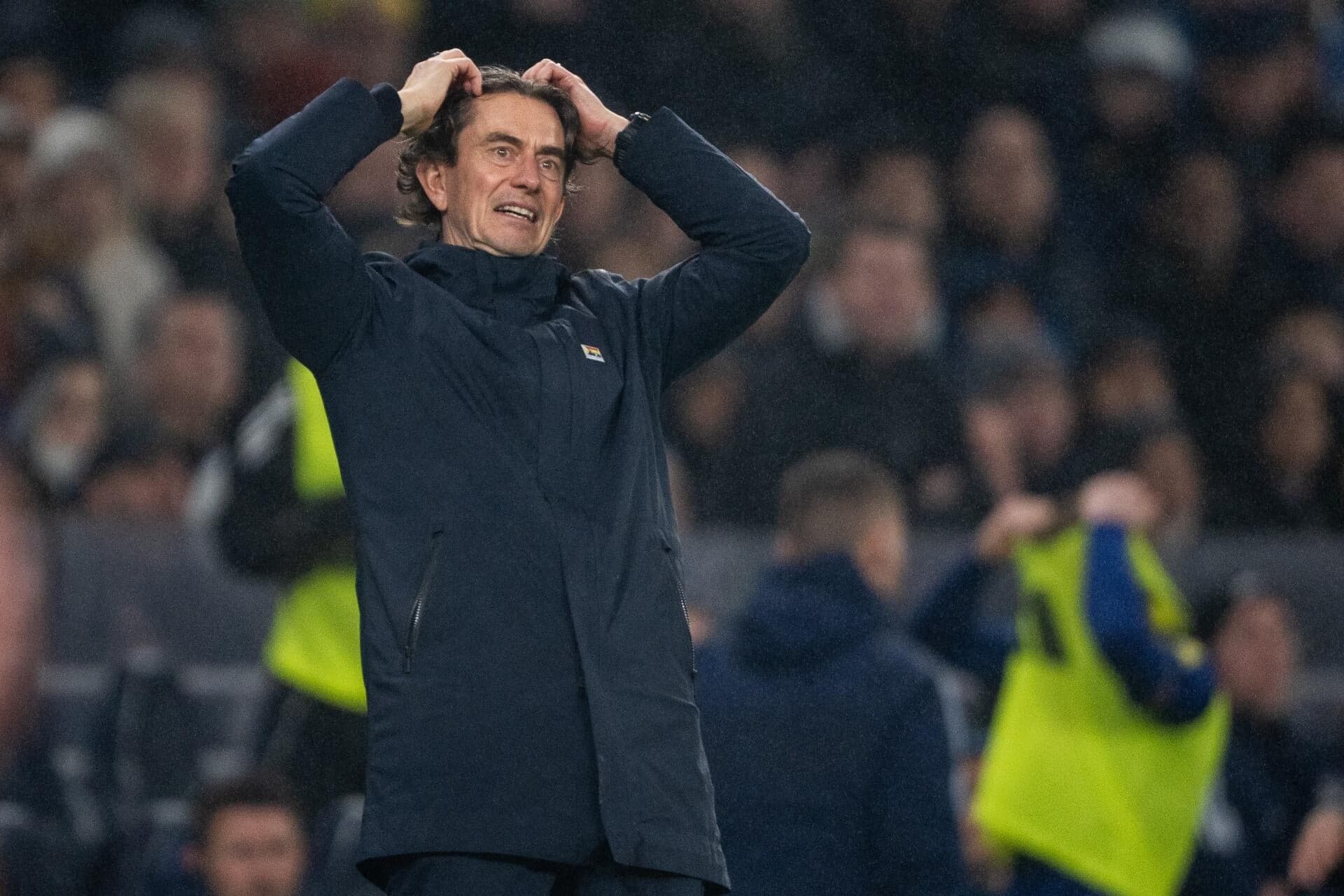
Thomas Frank was meant to bring stability to Spurs, but ended up unpopular with fans and players
Published on Thursday, 12 February 2026 at 6:00 am

When Tottenham Hotspur unveiled Thomas Frank as head coach in June 2025, the brief sounded simple: rebuild a dressing-room culture fractured by a 17th-place league finish and a Europa League triumph that felt like it belonged to two different clubs. Eight months later, the defining soundtrack of his reign is the echo of boos around the £1.2 billion stadium and the chant of “Sacked in the morning” that finally came true after last night’s 2-1 home defeat to Newcastle United.
Frank leaves after 26 Premier League matches, having taken 29 points and recorded only two home league victories. The numbers are stark, yet the mood is starker. Even during the darkest days of Antonio Conte, Nuno Espírito Santo or Ange Postecoglou, Spurs supporters never turned on a manager with the unanimity shown to the 51-year-old Dane. On Tuesday night, resignation blended with anger as fans feared a genuine relegation fight; by Wednesday morning, the club had granted their wish.
The collapse feels remarkable given the early promise. A 3-0 opening-day win over Burnley and a 2-0 triumph at Manchester City offered a template of compact 3-5-2/5-4-1 shapes, set-piece dominance and rapid counters. Mohammed Kudus and João Palhinha, signed in time for the UEFA Super Cup, shone as totems of a new, streetwise Spurs. But the City victory remained their sole scalp against top-tier opposition; Burnley became one of only two league wins at the Tottenham Hotspur Stadium.
From September onward, flaws calcified. A 1-0 home loss to Bournemouth produced an xG of 0.19; subsequent home displays against Wolves, Chelsea and Fulham plumbed even lower depths. Opponents quickly learned to crowd the flanks, safe in the knowledge Spurs would not attempt central progression. Crowds dwindled in belief, then in patience, then in numbers.
The toxicity peaked during back-to-back home defeats to West Ham and Newcastle when the stadium united against the coach. After the Chelsea loss in October, Micky van de Ven and Djed Spence strode past Frank as he beckoned them to applaud supporters; the pair later apologised, but the image of a manager without authority had already gone viral. When sections jeered goalkeeper Guglielmo Vicario during the Fulham defeat, Frank branded them “not true fans”—a comment that shattered any lingering goodwill.
Privately, players had already begun to disengage. One senior source told The Athletic the squad viewed Frank as “a smaller-team coach,” whose long-ball, counter-attacking mandate allowed creative talents “only ten per cent” of their potential. Constant rotation prevented any settled XI; discipline slipped, with Cristian Romero among players arriving late the day after a heated post-Arsenal dressing-down.
Recruitment offered no refuge. Chairman Daniel Levy, sacked in a seismic boardroom coup on 4 September, had sanctioned a £52 million move for Xavi Simons after missing prime No. 10 targets Morgan Gibbs-White and Eberechi Eze. Simons flashed potential but needed time Spurs could not afford. The failure to replace Son Heung-min, combined with long-term injuries to Dejan Kulusevski, James Maddison and Dominic Solanke, left a lopsided squad short of goals and guile.
Away form provided the only respite: 19 of 29 points came on the road, including wins at West Ham, Leeds, Everton and Crystal Palace. Yet even those successes reinforced the sense of a club betraying its heritage. On New Year’s Day, Spurs fans at Brentford sarcastically sang “Boring, boring Tottenham” after a passive 0-0 draw; the travelling support at Arsenal in November recoiled at a ultra-defensive 5-4-1 that resembled a League One side hunting an FA Cup replay.
Sporting director Fabio Paratici concluded after the November defeats that the role was “too big” for Frank; by December’s 3-0 loss at Nottingham Forest, he was already negotiating an exit to Fiorentina. The head coach, meanwhile, warned friends the second half of the campaign would be “painful,” lamenting a squad “low on quality” in key areas.
Frank’s final act could not have been more symbolic: a late collapse against Newcastle, fans streaming for the exits, the chant for his dismissal answered within hours. He departs having failed to lift Spurs above 15th, having never won over a sceptical fanbase, and—crucially—having never convinced his own players that the step up from Brentford to one of England’s most demanding stages was manageable.
In the modern history of Tottenham Hotspur, no permanent manager has left with less credit in the bank. Thomas Frank arrived promising stability; he exits as the most unpopular coach of the contemporary era, a sobering reminder that good ideas in west London do not always translate to the bright lights of N17.
SEO Keywords:
LiverpoolThomas FrankTottenham HotspurSpurs manager sackedfan backlashPremier League relegation battleTottenham home form crisisunpopular head coachDaniel LevyFabio ParaticiBrentford to Spurs2025-26 season
Source: theathleticuk