Thomas Frank pays the price for his ineffective, lifeless approach at Tottenham Hotspur but problems persist
Published on Thursday, 12 February 2026 at 9:48 am
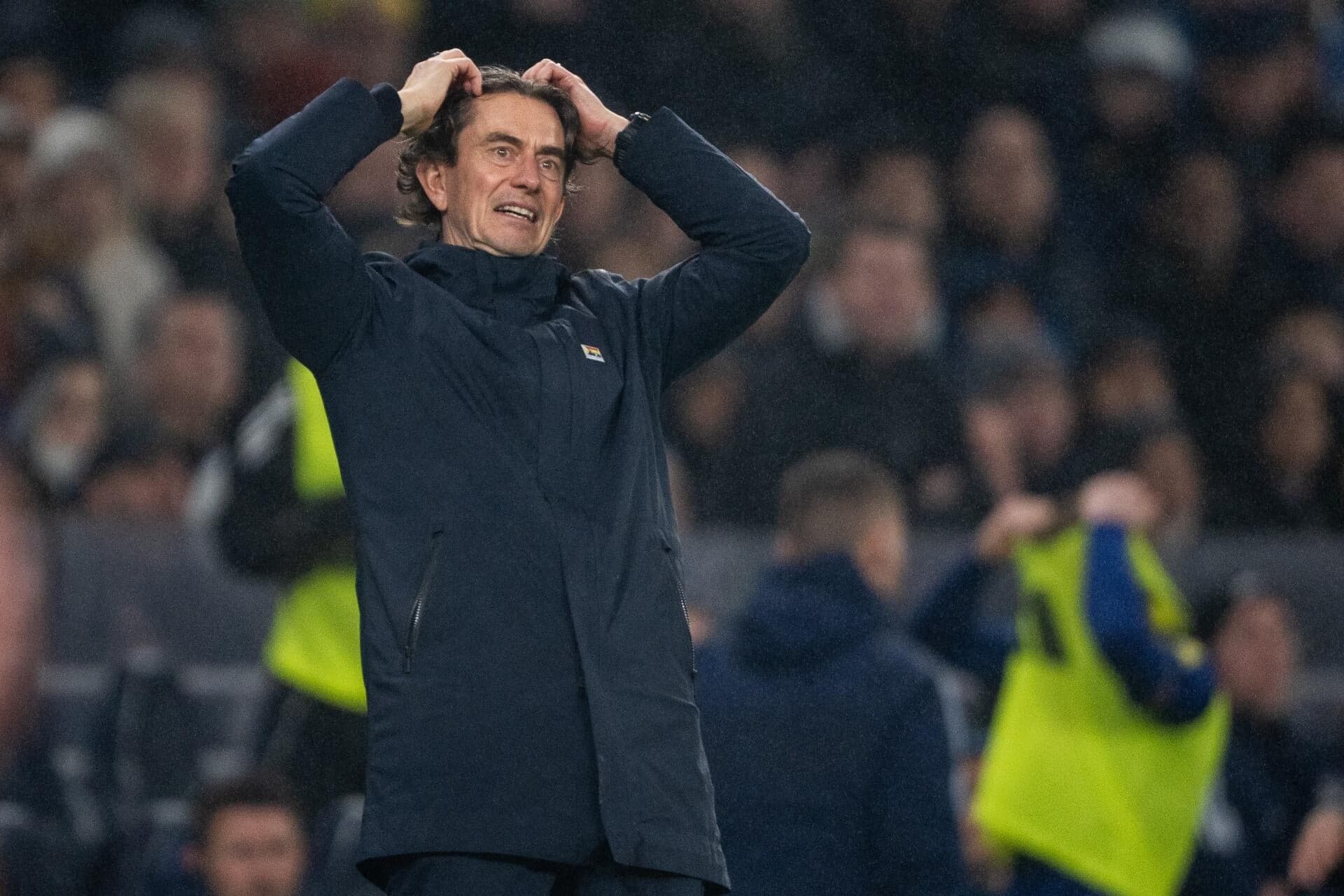
Tottenham Hotspur’s board finally pulled the plug on Thomas Frank’s brief and bruising tenure on Tuesday evening, hours after a 2-1 home defeat to Newcastle United that felt like a microcosm of every failing that had come to define his six months in charge. The Dane departs with Spurs 13th in the Premier League, having offered neither the attacking verve of his predecessor Ange Postecoglou nor the defensive solidity his reputation at Brentford had promised.
Frank’s sacking was not an act of scapegoating; it was an admission that the experiment had run its course. The numbers are stark: an average of 0.1 points per game more than last season’s side, a marginal 0.3-goal improvement in goals against, and expected-goals metrics that still place Tottenham among the league’s most generous back lines. Even when Cristian Romero and Micky van de Ven were simultaneously fit—a luxury Postecoglou rarely enjoyed—Spurs looked disjointed, defenders frequently caught ball-watching and second-guessing the offside trap their coach never quite committed to.
In attack, Frank’s wing-heavy, midfield-bypass blueprint produced early-season smoke and mirrors. A hot finishing streak in August flattered a side that had lost James Maddison to an ACL tear before a competitive ball was kicked, but once regression arrived Tottenham plummeted down the creativity table. The team finished Frank’s reign having mustered three shots and 0.12 expected goals in the 1-0 loss to Chelsea, followed by three shots and 0.07 xG in the 4-1 capitulation against Arsenal. Far from becoming set-piece specialists, Spurs rarely earned enough dead-ball situations to make that supposed strength matter.
The tactical whiplash was perhaps most painful to watch. Every third match, Tottenham would emerge after half-time appearing to remember that goals were permissible, only to retreat into a shell that invited pressure they could not absorb. The decisive goal conceded to Newcastle—Anthony Gordon left free to tee up Jacob Ramsey on the break—came seconds after Spurs had equalised, a perfect snapshot of a side that never learned to manage momentum.
Supporters, once famed for their patience, turned quickly. “Boring, boring Tottenham” rang around the stadium long before the final whistle on Tuesday, a chant that cut deeper than any score line. Frank’s caution was meant to steady a club that finished 17th last season; instead it produced joyless football that neither protected results nor protected his job.
Chairman Daniel Levy’s successor—installed in September after the longtime chief executive’s exit—now inherits a squad short on midfield creators, short on reliable finishers, and short on belief. The new hierarchy must decide whether another quick managerial fix can mask years of squad-building neglect, or whether the rot runs too deep for any coach to cure in a single campaign. Frank leaves having proved that pragmatism without identity is simply paralysis, and that steering a club away from relegation requires more than a low block and a prayer.
Tottenham move on, but the structural issues—the injury crisis that still simmers, the absence of a credible creative midfielder, the lack of a coherent transfer strategy—remain untouched by Tuesday’s dismissal. Whoever takes the reins next must find a way to breathe life back into a team that, under Frank, became a study in how not to balance risk and reward.
SEO Keywords:
Manchester UnitedThomas FrankTottenham HotspurSpurs manager sackedPremier LeagueTottenham problemsCristian RomeroAnge PostecoglouTottenham attackTottenham defensePremier League relegation battleNorth Londontactical analysis
Source: cbssports