
Why Manchester United remembering the Munich Air Disaster matters
Published on Saturday, 7 February 2026 at 5:53 pm
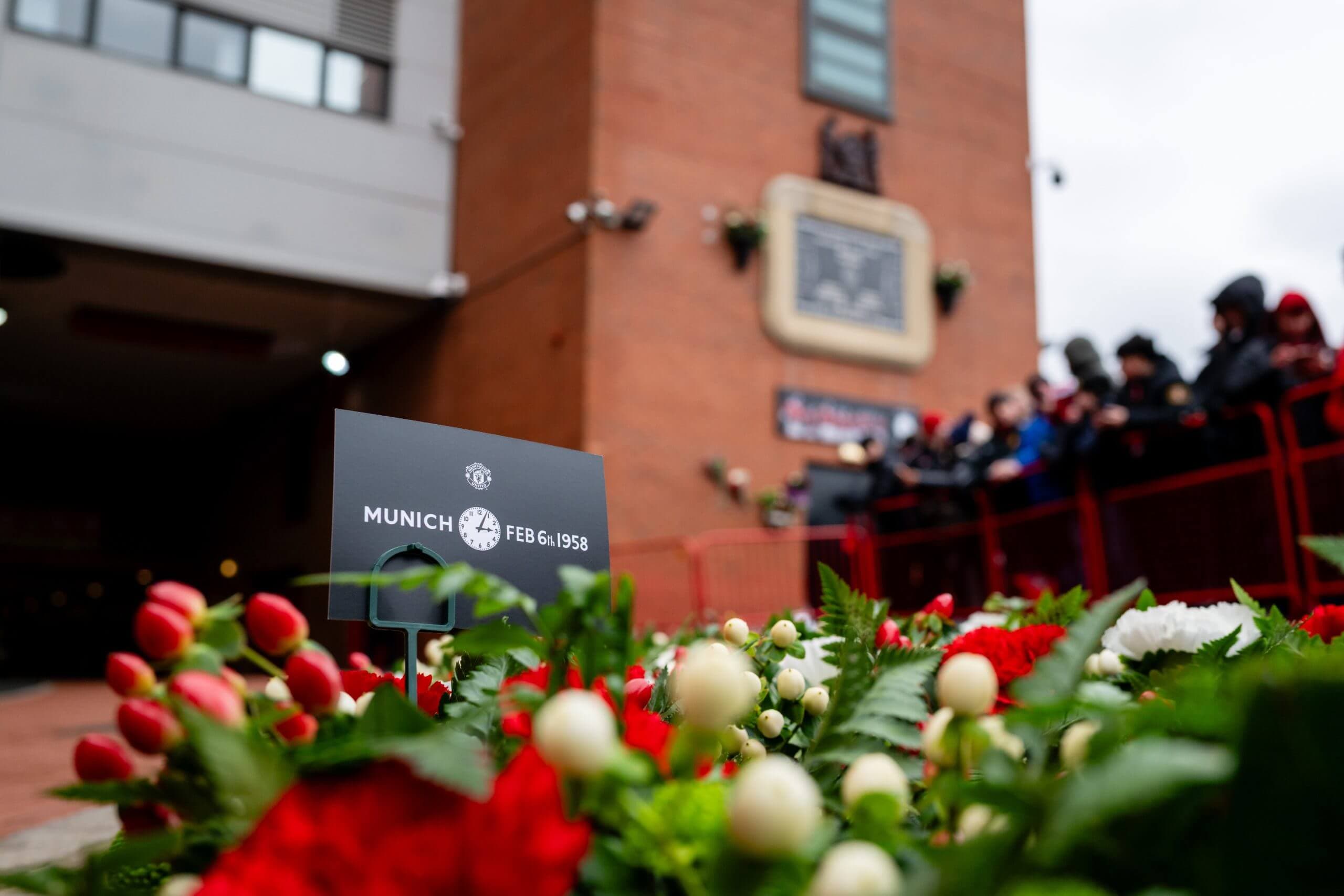
On a rain-slicked Old Trafford forecourt, several thousand supporters stood in silence as Bruno Fernandes and Maya Le Tissier, respective captains of Manchester United’s men’s and women’s teams, laid wreaths beneath the memorial clock. Around them, Michael Carrick and Marc Skinner led their coaching staffs, first-team squad members and junior players, including Klay Rooney. Former stars such as Denis Irwin, Lou Macari, Darren Fletcher and Edwin van der Sar were joined by civic leaders, among them Greater Manchester mayor Andy Burnham. The ceremony, repeated every 6 February, has grown from a gathering of barely a dozen loyalists in the 1990s to a cornerstone of United’s modern identity.
The transformation is striking. Three decades ago, Cliff Butler and a handful of familiar faces would pause for two minutes on the forecourt before dispersing; the club itself marked the date only at the nearest home fixture. Today, up to 3,000 fans attend the stadium service, while between 500 and 1,500 supporters make the annual pilgrimage to Munich’s Manchesterplatz, the small snow-lined square near the site of the 1958 crash that claimed 23 lives, among them the Busby Babes. United now sends former players, lays wreaths, funds billboards reminding visitors that the memorial is alcohol-free, and invites supporters to view artefacts from the lost team managed by Matt Busby.
Critics argue the scale risks turning solemnity into spectacle, pointing to crates of beer carried by a handful of fans last year. Yet organisers, including the Manchester Munich Memorial Foundation, insist the growth reflects a deepening commitment rather than commercialised mourning. The foundation channels donations into community projects in Manchester and Munich, ensuring remembrance translates into tangible good.
Speaking at this year’s commemoration, lifelong fan and journalist Andy Mitten told the crowd that fresh stories still surface 66 years on. He recited an email from 94-year-old Martin Gordon, who as a boy in rural Ireland heard his priest announce the crash and later founded the Manchester United Memorial Cup tournament. Such anecdotes, Mitten argued, illustrate why collective memory must be continually renewed.
In Munich, Bayern icons also champion the tradition. At the 60th anniversary, former player and chairman Karl-Heinz Rummenigge addressed English and German supporters: “Manchester United are more than wins, defeats, titles and lost trophies… the memory of those who were lost is passed on by fans.” He noted that post-war relations between England and Germany were still raw in 1958, yet the compassion shown by Munich residents, doctors and Bayern officials became “an important social and political contribution” to reconciliation.
Local residents maintain the memorial with equal devotion. Michael Stapf, who lives on Manchesterplatz, tends the site year-round, welcoming travelling Reds whose journey has become, in Mitten’s words, “a pilgrimage.” One such traveller, Graham Larkin, asked friends to push his wheelchair around the square shortly before his death; his funeral was held three miles from Old Trafford on the day of this year’s service.
The club’s evolving ritual now includes junior academy players, ensuring teenagers born six decades after the disaster understand its place in United’s narrative of tragedy and triumph. As supporters sang the Flowers of Manchester beneath the stadium’s cantilevered roofs, the message was clear: remembrance is no longer optional; it is woven into the fabric of match-day culture. From a dozen stalwarts to thousands of pilgrims, Manchester United have ensured the Busby Babes are never merely history—they are present, every February, in rain, snow or shine.
SEO Keywords:
Real MadridMunich Air DisasterManchester United remembranceOld Trafford memorialBusby BabesFebruary 6 anniversaryAndy MittenKarl-Heinz RummeniggeManchester Munich Memorial FoundationBruno FernandesMaya Le Tissier
Source: theathleticuk
