
Why are angry Real Madrid fans waving white handkerchiefs?
Published on Wednesday, 11 February 2026 at 5:36 pm
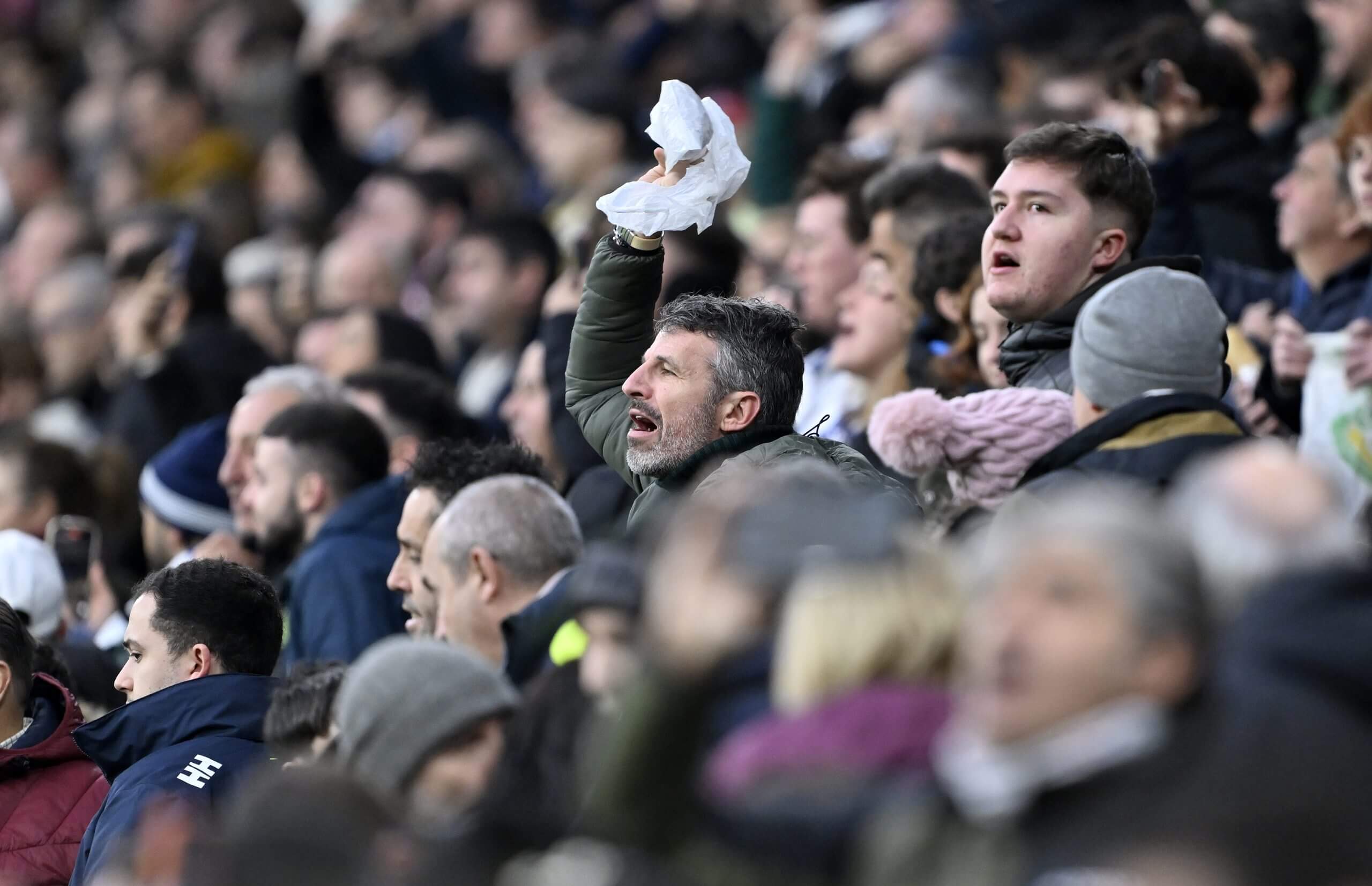
Madrid, Spain – On the night of 17 January, the Santiago Bernabéu resembled a bullring more than a football stadium. Moments after the half-time whistle blew in Real Madrid’s La Liga meeting with Levante, thousands of supporters rose in unison, raised white handkerchiefs above their heads and twirled them furiously. The gesture—known in Spanish as a panolada—turned the gleaming, newly remodelled arena into a rippling sea of white, a visual rebuke aimed at the pitch, the bench and the directors’ box.
The immediate spark was a fortnight of humiliation: a Clásico loss to Barcelona in the Supercopa de España final in Saudi Arabia and a Copa del Rey elimination at second-division Albacete. Yet the fury ran deeper than results. Vinicius Junior, Jude Bellingham and Federico Valverde were met with piercing whistles every time they touched the ball. New coach Álvaro Arbeloa heard jeers. Loudest of all were the chants demanding president Florentino Pérez resign, even as Madrid cruised to a 2-0 victory over relegation-threatened Levante.
Spanish sports historian Ángel Iturriaga traces the ritual to the 18th-century bullring, where a white handkerchief waved in approval could earn a matador the bull’s ear or tail, the highest honours. When football overtook bullfighting as Spain’s mass spectacle in the 1950s, supporters imported the custom. “At first we waved them for a great goal,” Iturriaga says. “But football also turned the panolada into protest—against bad play, against the coach, against the board.”
Alfredo Relaño, former editor of Diario AS, recalls the first Bernabéu panolada he witnessed in November 1964, when Amancio’s slaloming strike against Barcelona drew a white-flag salute. Since then, the gesture has become shorthand for discontent. “Madrid fans are capital-city residents used to the best bulls, the best opera, the best of everything,” Relaño notes. “When they feel honour is missing, they act.”
That sense of guardianship fuelled the recent protest. Many socios believe players undermined previous coach Xabi Alonso while Pérez allowed speculation over his future to fester. “Someone they saw as a good person was publicly tortured,” Relaño says. “The panolada was their reply.”
The unrest is amplified by Pérez’s proposal to open the club to private investment for the first time, threatening the member-owned structure that places Madrid alongside Barcelona, Athletic Club and Osasuna. “There is a feeling ownership is being taken away,” Relaño adds. “The shouts of ‘Florentino Out’ will affect him.”
Panoladas are not unique to Madrid—Barcelona saw them in 2008, and recent weeks have brought similar scenes at San Mamés and Mestalla—but they remain most vivid at the Bernabéu, where supporters view themselves not as passive consumers but as co-authors of the club’s story. “Just like in the bullring, they judge what is offered,” Relaño says. “When honour and dignity are lacking, the white flags appear.”
Whether the protest jolts the team into sustained improvement is uncertain. After the Levante match Madrid thumped Monaco 6-1 in the Champions League, yet a fortnight later they were humbled 4-2 at Benfica and required a stoppage-time Kylian Mbappé penalty to edge nine-man Rayo Vallecano at home, prompting another chorus of whistles and handkerchiefs. “A panolada usually provokes a reaction,” Relaño concludes, “but if the ingredients for a good team aren’t there, it rarely lasts.”
For now, Madrid’s players and president have been warned: the capital’s demanding public will keep their handkerchiefs ready, willing to turn tradition into a weapon whenever the club’s standards slip.
SEO Keywords:
barcelonaReal Madridpanoladawhite handkerchiefsBernabéu protestFlorentino PérezVinicius JuniorJude BellinghamSpanish footballLa Ligaclub ownershipsocio membersÁlvaro Arbeloa
Source: theathleticuk


.jpg.webp%3Fitok%3De-D_iMBw&w=3840&q=75)