They were the worst minutes of my life: Jamie Mitchell on humiliation rituals and why football must do better
Published on Wednesday, 8 April 2026 at 5:30 pm
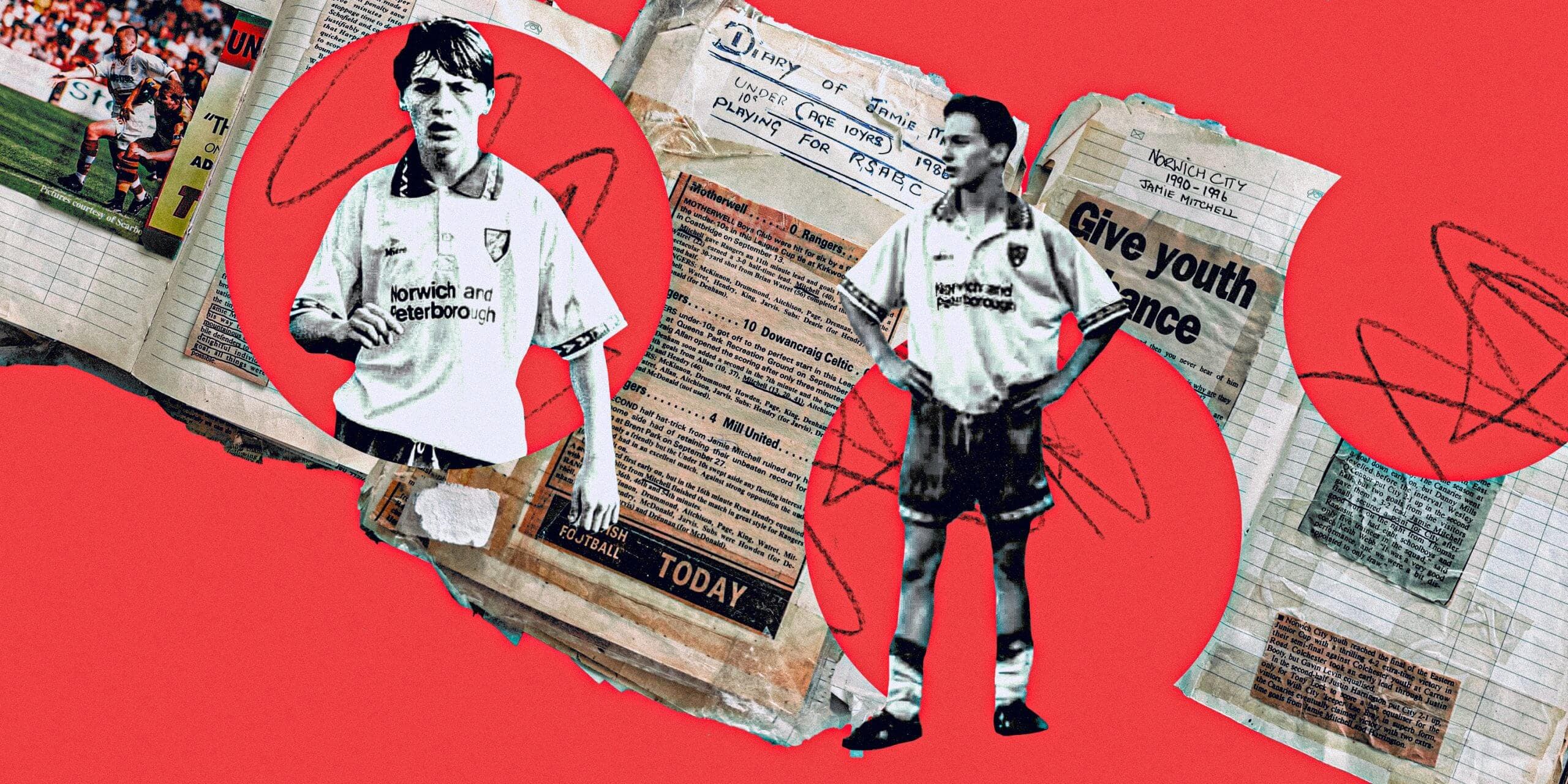
Jamie Mitchell’s scrapbook is a shrine to a career that once glittered. Page after page of yellowing newspaper clippings chart the rise of the Glasgow boy who told Walter Smith he was choosing Norwich City over Rangers, signed an eight-year deal at 14 and went on to make more than 300 senior appearances. Yet the cuttings stop short of the memories that still jolt Mitchell awake at night: the ketchup-smeared Christmas ritual, the naked sprint through a gauntlet of first-team stars, the Polaroid he never asked for and can never erase.
“They were the worst minutes of my life,” Mitchell says, 30 years after the ordeal that shaped everything that followed. “I was 18, hadn’t been through puberty, and had to stand on a treatment table singing Rudolph the Red-Nosed Reindeer while grown men sprayed me with condiments and threw £50 notes. I felt I had no choice—if I refused I’d be running round the pitch naked in the snow. That was the culture. You earned your stripes by being broken.”
Mitchell, now 49, is speaking because he believes the game still fails its most vulnerable. A technically gifted winger, he arrived in Norfolk in 1990 after Norwich’s head of youth, Gordon Bennett, drove to Scotland to court his working-class family, offering a seven-year contract, a guaranteed professional year, a job for his father and a choice of 25 rent-free houses. The 12-year-old who looked Smith in the eye and said “I’m going to be a Canary” never imagined the price would be his sense of self.
Inside the club’s old Trowse training ground, the hierarchy was medieval. Apprentices earned £29 a week, scrubbed boots, cleaned toilets and fetched cash for senior players who flashed wads of £50 notes. Mitchell, 5ft 2in and pre-pubescent, dreaded the communal showers. “I hadn’t matured. I didn’t want to be naked in front of them. I’d wait until the room cleared, then sprint through. I told my dad; the club said I’d grow out of it. No one asked whether a child should be placed in that environment.”
The Christmas ritual escalated the humiliation. First-teamers, coaches and the club photographer crammed into the dressing room as Mitchell and two other apprentices, all stripped, clambered onto the medicine table, sang carols and were pelted with flour, ketchup and ice water. A Polaroid froze the scene forever. “I got into a zone—just get through it, don’t show weakness. Afterwards I ran through the showers, didn’t pick up a single note. I wanted to vanish.”
One apprentice never returned; Mitchell numbed himself for two decades. He avoided nights out, hid in school and computer games, and carried the template into later life: when Norwich released him at 19 for being “too small”, when injuries forced retirement at 29, when he faced a second cliff-edge with a mortgage and no qualifications. “I fell out of love with football. I didn’t want my own son near that world.”
Norwich City say safeguarding is now “at the heart of the academy experience”, citing inspections, staff training and a three-year alumni support programme. Mitchell welcomes the progress but insists the past still matters. “Clubs must recognise the signs earlier. If I’d had somewhere to log my feelings, someone to flag my anxiety, my story could have been different.”
That belief birthed Edge Futures, the initiative Mitchell runs with Dr Clare Daly of the University of Strathclyde. Motherwell are piloting the scheme: digital badges co-designed with employers, a digital scrapbook that doubles as a mental-health diary, and pathways for the 99 per cent of academy kids who are released. “We can’t let another generation define themselves by whether they survive humiliation rituals,” Mitchell says.
Former Norwich team-mate Josh Carus, now a firefighter, backs the campaign. “It was designed to make boys feel small. Mitch had more talent than most first-teamers, yet he felt worthless. I never pushed my son into football—too many broken along the way.”
Mitchell’s scrapbook will keep growing: Edge Futures badges, testimonials, maybe a new generation of players who measure success not by how much they endure, but by how supported they feel. “I want the game to look at that Polaroid and ask why we ever thought this was acceptable,” he says. “Football must do better. Boys like me deserve better.”
SEO Keywords:
Manchester UnitedKeywords: Jamie MitchellNorwich Cityfootball academieshumiliation ritualsyouth player welfareEdge Futuressafeguarding in sportPremier League apprenticeshipmental health footballacademy release supportplayer carefootball culture
Source: theathleticuk