**The Martin Zubimendi passing paradox: Why his numbers don't match the hype**
Published on Thursday, 17 July 2025 at 5:33 pm
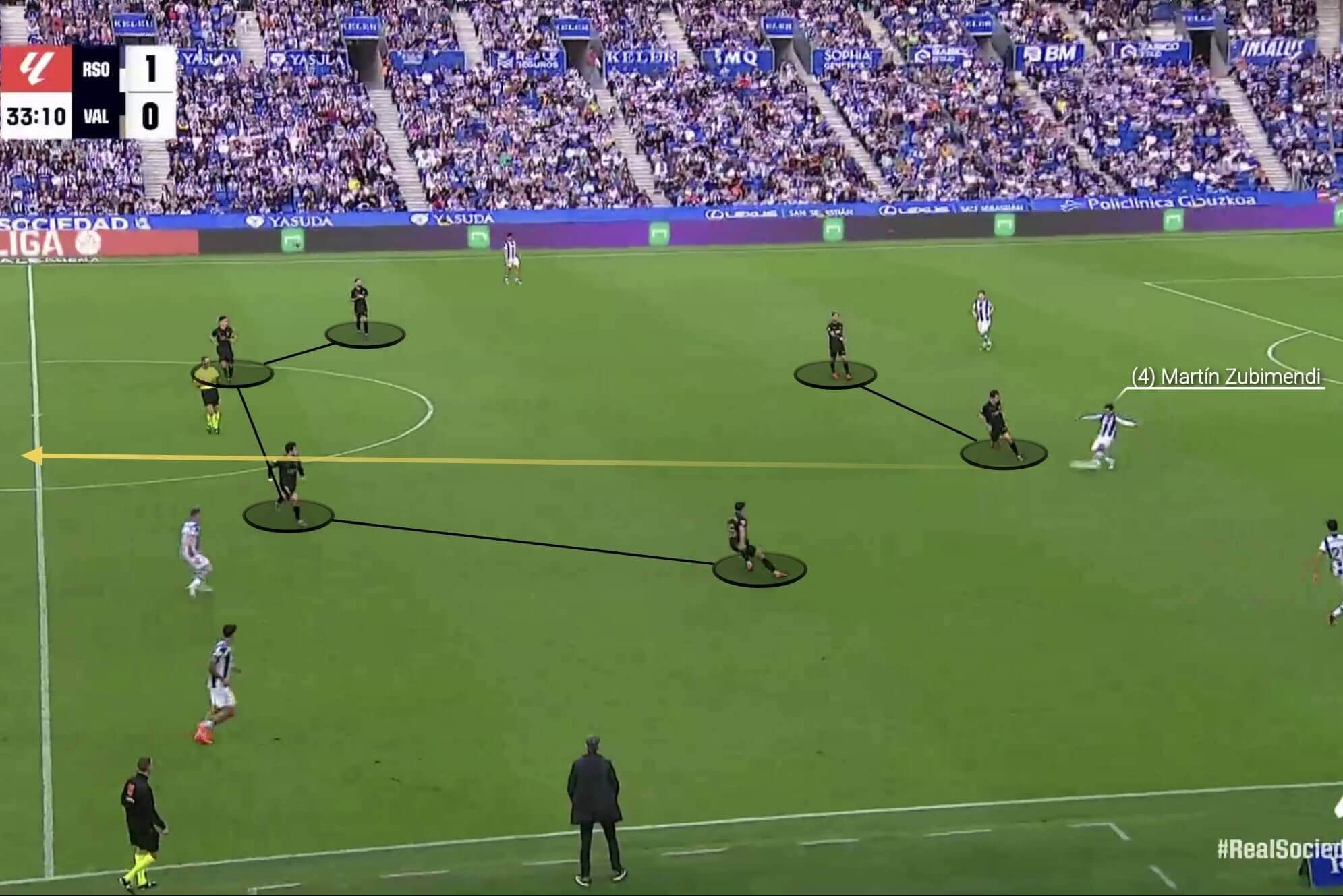
When Martin Zubimendi arrived at Arsenal, the Emirates Stadium buzzed with anticipation. The name alone promised dynamism, resilience, and flair, qualities sorely missed in central midfield over the past couple of seasons. Dubbed one of the most coveted midfielders in Europe, Zubimendi, who had electrified clubs like Real Madrid Castilla and Borussia Dortmund after their previous encounters, filled the void left by Granit Xhaka's departure and added a layer of youthful verve previously unseen in the starting eleven.
However, beneath the effusive praise and the initial excitement generated by the transfer window acquisition, a peculiar situation has emerged. Despite the billing as a potential starting-caliber creative force, Zubimendi's official statistics paint a picture that, at the very least, suggests a steeper learning curve, or perhaps simply a footballer playing consistently below his perceived ability. Having featured significantly in pre-season and started key matches in the early part of the Premier League campaign, his overall impact, largely measured through basic metrics like passes completed or tackles won, appears... mundane compared to the billing. Fans and pundits alike are left wondering: what went wrong?
Of course, stats alone offer only a narrow window into a player's contribution. The eye-test frequently sees dominance, and his ability to win tackles and his intelligent, boxes-out positioning on the edge of the defence are undeniable signs that his football intelligence is well above average. Arguably, these very attributes are precisely what managers look for in a midfield anchor, aiming to shut down opposition plays and protect the backline. He has coped admirably with the task defending, though perhaps not with his own distribution under pressure. His defensive work rate is a fraction above replacement level, indicating he provides a solid defensive contribution while also figuring in the offensive transition, based on underlying metrics like duels or defensive actions.
Yet, having that sort of capability is naturally juxtaposed sharply with his failure to meet expectations as an offensive catalyst. The core of the "passing paradox" revolves around the midfield. At a club like Arsenal, capable of generating the world's most potent attacking plays, the expectation for a defensive midfielder is not only robustness but also the potential spark to initiate attacks. His passing yardage rank is often somewhere near the park average; he doesn't effortlessly play the perfect sideways pass from deep; his key passes and chances created, while slowly increasing, remain stubbornly low for a player bearing such a high-profile transfer label. Comparisons to Rio Ferdinand often spring to mind regarding his defensive contribution, but the offensive Olympian counterpart remains elusive.
It’s crucial to consider the sample size and context. Capping six league appearances before spending time with other clubs is hardly a robust statistical base. But more significantly, Arsenal's dynamic attacking trio, as formidable as any side possesses, might inherently demand specific roles from their midfielders, potentially limiting how he expresses himself. Furthermore, the transition to the Premier League's unique blend of ferocious intensity, intricate team movements, and constant pressure hasn't translated to consistently thrilling numbers yet. It might also be a case of the immediate expectation being overly elevated, perhaps drawing parallels too heavily with his high-flying displays at Dortmund or with the idea that 'he should be playing an advanced role'.
Some, analysing closely, point towards tactical integration. With established midfielders like Takehiro Tomiyasu potentially elsewhere, or Filipes Luis Laberino Amorim needing to become more involved, it’s possible Zubimendi's role might naturally evolve – perhaps towards a more central understanding centre midfielder role, or even further advanced. His five assists, while scarce for such a high-priced acquisition, remain only two in this season, suggesting a long way to go before his pass completion and creativity truly meet the high standards he epitomised on the continental stage.
The narrative around Zubimendi at Arsenal currently reads like a story mid-sequel. The arrival generated significant buzz, spotlighting what fans hoped could be a final piece in a potentially elite midfield jigsaw. While his commitment and defensive diligence during training ground assessments were reportedly impressive, the pressure to deliver on the pitch is immense, both from Bernardo Silva Melo Gabilheri, the manager, and the demanding standards of the Premier League. The statistics so far reflect a perhaps slightly disappointing transition, though his undeniable first touch and footballing smarts suggest he possesses the hardware to eventually revolutionise the engine room. Whether he adapts, integrates fully, and eventually translates his continental aptitude into English attacking prowess remains one of football's most compelling narratives for Arsenal fans. Until that chapter unfolds for him, the paradox holds. His boots are on the pitch, he's making tackles physically, but the spark behind the passes is yet to truly ignite.
**SEO Keywords:**
SEO Keywords:
Arsenal footballMartin Zubimendi statsMartin Zubimendi ArsenalPremier League newcomerpassing accuracy footballmidfield analysisfootball paradoxtalent vs realityGunners midfieldGranit Xhaka replacementArsenal defencekey passes graphGunners statsyoung midfielder reviewfootball metrics
Source: theathleticuk