Ligue 1 was, for a long time, a farmer's league – but urbanisation is behind France's increased success
Published on Wednesday, 11 March 2026 at 5:06 pm
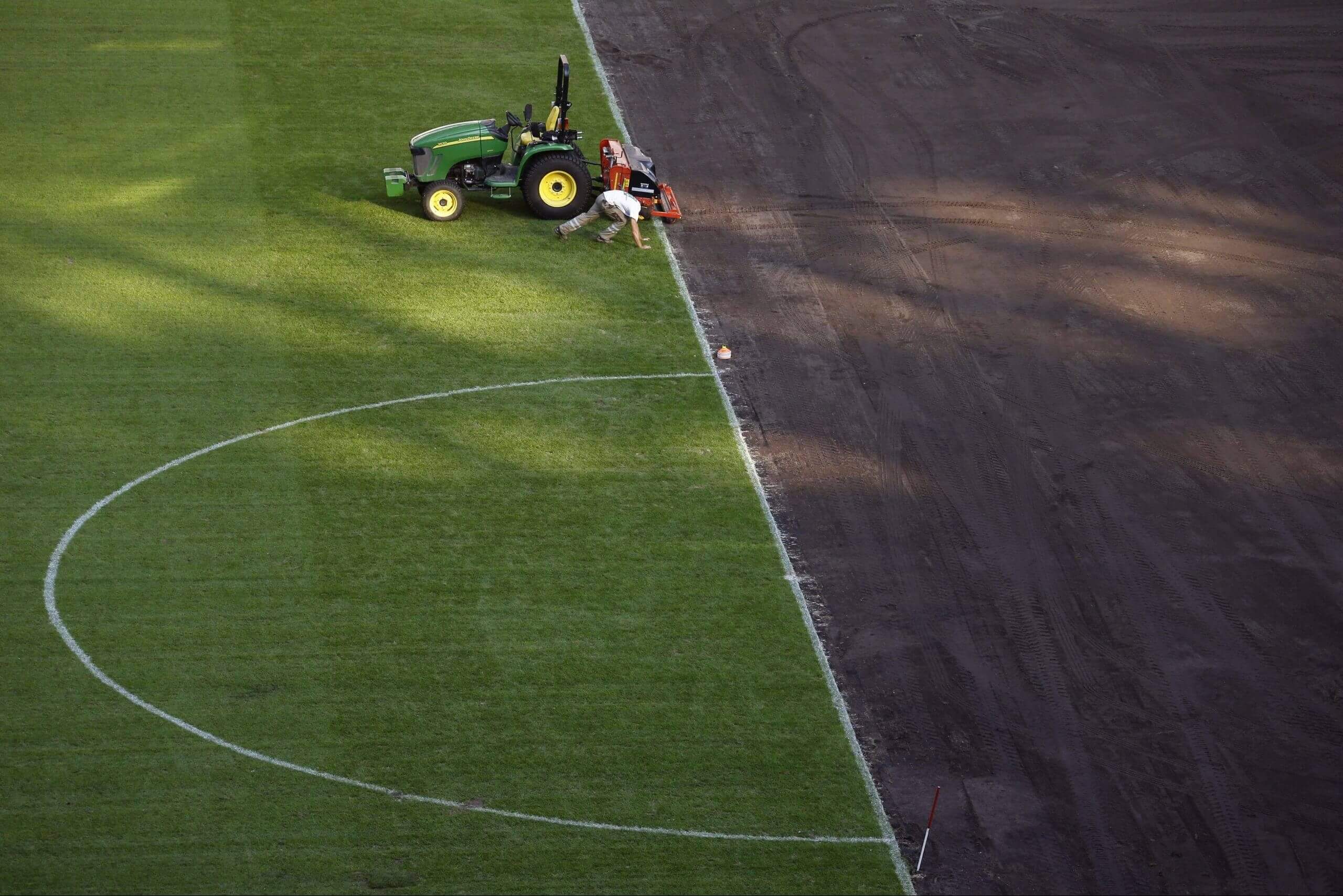
For decades the sneering label “farmer’s league” has clung to Ligue 1, a shorthand dismissal of French football’s supposed rustic inferiority. The joke reached its viral zenith in August 2020 when Kylian Mbappé himself, then a PSG striker, tweeted “FARMERS LEAGUE” beside a clown emoji after Lyon stunned Manchester City in the Champions League quarter-finals. Mbappé’s sarcasm, however, underscored a deeper truth: France’s clubs were late arrivals to Europe’s top table because the country itself remained stubbornly rural long after its neighbours had urbanised.
The numbers are stark. In 1960 only 62 % of French citizens lived in urban areas, against 79 % in England. Ligue 1’s average crowd that season hovered around 8 500, while England’s First Division pulled in roughly 25 000. French football’s championship was still an amateur knockout affair when the Tour de France was already knitting together the nation’s cities by bicycle. Stadiums doubled as velodromes; clubs carried civic names like Stade de Reims, Stade Rennais, Stade Malherbe. Cycling, not football, was the national passion, because pedals suited a dispersed, village-based population whose rail lines lagged behind England’s and whose Saturdays were not freed by factory half-days.
Industrialisation arrived late and unevenly. Political upheaval and nineteenth-century wars delayed the mill-town money that turbo-charged clubs in northern England and the Ruhr. Without dense cities, France lacked the critical mass of working-class supporters, gate receipts and street-corner academies that forged urban talent pools. Instead, the top flight became a mosaic of small-town sides: Sedan, Limoges, Troyes, Auxerre. When Auxerre captured the league-and-cup double in 1996, the achievement felt romantic precisely because the town of 35 000 felt implausible as a European football capital.
Yet the countryside emptied. Since 1960 France’s rural population has halved; megacities have swollen. Paris and its banlieues—those sprawling, multicultural suburbs—have become the world’s most fertile conveyor belt of elite footballers. Mbappé, raised in Bondy, is the emblem: a product of the estate cage and the municipal academy, not the village square. Scan the birthplaces of the 2022 World Cup-final squad and a glowing cluster around the capital stares back, while vast tracts of “la France profonde” send no one.
Urbanisation has supplied the density, diversity and daily competition that street-football cultures thrive upon. Academies from INF Clairefontaine to the regional centres have simply harvested what cities now grow naturally. Simultaneously, ownership models have evolved: Peugeot’s long stewardship of Sochaux, Claude Bez’s marketing savvy at Bordeaux, Bernard Tapie’s combustible ambition at Marseille, and finally Qatar Sports Investments’ bottomless purse at PSG. Cash injections once needed to compensate for thin crowds are now strategic turbo-charges atop already solid demographic foundations.
The payoff is visible. PSG’s 5-0 demolition of Inter in last season’s Champions League final delivered only France’s second European Cup, 31 years after Marseille’s inaugural triumph, yet it arrived amid sustained continental relevance. Les Parisiens are the reigning European champions, while the national team has reached three of the last seven World Cup finals, winning two. France’s under-20 pipeline keeps replenishing Europe’s top clubs.
Tonight’s round-of-16 first leg between Chelsea and PSG in the French capital illustrates the shift. The clubs have met ten times since 2004, none before: both were afterthoughts for most of the twentieth century, but urban market forces have turned them into regular adversaries. London spreads its allegiances across half-a-dozen top-flight teams; Paris, until recently, channelled its 13 million metropolitan inhabitants through PSG alone. The concentration is finally paying dividends.
So the “farmer’s league” barb, once rooted in demographic reality, is now an anachronism. France’s fields have given way to five-a-side cages, its villages to vertical estates, its cyclists to footballers. Great clubs and players no longer emerge from the furrows but from the concrete. The harvest, at last, is continental silver.
SEO Keywords:
LiverpoolLigue 1urbanisationFrance footballPSGChampions Leaguefarmer’s leagueFrench national teamMbappeEuropean championsurban footballrural to urban shiftFrench academies
Source: theathleticuk