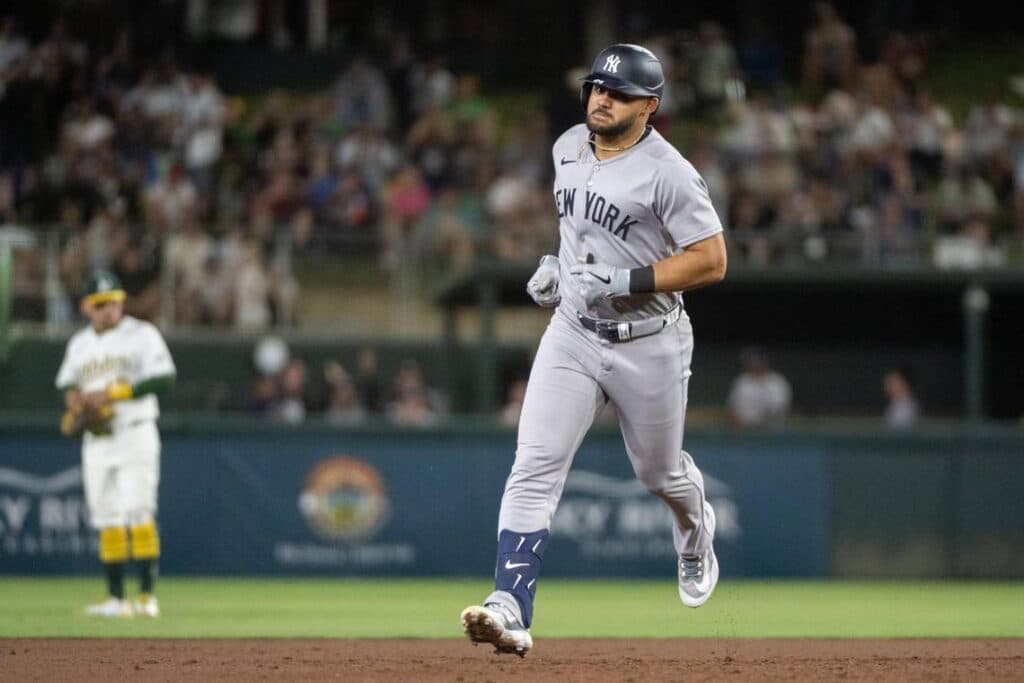
Ja'Marr Chase and Uniqueness: The 2028 Olympic Dream at America's Got Talent?
Published on Thursday, 10 July 2025 at 11:31 pm

Los Angeles might stage the next Summer Olympics, but America’s Got Talent already airs weekly on NBC. That seems almost comically incongruous, but it highlights the sheer unpredictability celebrated by reality competitions and increasingly apparent throughout elite spectator sports in the contemporary era. Fast forward three years, however, and that randomness will have a very specific, high-stakes application in international competition. Following his remarkable recovery from Achilles tendon reconstruction surgery (a procedure many veteran professionals might have chosen to delay indefinitely, let alone face Olympic-level competition within three seasons), Ja'Marr Chase has emerged not merely as a player aiming to reclaim AFC supremacy or rejoin the Bengals at the second-string receiver depth, but as a potential candidate for Team USA’s ambitious bid to bring flag football to the global stage.
The path forged by the NFL's return to international competition – flag football’s debut at the 2028 Summer Olympics in Los Angeles – necessitates considerable innovation both on and off the field. Historically, Olympic football (soccer) and basketball dominate the roster conversations for nations like the United States, whose athletic prowess is globally unmatched. The introduction of flag football as a medal sport requires not just top-tier athletes but also creative thinking regarding field dimensions, game rules, and interpretative freedom within established boundaries. It represents a deliberate experiment, seeking maximum viewer engagement and market viability within an Olympic framework that has seen battle-tested veterans dominate the court or pitch. The selection process, therefore, will likely transcend simple comparisons of speed and vertical leap; it must identify athletes embodying the unique combination required for this stage-specific game. Ja'Marr Chase, renowned for his electrifying speed (American-record holder in the 100m) and leaping ability, certainly possesses the raw physical tools.
His inclusion in the conversation, however, signifies more than just recognizing these athletic attributes. The flag football ruleset, particularly its adaptation into an eight-second play clock significantly faster than the standard NFL game clock, demands exceptional anticipation, quicker decision-making cycles, and often a more direct ball-handling approach than the pocket-to-post passing oriented towards NFL Sundays. Chase's route-running acumen is legendary. Should flag football see the development of intricate passing concepts or primarily focus on a showcase of one-on-one contested catches in a shorter, faster format? The International Olympic Committee (IOC) recently announced plans to finalize the specific ruleset, and this ambiguity itself underscores the novelty being embraced. Furthermore, a granted qualification window for flag football begins in 2025, meaning subsequent years will crucially shape the emerging international standard. It’s a project requiring immediate success and viewer buy-in to secure the sport's future Olympic status.
The discussion 'the only' Ja'Marr Chase flag position (the sort of hyperbole often applying to remarkable athletic recoveries from major surgery) likely refers to the ruleset innovation dominating the narrative surrounding Olympic flag football. Unlike the traditional position assignments – split end, slot receiver, or running back – the flag football context creates a unique profile for potential multi-sport athletes. Point-forward or specialist slot receiver? The positioning itself might evolve. More critical, though, is the thematic uniqueness. Football, as a coded word often used to denote 'soccer' internationally (especially regarding US participation in the modern Olympic Games), now literally exists *as* flag football at the 2028 Games. Ja'Marr Chase's potential inclusion isn't framed merely as 'an American football star trying his hand'; it's tied directly, conversationally, to this historic *demise* of men's professional gridiron football as an Olympic team event and the birth of a new, distinct iteration under the four rings. It’s flag football, pure and simple.
Speculation surrounding Chase's potential inclusion seems driven by his astonishing recovery progress and his undeniable potential to become an outstanding flag football talent. While his single-minded pursuit of NFL glory is well-documented, the journey downhill (literally) to Sochi (eventually missing most of the 2022 season post-surgery) and subsequent return to elite prep work reveal a fighter relishing the physical demands and intrigue of pushing boundaries, not just avoiding the Injured Reserve list. The long road from Los Angeles – from 2026 onwards, qualification windows need navigating, training camps structured, and a new wave of international stars identified – seems an ideal stage for competitive fire. The stage is set within three years; the conversation, perhaps prematurely, is already bold enough to name players affiliated with the century-delayed dream of competitive American football.
SEO Keywords:
flag footballunique positionJa'Marr ChaseOlympic trialsLos Angeles Olympicsflag football team2028 GamesNFL recoveryUS Olympic CommitteeOlympic qualificationeight-second clock
Source: yardbarker