Football grounds designed for women's teams aren't a trend, they're a necessity
Published on Friday, 6 March 2026 at 11:06 pm
When Juventus packed 39,027 fans into the Allianz Stadium in November 2019 and Atlético Madrid squeezed 60,739 into the Wanda Metropolitano weeks later, the photographs looked like watershed moments. They were, instead, optical illusions: one-off gestures that disguised a structural problem rather than solved it.
Four years on, the Women's Super League (WSL) is still searching for places its teams can genuinely call home. Forty WSL fixtures were staged in men's main grounds last season, up from only eight in 2019-20, yet the majority of the league's 12 clubs remain tenants in stadiums conceived, built and branded for someone else.
Brighton Women train at the same complex as the men's squad but on match-days trundle up the M23 to Crawley Town's 5,996-seat People's Pension Stadium, 20 miles from the Amex the club markets as its spiritual heart. Manchester United Women's side share Leigh Sports Village with rugby-league outfit Leigh Leopards; Liverpool play at the Halton Stadium in Widnes; Spurs, West Ham and London City Lionesses bed down with Leyton Orient, Dagenham & Redbridge and Bromley respectively. The inconvenience is baked in: fixture clashes with concerts, inadequate toilet-to-urinal ratios, no sanitary-bin provision, no private space for breast-feeding, no pram storage, catering built for beer-and-pie culture rather than family palettes.
"Infrastructure is going to change this game," Brighton chief executive Paul Barber told a recent summit hosted by law firm Boodle Hatfield and planning consultancies Quod and Town Legal. "Half the world's population is female, but a relatively small percentage consume football versus the male population. What a market opportunity we have."
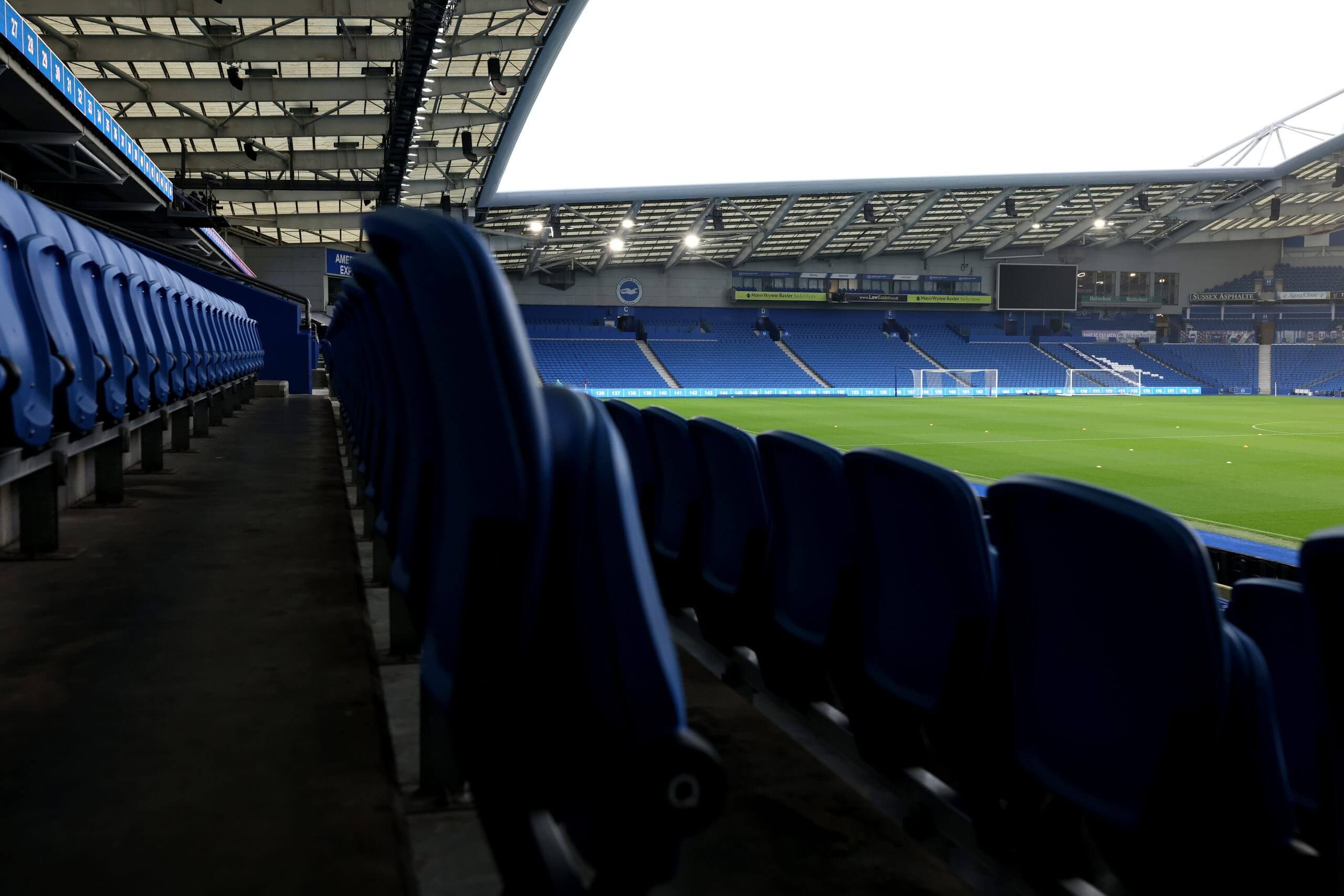
Brighton intend to seize it. In October 2023 the local council approved plans for a purpose-built, 10,000-seat stadium at the men's training complex in Lancing, targeted for the 2027-28 campaign. Barber argues a sold-out mid-size bowl will "look and sound a hell of a lot better" than a three-quarters-empty 32,000-seat Amex currently dotted with 20,000 empty seats when the women's side play there. "Cameras pan around 25,000 empty seats and it diminishes the product," he said. "You actually do quite a lot of harm."
The Amex, like most Premier League citadels, was engineered for a different customer: open showers, urinals, seating geometry based on male body dimensions, strength equipment calibrated for 6ft 4in athletes. When the women's squad filters back into the gym after the men's session, machines are inevitably set for someone twice their size. "Very quickly you realise you're not treating the female athletes with respect," Barber admitted.
Brighton's smaller arena is expected to become the league's second ground designed specifically for a women's team, following Kansas City Current's CPKC Stadium in the National Women's Soccer League, which includes sensory rooms, on-site breast-feeding facilities and family zones. Angel City FC, sharing Banc of California Stadium with MLS's Los Angeles FC, funnels supporters through a Nike merchandising tunnel and offers touch-of-a-button in-seat catering. WSL chair Dawn Airey believes such touches explain why NWSL teams can generate higher commercial-to-broadcast revenue splits than their English counterparts.
London City Lionesses illustrate the demographic nuance: families attend matches at Bromley's Hayes Lane, but the digital core is 18-34-year-old women who treat football as one stop on a wider social itinerary—brunch, match, drinks. Yet the club cannot stage bottomless brunch at Hayes Lane and will trial its first at Millwall's Den when hosting Chelsea later this month. "We're held back in being able to deliver that experience," managing director Sarah Batters said. "To keep growing we need to innovate."
Innovation costs money. Purpose-built stadia can run into the hundreds of millions, yet women's football accounted for only $800 million of the $2.3 trillion annual global sports economy cited at January's World Economic Forum. Investors must therefore commit long before revenues catch up, a dynamic familiar across the women's game.
Some WSL clubs are waiting for a first-mover; others are exploring multi-use models that could split costs with rugby or netball franchises. Yet the consensus emerging from this month's summit was that bespoke venues are moving from speculative to strategic. Brighton hope to open their doors in three years; if attendances swell, Barber envisages graduating to the Amex armed with proof of concept rather than dependence.
Until then, the Amex experience will remain instructive: when Brighton Women play there gates rise, yet 10,000 fans scattered across a 32,000-seat bowl feels underwhelming on television and deflates potential sponsors. A 10,000-seat venue packed to the rafters every fortnight transmits a different message—that the product is elite, the atmosphere electric and the investment case watertight.
As Airey summarised: "You only build if you really think there's a commercial reason for supporting your women's team. It's not just corporate social responsibility. It makes commercial business sense."
In English women's football, the next frontier is not simply filling the biggest ground available; it is owning one that fits.
SEO Keywords:
FC Barcelonawomen's football stadiumsWSL infrastructureBrighton Women new groundwomen's football investmentwomen's football attendancewomen's football facilitieswomen's football fan experiencePaul Barber BrightonDawn Airey WSLpurpose-built women's stadium
Source: theathleticuk