Charles Bediako Denied Injunction Against NCAA Eligibility Rules as Alabama Return Ends After Five Games
Published on Tuesday, 10 February 2026 at 12:24 pm
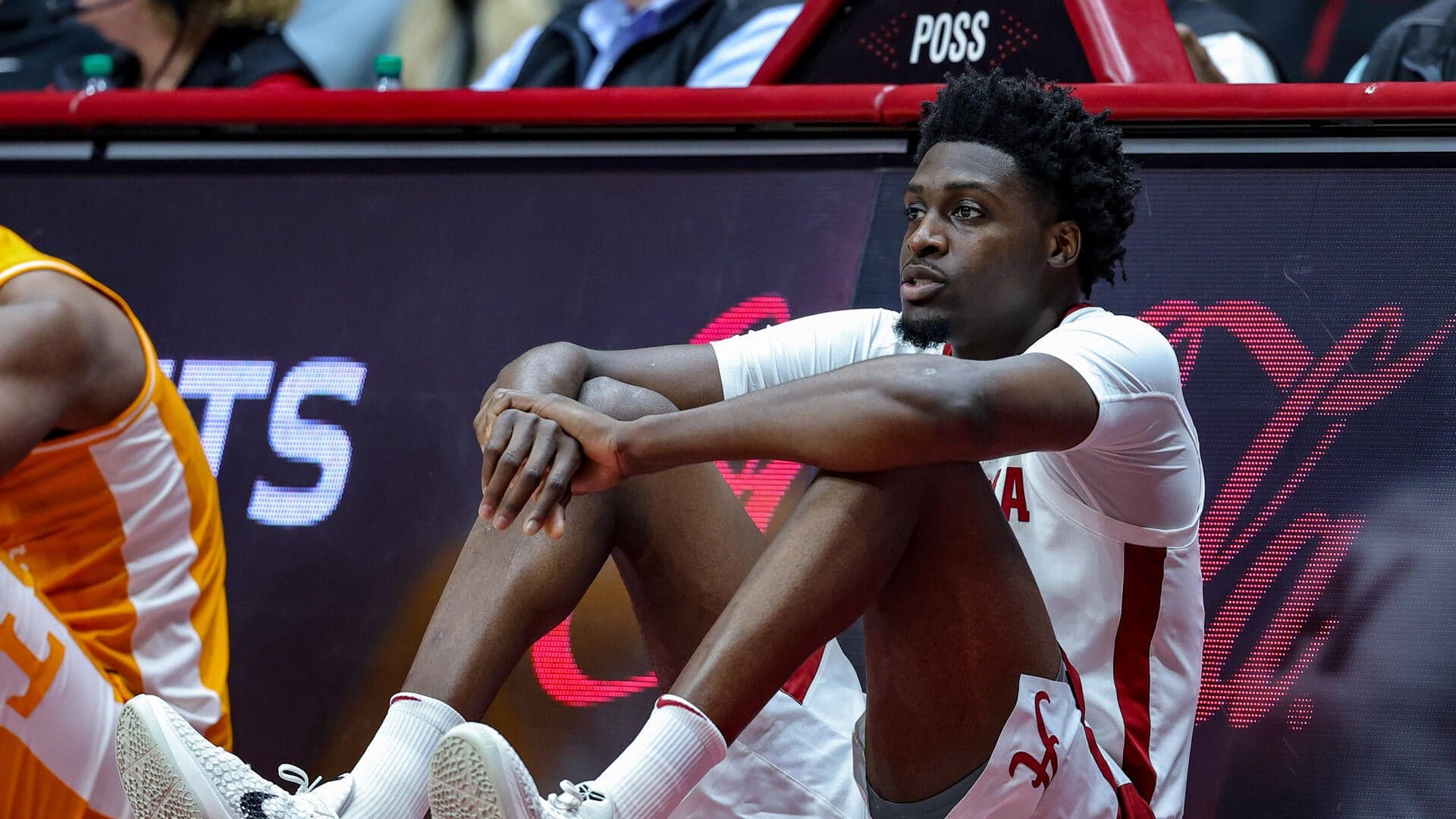
Tuscaloosa, Ala. – Charles Bediako’s unprecedented bid to rejoin college basketball after a professional stint has hit a legal wall, as a federal judge on Monday denied the Alabama center’s request for a preliminary injunction against NCAA eligibility rules. The ruling ends Bediako’s second act in crimson and white after only five games and could reverberate through courtrooms from Knoxville to Oxford.
Bediako, a 7-foot rim protector who last wore an Alabama uniform in the 2023 NCAA Tournament, became the first former pro to suit up for a Division I program in January when he secured a temporary restraining order against the NCAA. That emergency measure allowed him to average 10.0 points, 4.6 rebounds and 1.4 blocks while Alabama navigated the heart of its SEC slate. Friday’s injunction hearing, however, proved the final hurdle the senior could not clear.
Judge Daniel Pruet, who took the weekend to weigh arguments, sided with the NCAA late Monday, dissolving the temporary order and reinforcing the association’s four-year eligibility clock. The decision means Bediako is immediately ineligible and leaves Alabama without the experienced big man it re-inserted into the lineup just three weeks ago.
“Common sense won a round today,” NCAA president Charlie Baker said in a statement released moments after the ruling. “The court saw this for what it is: an attempt by professionals to pivot back to college and crowd out the next generation of students. College sports are for students, not for people who already walked away to go pro and now want to hit the ‘undo’ button at the expense of a teenager’s dream.”
Baker, who has lobbied Capitol Hill for a federal standard governing athlete compensation and eligibility, added that “one win doesn’t fix the national mess of state laws” and urged Congress to craft uniform legislation.
The case drew high-profile opposition beyond Indianapolis. SEC commissioner Greg Sankey submitted an affidavit last week urging the court to uphold “eligibility rules which are essential to the integrity of college sports, to the educational mission they serve, and to the opportunities they provide for current and future student-athletes.”
University of Alabama officials voiced disappointment while highlighting what they view as inconsistent NCAA enforcement. “The NCAA has granted eligibility to over 100 current men’s basketball players with prior professional experience in the G League or overseas,” the school said in a statement. “Granting eligibility to some former professionals, and not to others, is what creates the havoc we are currently in.”
The association routinely waives pro-experience restrictions for athletes who have never previously enrolled in an American college, a carve-out that has benefited former G League Ignite players and international transfers. Bediako’s status as a former Alabama student-athlete who declared for the NBA Draft and signed a pro contract placed him outside that policy.
Legal twists punctuated the proceedings since early January: an extension of the initial restraining order, the recusal of a district judge who is a documented Alabama booster, and a postponed injunction hearing that kept Bediako in uniform longer than many within the NCAA expected.
Monday’s decision arrives as at least two other high-profile athletes seek similar relief. Tennessee quarterback Joey Aguilar and Ole Miss quarterback Trinidad Chambliss have asked state courts to grant an extra season, arguing that junior-college years should not count against the NCAA’s four-year clock. Judges in those cases now have fresh precedent, though the factual distinctions—particularly the lack of prior professional contracts—could yield different outcomes.
For Alabama, the ruling forces an abrupt recalibration. Bediako logged 20 minutes per game during his brief return, anchoring a frontcourt that has struggled with consistency. His exit strips the Tide of interior depth as February’s schedule intensifies and NCAA Tournament seeding looms.
For Bediako, the path forward is murky. Having already played under an NBA contract and appeared in the G League, he cannot return to college competition unless the NCAA revises its bylaws or Congress intervenes—scenarios that appear remote in the current legislative climate.
The case, once viewed as a potential watershed for name, image and likeness rights, instead reinforces the association’s authority to police its eligibility windows. And for the growing cadre of athletes testing those boundaries in courthouses across the South, Monday’s decision delivers a stark reminder: the clock rarely stops, even when the courts get involved.
SEO Keywords:
footballCharles BediakoNCAA eligibilityAlabama basketballpreliminary injunctioncollege sports lawsuitNCAA four-year ruleprofessional athlete college returnG League IgniteSEC basketballDaniel Pruet rulingCharlie Baker statementGreg Sankey affidavit
Source: cbssports