
‘Stop Saying That’—Toni Kroos Opens Up on Real Madrid’s Recent Struggles
Published on Monday, 21 July 2025 at 5:33 am
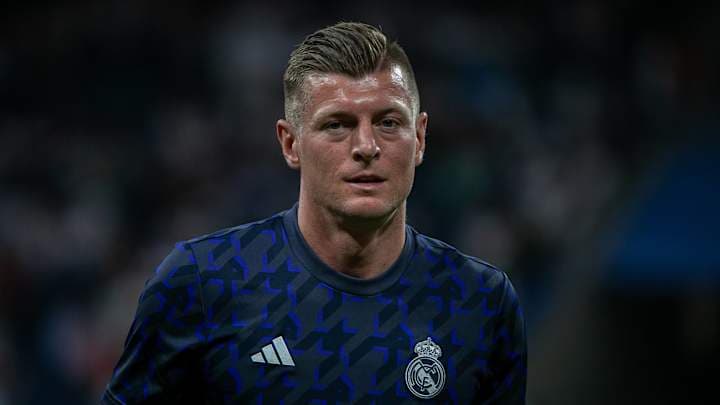
The echoes of a disappointing 2024-25 campaign still reverberate around the Santiago Bernabéu, a season that saw Real Madrid fall short of the lofty expectations set by their own historic standards. At the heart of much post-mortem analysis has been the glaring void left in the midfield, a chasm that many attribute directly to the retirement of maestro Toni Kroos. Now, the German legend himself has weighed in, reportedly expressing a nuanced frustration with the singular focus on his absence, a sentiment encapsulated by his exasperated plea to “stop saying that.”
While Kroos’s statement suggests a desire to broaden the conversation beyond his individual impact, it undeniably highlights the profound influence he wielded. Throughout the frustrating 2024-25 season, Real Madrid’s midfield often lacked the characteristic control, composure, and surgical precision that defined the Kroos era. Matches that once felt like a methodical, almost inevitable progression towards victory often devolved into chaotic affairs, with misplaced passes, disjointed transitions, and a noticeable absence of the calm, tempo-setting presence that allowed Madrid’s attacking talent to flourish. The ball circulation, once a hallmark of their dominance, became hesitant, leading to fewer clear-cut chances and increased pressure on a defence that, at times, looked exposed.
The tactical implications of Kroos’s departure extended far beyond mere passing statistics. His unparalleled ability to dictate the pace of play, switch the point of attack with effortless grace, and provide a crucial defensive shield in front of the backline was a cornerstone of Carlo Ancelotti’s tactical blueprint. Without him, the likes of Tchouaméni, Camavinga, and Valverde, while individually brilliant and energetic, struggled to consistently replicate that unique blend of vision and tactical intelligence. Opposition teams, perhaps sensing the shift, were often able to press higher and more aggressively, disrupting Madrid’s build-up play in ways that were rarely successful when Kroos was pulling the strings. The team’s overall rhythm suffered, transforming what was once a symphony of possession into a more frantic, often reactive, performance.
Kroos’s reported comments, therefore, can be interpreted not as a dismissal of his own importance, but perhaps as a call for a more collective introspection. While his individual brilliance was indeed missed, the struggles of the 2024-25 season were multifaceted, encompassing periods of defensive lapses, inconsistent finishing from key forwards, and a general dip in collective intensity that transcends any single player’s absence. Real Madrid’s challenge now is not merely to replace Toni Kroos, but to evolve beyond the reliance on one irreplaceable figure, finding new ways to assert control and composure in the engine room as they look to reclaim their perch atop European football. The conversation must shift from lamenting what’s lost to building what’s next, a task that will require a unified effort from every player on the pitch.
SEO Keywords:
Real Madrid strugglesToni Kroos retirement impact2024-25 season disappointmentReal Madrid midfield voidCarlo Ancelotti tacticsSantiago BernabéuLa Liga performanceChampions League strugglesEuropean football analysisfootball club management
Source: si