Pep Guardiola, Liam Rosenior and the risks and rewards for football figures talking politics
Published on Saturday, 7 February 2026 at 5:29 pm
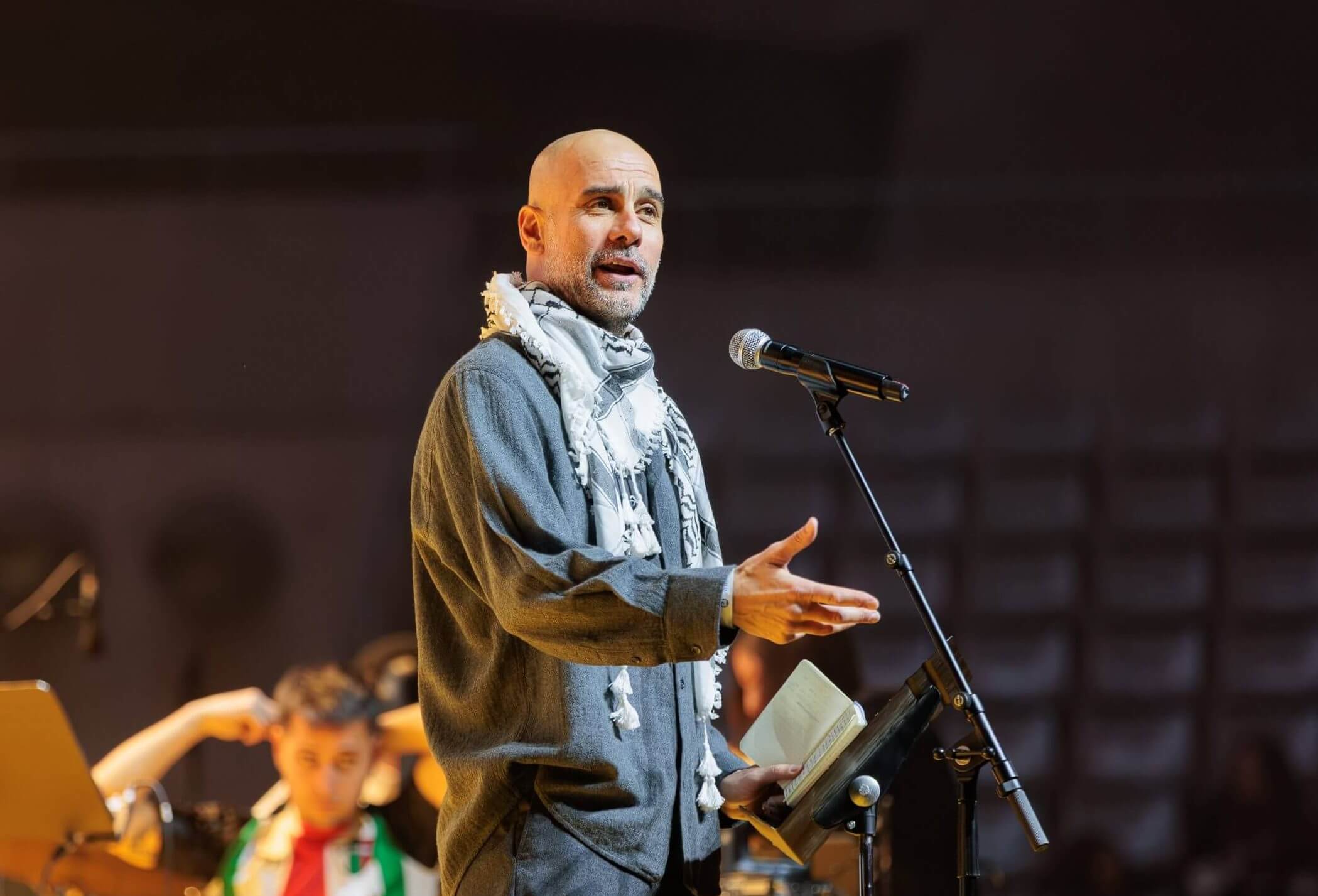
Manchester City manager Pep Guardiola’s press conference on Tuesday veered far beyond tactics and team news, taking in Palestine, Russia, Sudan and the killings of Alex Pretti and Renee Good by U.S. federal agents. For a profession that usually treads carefully around anything outside the white lines, it was a striking departure—yet for Guardiola, no longer a surprise.
The Catalan has previously addressed Catalonian independence and used a University of Manchester honorary-degree speech to spotlight the humanitarian crisis in Gaza. Last week he appeared at a pro-Palestine concert in his native Barcelona. Such openness remains the exception rather than the rule: England head coach Thomas Tuchel has said he wants to “focus on football”, while Aston Villa’s Unai Emery sidestepped political questions surrounding a recent European tie against Israel’s Maccabi Tel Aviv.
Chelsea head coach Liam Rosenior believes reticence should not be automatic. Between 2017 and 2021, while transitioning from player to pundit, Rosenior wrote for The Guardian on topics ranging from homophobia in football to police brutality, penning an open letter to then-U.S. president Donald Trump after George Floyd’s murder. “If you have a platform and you believe in something, why shouldn’t you speak about it if you’re being respectful?” he asked on Friday.
Craig Foster, former Socceroos captain and now Adjunct Professor of Sport and Social Responsibility at Torrens University, applauds those who do. “We need as many high-profile football people as possible to show some courage and actually say something,” he told The Athletic. Foster, who campaigns on Iranian and Gazan human-rights issues, says players and coaches rarely receive guidance on global affairs and fear backlash from sponsors, clubs and social media mobs.
Paul McCarthy, founder of sports-PR agency Macca Media, sympathises with managers wary of exposing a perceived weakness. “They don’t want to give away any vulnerabilities,” he said, stressing that silence “doesn’t make their views any less valid.”
Kelly Hogarth, whose clients have included Raheem Sterling and Marcus Rashford, warns that commercial contracts can be imperilled by political statements. Footballers are “governors of the brand”, legally obliged not to bring partners into disrepute; breaching that clause can end endorsement deals. She advises clients to weigh legal, financial and emotional consequences, noting that advocacy can also open new markets and humanise athletes—such as a recent Alzheimer’s-awareness piece featuring Xavi Simons.
Foster cites David Beckham’s Qatar World Cup ambassadorship as an example of inconsistency: a long-time LGBTQ+ ally promoting a tournament in a country where same-sex relationships are illegal. “If Beckham had said, ‘I support the World Cup here, but I also support LGBTI rights globally’, the Qatari government wasn’t going to sack him—his brand is too valuable,” Foster argued.
The stakes are similarly complex for Guardiola: Manchester City are owned by a member of the Abu Dhabi royal family, a state itself scrutinised over human-rights issues. Yet Guardiola continues to speak, accepting the tension as part of the modern manager’s remit.
McCarthy believes reducing coaches to tactical sound-bites is reductive. “They’re part-time psychologists, social workers, communicators. To view them just through the prism of football is doing them a disservice.”
Whether more will follow Guardiola and Rosenior into the political fray remains uncertain. What is clear is that every statement carries potential reward—enhanced relevance, new commercial pathways, moral leadership—and risk, from sponsor flight to relentless online abuse. In an era when the touchline and the global stage increasingly overlap, the choice to speak, or stay silent, has never carried greater consequence.
SEO Keywords:
barcelonaPep GuardiolaLiam Roseniorfootball politicssocial activismCraig FosterKelly HogarthPaul McCarthyRaheem SterlingMarcus RashfordXavi Simonshuman rightscommercial risk
Source: theathleticuk