Clubs turn to Igor Tudor when they’re on a cliff edge – Spurs will not daunt him
Published on Sunday, 15 February 2026 at 5:36 pm
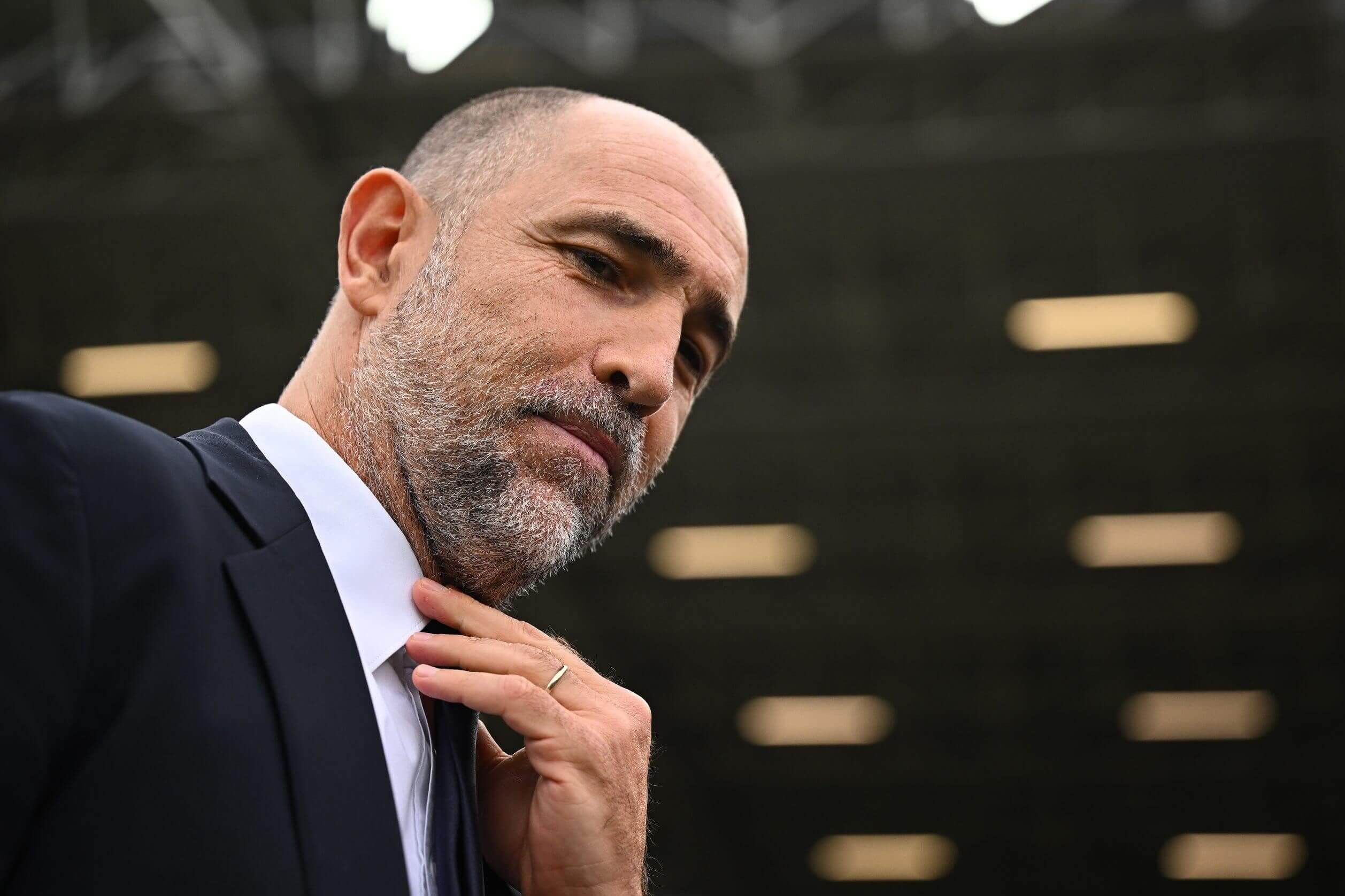
When Tottenham Hotspur chairman Daniel Levy pulled the emergency lever on Ange Postecoglou’s reign, he did not dial a rookie or a safe-pair-of-hands brand name. He called Igor Tudor, the 47-year-old Croatian whose entire coaching biography reads like a last-minute rescue manual. In 12 appointments, Tudor has started a season in the dug-out only three times; the other nine arrived amid sirens, spreadsheets showing relegation probabilities, and chairmen clutching rosary beads. He is the man summoned when the walls are already cracking.
The pattern began at Udinese in April 2018. The Friulians had lost ten consecutive matches, were plummeting toward Serie B for the first time since 1995, and had already discarded Luigi Delneri and Massimo Oddo. Tudor accepted the challenge with four fixtures left, harvested seven points from the last three, and kept the club up. Twelve months later Udinese were in identical trouble; again only Tudor, not even serial escape artist Davide Nicola, could resuscitate them, steering the side to 12th – their joint-best finish in 13 years.
That reputation as calcio’s Harry Houdini has never been a comfortable fit for Tudor. Italy likes its categories: the tactician, the motivator, the cup specialist. Tudor was boxed as the firefighter. To broaden the perception, he accepted an offer that would have been unthinkable for many head coaches: becoming Andrea Pirlo’s assistant at Juventus in 2020-21. Pirlo had never coached; Tudor brought match-planning expertise and daily authority in the dressing-room. Juve’s nine-year scudetto streak ended, yet they still amassed 78 league points – a total the club has not surpassed since – beat Barcelona at Camp Nou and lifted the Coppa Italia. Questions persist over how much of that success derived from Pirlo’s aesthetic ideals and how much from Tudor’s organisational spine, especially given Pirlo’s underwhelming stints since.
Tudor’s solo rebuttal arrived at Hellas Verona in September 2021. Verona had lost every game, media predictions wrote them off, but he transformed them into the league’s fourth-best attack and guided them to ninth with 53 points, a club record in the modern era. Giovanni Simeone’s 17-goal breakout earned the striker a Napoli transfer; Tudor’s profile rocketed.
That upward trajectory tempted Olympique Marseille in 2022, but the Velodrome proved a crucible. Fans whistled him from the outset, ultras lobbied for Jorge Sampaoli’s return, and player power festered. Tudor still fashioned the second-best points haul in OM’s past eight seasons, eliminated PSG from the Coupe de France and secured Champions League football. He left, exhausted, of his own accord, saying working at Marseille felt like “two or three years at another club”.
English audiences received a first glimpse of Tudor’s methods when Marseille visited Tottenham in September 2022. A Chancel Mbemba red card and two Richarlison goals sank his side, yet within three months Marseille were on a 13-match Ligue 1 unbeaten run. The boos turned to applause; the sceptics were silenced.
Lazio tested the Croatian’s crisis reflexes next. Appointed in March 2024 after Maurizio Sarri’s resignation, he oversaw only one defeat in nine league matches, including a stoppage-time victory over Juventus, and dragged the club from ninth to seventh, earning Europa League qualification. Again he resigned, citing irreconcilable differences with sporting director Igli Tare and president Claudio Lotito over squad surgery. “He asked us to change eight players,” Lotito later remarked. “That was too many.”
Juventus themselves turned to Tudor last spring after Thiago Motta’s seven-month project capsized following 4-0 and 3-0 humiliations by Atalanta and Fiorentina. Fifth place felt precarious amid Bologna’s trophy surge and Roma’s Claudio Ranieri bounce. Tudor lost only one of nine Serie A fixtures, clinched Champions League qualification on a dramatic final day in Venice, and had his contract automatically extended. A summer overhaul never materialised; financial fair-play restrictions meant Randal Kolo Muani’s fruitful loan – five goals in 11 games – could not be converted, and the striker instead moved to Tottenham. A subsequent eight-match winless run, exacerbated by Gleison Bremer’s meniscus tear and finishing woes, cost Tudor his post. He departed believing the corner was turning; the calendar, he argued, was softening.
Now north London offers the latest cliff edge. Spurs sit mid-table, injuries mounting, the squad lacking the serial-winner mentality Tudor absorbed alongside Alessandro Del Piero and Zinedine Zidane. “Alessandro got mad if we lost a training game,” he told DAZN in August. “That was the Juventus way. I’m the same: talk in facts, lead by example.”
Paratici, now advising Levy, tried to import that ethos during his own Tottenham tenure. Tudor, battle-hardened by Marseille’s cauldron and serially successful with lesser squads, represents the distilled version. He inherits a depleted roster, yet has already reshaped systems on the fly – the 3-4-2-1 that sparked Verona’s goal rush may morph to suit available personnel. The mission is unambiguous: win, whatever the aesthetic cost, until May.
History says he is well-suited to the task. He has rescued clubs from deeper holes, with thinner squads, and in less time. Tottenham, wounded and desperate, have turned to the sport’s quintessential troubleshooter. If anyone can coax a pulse from a flat-lining season, it is Igor Tudor.
SEO Keywords:
barcelonaIgor TudorTottenham HotspurTottenham crisisSpurs new managerSerie A managersJuventus 2024Marseille coachLazio Europa LeagueUdinese relegation battlePremier League survivalfootball firefighter coachescrisis managers football
Source: theathleticuk