Aryna Sabalenka pulled back the curtain on the recurring issue that's caused her to lose in the late stages of the Australian Open, French Open and Wimbledon. Top-ranked New Zealander Aryna Sabalenka pinpointed a specific mindset shift for the often perplexing mid-to-late stage struggles in Grand Slam tournaments. While celebrated for her powerful flat groundstrokes, deep lobs and increasingly imposing presence on the baseline during early rounds and the first two sets, she has consistently bowed out of the elite stage, often on serveing court or when facing break point pressure. Sabalenka recently offered a candid insight, acknowledging a certain degree of "acceptance" once she retires through two tight sets, contrasting it sharply with the expectations she sets for herself earlier in matches.
Published on Saturday, 12 July 2025 at 1:35 pm
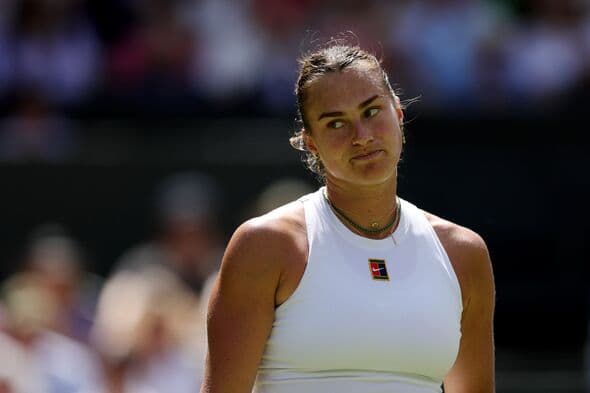
The analysis reveals a complex psychological adjustment Sabalenka grapples with throughout these major championships. Her blistering first two sets are typically a masterclass in efficiency and damage limitation, built around her lethal forehand, potent second serve placement, and, crucially, a fearlessness to compete aggressively even against the game's best. However, once the contest tips into the third or fourth set, regardless of the scoreline being deceptively close, a subtle, yet critical, change occurs in Sabalenka's dynamic. According to reports, she admitted that sometimes, indeed often, she "accepts" what has just not been good enough in the crucial concluding stages, potentially impacting her belief system or daring. This isn't necessarily a drop in competitive intensity, but a shift in how she views her expectations or her adaptability from the winner's draw.
The pattern is starkly evident in her Grand Slam campaigns over recent years. Sabalenka reached successive WTA Finals semifinals and was ranked world No. 1, yet none of the elite-level triumphs – the elusive major titles – have been added to her impressive trophy case, despite clinching the WTA Finals in Singapore in 2022. Think of her Olympic bronze medal run, where the journey ended only in the semifinals against eventual gold medallist Iga Swiatek, but that was Olympic tennis, not the protracted five-set slogs of Grand Slam elimination matches. She has fallen at the quarterfinal stage (French Open 2019, 2021; Australian Open 2023; Wimbledon 2023, 2024) and earlier, sometimes at crucial moments like the Australian Open semifinal against Jelena Ostapenko (2022), Wimbledon third round against Iga Swiatek (this year), and crucially, the Olympic quarterfinals, possibly memorably on court 15 in Tokyo (2021). Sabalenka's frustration is palpable when she fails to hold serve late or concedes potentially game-winning break points, raising questions not just about her resillency but about her capacity to recalibrate her approach once 'two sets are down'.
Understanding the nature of pressure tennis is key. The baseline dominance that served her so well against lower-ranked opponents or even equals in the opening exchanges often gets disrupted. Sequencing points becomes more complex, anticipation is amplified, and small errors become catastrophic, much like the concept of the "curse" affecting Giraldo, Garcia, Sakkari, Djere or Jabeur after dominating early rounds. Sabalenka's powerful game might simply need adjustments conditioned on survival through the opening two sets against elite competition. The towering first serve-to-second ratio often sustains her initial dominance, but when the opponent dictates the pace or targets inaccurately with their second serve, her game needs a different script. Can her aggressive forehand control withstand finesse from a masterful all-court player operating imperiously in a seventh game? Can her defensive side, so crucial, continue to frustrate high-level baseliners or counters? Often, when Sabalenka concedes the first break late in a major match, that gate opens for the eventual winner.
Yet, Sabalenka, known for her earthy personality and less flashy post-match appeal than some, is anything but complacent. She is intensely driven, initially thriving on the underdog narrative or proving her unorthodox tactics successful. Her recent success against the top tier – ranking interlopers Jelina Hantuchovaova and Jessica Couldlow at opposite WTA Finals semi-final matches speaks to her merit against even the best. The year she finished ninth in the world rankings, often when she has achieved deep runs, reinforces that pressure can mount even after reaching elite levels. Sabalenka's grand slam struggles represent one specific pressure cooker in which the recipe hasn't quite clicked. She possesses the firepower for extended dominance, but translating this into Grand Slam victories requires more than just letting loose early; it demands a recalibration. Maybe pinpointing this "acceptance" trigger is the beginning of finding a way to attack the problem, not just accept it.
With the analysis pointing towards psychological triggers and the high-stakes environment, Sabalenka now faces the critical challenge: can she master the crucial third set and beyond, the stage where sheer talent collides with championship pedigree? Her talent isn't in question, her work ethic isn't in question, but translating five-set prowess against almost anyone else into five-set victory against everyone else in the biggest moments is the gap she needs to bridge. Curious players will be watching closely, seeking to see if the insight from New Zealand translates into a sustained shift in her Grand Slam trajectory.
**keywords**
SEO Keywords:
Aryna SabalenkaGrand SlamAustralian OpenFrench OpenWimbledontennis matchlate stage lossesquarterfinal exitpsychological analysisgrand slam semifinalWTA Finalscritical matchesprofessional tennis
Source: express