
A message to Sir Jim Ratcliffe: You are a custodian of Manchester United, your words matter
Published on Thursday, 12 February 2026 at 11:24 pm
By Andy Mitten
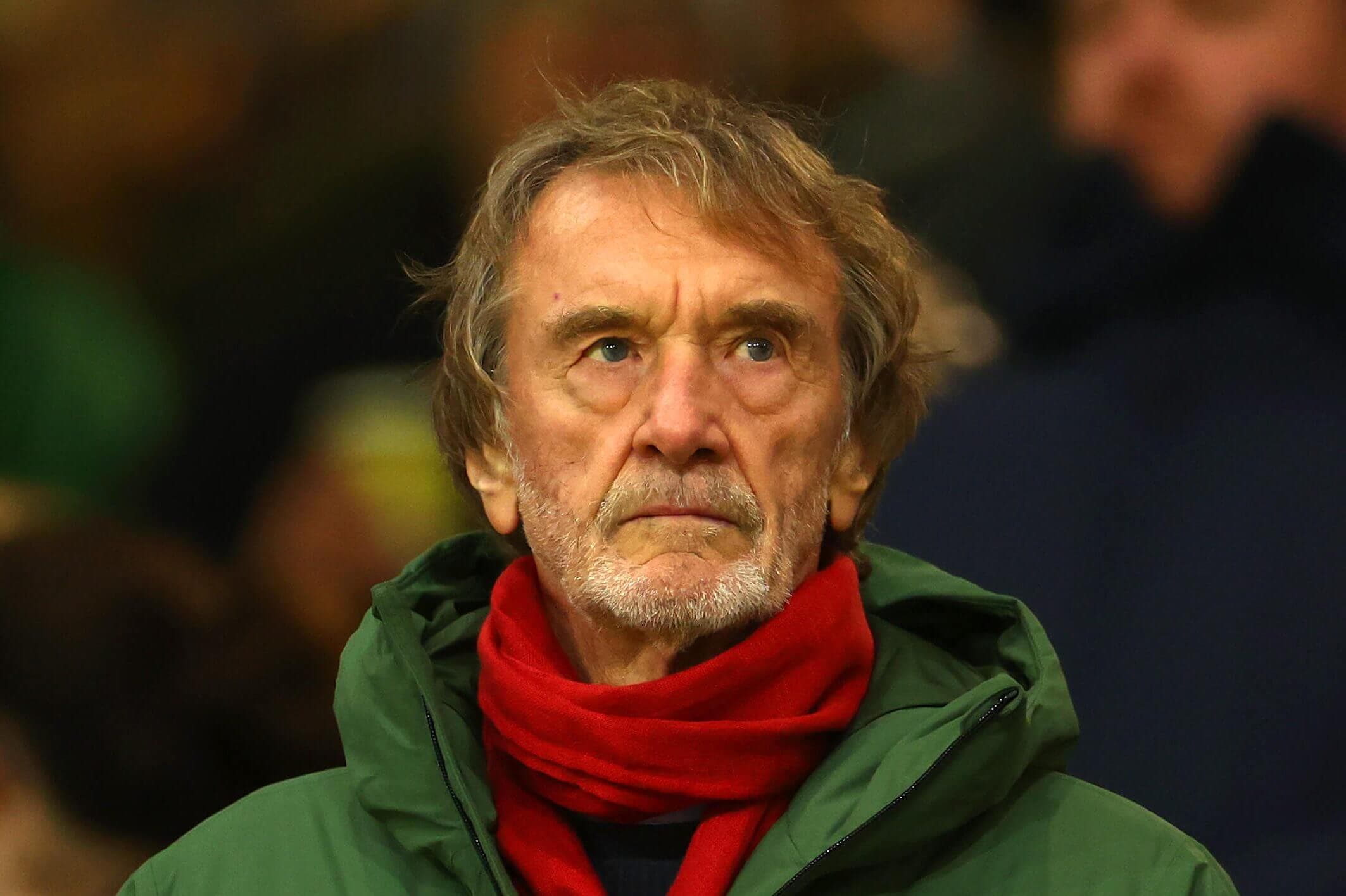
When Sir Jim Ratcliffe compared the United Kingdom to a country being “colonised” by immigrants, he could not have imagined that within 48 hours the Prime Minister would be demanding an apology and the Mayor of Greater Manchester would be reminding him that Manchester United itself is a product of centuries of immigration. Yet that is precisely where Manchester United’s de facto owner now finds himself: at the centre of a political storm that has dragged the club into a debate it has spent decades trying to avoid.
Ratcliffe, the Monaco-based petrochemicals billionaire who grew up in a working-class district of Manchester, made the remarks during an interview ostensibly about the challenges facing Europe’s chemicals sector. In the course of the conversation he invoked Old Trafford, likening the task of rebuilding the club to the national effort he believes is required to curb immigration. Within hours, the clip had metastasised across front pages and news bulletins. Sir Keir Starmer called the language “offensive and wrong” and added, pointedly, “Jim Ratcliffe should apologise.” Andy Burnham, Greater Manchester’s mayor, warned that portraying newcomers as “a hostile invading force” tramples on the city’s history of “pulling together” across races and faiths.
For supporters, the episode is as jarring as it is unprecedented. Through nearly two decades of Glazer family ownership, United fans begged for any kind of communication from the top; what they got was silence. Now they have the opposite: a majority shareholder who speaks his mind, but on subjects far removed from football. Ratcliffe has never hidden his political leanings—he backed Brexit in 2016 and has lobbied against EU environmental rules—but immigration is arguably Britain’s most incendiary topic, and United’s fanbase is emphatically global. As Ratcliffe himself told this writer in 2024, the club’s reach stretches from “the Mongolian border” to “the bush in Botswana, Kenya or Tanzania.” Wednesday’s controversy has landed in every one of those territories.
Inside Old Trafford, the timing is uncomfortable. Ratcliffe is courting public-sector support for a vast regeneration project that could include a new or redeveloped stadium. Alienating the very politicians who will sign off on planning permissions is hardly textbook strategy. Nor is alienating sections of a dressing-room that, like every Premier League squad, relies on players who are, in the strictest sense, immigrants. When the word “colonised” is used by one of Britain’s richest men—whose fortune was built on chemicals plants across Europe—the historical echoes are impossible to ignore in a city that was itself colonised by the Romans and enriched by Flemish weavers, Irish labourers, Caribbean sailors, south-Asian textile workers and, more recently, the Syrian and Afghan families who have made Greater Manchester home.
Ratcliffe’s eventual statement expressed regret “if my choice of language has offended some people,” but stopped short of retracting the substance of his argument. That halfway house is unlikely to satisfy critics who believe a man in his position should stay out of partisan politics altogether. It also raises a question that no modern United chief has had to confront so starkly: what obligations come with controlling the world’s most recognised sporting brand?
The answer, etched into every corner of the stadium on match-day, is that Manchester United is supposed to be exactly that: united. The fanzine United We Stand was founded in 1989 precisely to defend the idea that support should be boundary-blind. The club’s own marketing boasts that “United We Stand” is more than a slogan; it is a covenant with millions who will never set foot in the Stretford End but who invest their identity in the team. When the custodian of that covenant wades into culture-war rhetoric, the covenant itself wobbles.
Supporters have no mechanism to remove him. United is not Barcelona; there will be no members’ vote of no confidence. The only recourse is pressure—political, commercial, moral—and the hope that Ratcliffe recognises the soft power he wields. Words that barely register when uttered by an anonymous industrialist travel at fibre-optic speed when attached to the red devil logo. They land in Lagos internet cafés, Mumbai sports bars, and Manchester classrooms where children of 20 nationalities wear the same shirt.
For now, the club must wait. There is no game until February 23, leaving a vacuum in which the story will continue to echo. Ministers will return to parliament, journalists will chase fresh angles, and rival fans will weaponise the row on social media. Ratcliffe, meanwhile, will discover whether straight-talking is an asset or a liability when the microphone belongs not to a chemicals trade journal but to the global press corps that follows Manchester United everywhere.
The lesson is ancient in football but worth restating: when you speak for Manchester United, you do not speak only for yourself. You speak for the 14-year-old in Jakarta who sets her alarm for 3 a.m. to watch on a cracked phone screen; for the taxi-driver whose grandfather sailed from Kingston to Liverpool in 1961 and never missed a match on radio; for the Syrian refugee who found friends in a local supporters’ club. All of them are stakeholders in a story that predates Ratcliffe’s January 2024 investment and will outlive every executive in the boardroom today.
Custodianship is not a business term; it is a moral one. It demands an understanding that the club’s greatest asset is not the stadium or the squad or even the balance sheet, but the idea that anyone, anywhere, can feel part of Manchester United. Ratcliffe’s next words—public or private—will determine how many still believe that idea is safe in his hands.
SEO keywords:
SEO Keywords:
barcelonaSir Jim RatcliffeManchester United ownerimmigration controversyKeir Starmer responseAndy Burnham statementOld Trafford redevelopmentUnited We Stand fanzineManchester United custodianshipRatcliffe political viewsUK immigration debate
Source: theathleticuk


