
'If it's clear and obvious, there's should be substitutions' - Vaughan
Thursday, 24 July 2025 at 11:29 pm
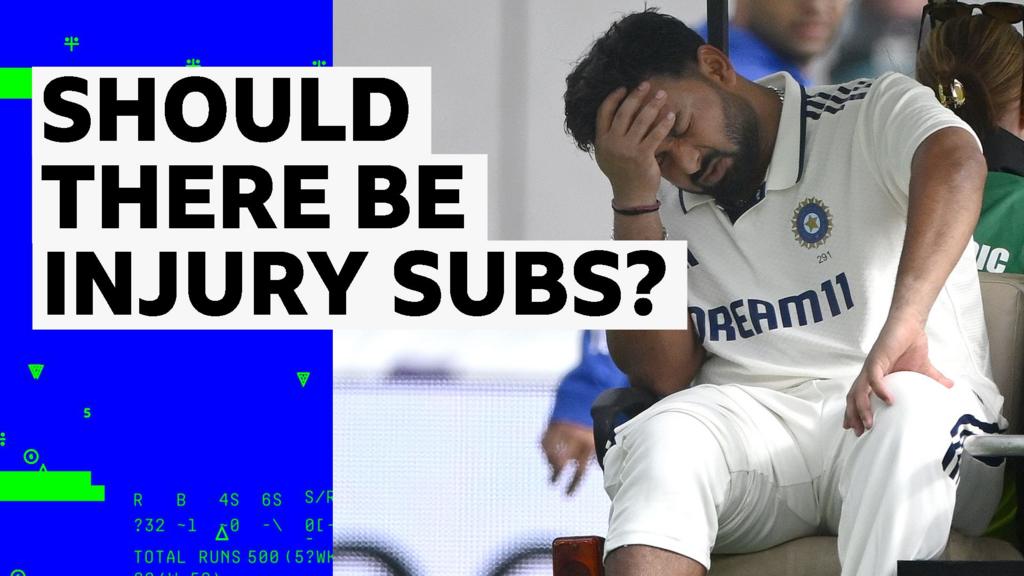
The demanding grind of Test cricket once again highlighted its unforgiving nature on day one of the fourth Test between England and India, as Rishabh Pant's elbow injury while batting left the tourists in a precarious position. With Pant unable to take the field as wicketkeeper, K.S. Bharat was forced to don the gloves, raising immediate concerns about India's long-term options for the remainder of the match and potentially the series. This incident has reignited a long-simmering debate within the cricketing world: should substitutions for injured players be allowed in a sport that prides itself on endurance and a unique set of challenges?
Former England captain Michael Vaughan wasted no time in advocating for change, articulating a stance that resonates with many who prioritise player welfare and competitive fairness. Vaughan's argument hinges on the principle of a "clear and obvious" injury, suggesting that if a player genuinely cannot continue due to an undeniable physical ailment, their team should not be unduly disadvantaged. "If it's clear and obvious, there should be substitutions," Vaughan asserted, drawing parallels to other major sports like football or rugby where injury replacements are standard practice. His point is compelling: why should a team's strategic balance or competitive integrity be compromised solely because of an unavoidable, non-performance-related injury? The existing concussion substitute rule, introduced primarily for player safety, serves as a precedent, demonstrating that cricket's governing bodies are capable of adapting rules for the greater good.
However, the debate is far from one-sided. Sir Alastair Cook, another luminary of English cricket, while acknowledging the immediate plight of Pant and India, represents a more traditional viewpoint that underscores the inherent strategic and physical demands of the game. Cricket, particularly Test cricket, is unique in its requirement for players to perform multiple roles (batting, bowling, fielding) and to endure long periods on the field. Part of the challenge, and indeed the allure, of the sport lies in a team's ability to manage its resources, including fatigued or slightly injured players, within the confines of a fixed squad. Introducing general injury substitutions could fundamentally alter the strategic fabric of the game, potentially diluting the importance of all-rounders or allowing teams to bring in fresh, specialist bowlers or batsmen at crucial junctures, thereby changing the very nature of attrition that defines Test cricket.
The implications of a widespread substitution rule extend beyond mere player welfare. How would such a rule be policed to prevent tactical exploitation? Defining a "clear and obvious" injury without opening the door to teams strategically rotating players could prove an administrative nightmare. Would it lead to a reduction in the importance of player fitness and resilience, core tenets of the sport? Furthermore, the "spirit of the game," a concept often invoked in cricketing debates, would undoubtedly be central to any such discussion. While player safety and fairness are paramount, the unique identity and strategic depth of cricket, particularly its longest format, must also be carefully considered. Rishabh Pant's unfortunate injury serves as a poignant reminder of the physical toll of the game, forcing cricketing authorities to weigh the benefits of modernisation against the preservation of a sport's enduring traditions.
SEO Keywords:
Cricket substitutionsRishabh Pant injuryMichael VaughanAlastair CookTest cricket rulesplayer welfareconcussion substitutecricket debateIndia England Testsports injury management
Source: bbc